The home health and digital wellness market is witnessing one of its most intriguing phases as Wyze, the company that rose to prominence by disrupting security camera pricing, turns its sights toward smart scales. With the announcement of the new Wyze BodyScan, the company promises to bring technology that once cost hundreds of dollars to the masses at a price point of just $79.98. This move comes only seven months after the release of the $120 Ultra BodyScan model, underscoring Wyze’s aggressive strategy for smart home dominance.
The 8-Electrode Advantage and Segmental Analysis
The primary feature that distinguishes the new BodyScan from standard smart scales is its use of eight electrodes instead of the typical four. Most consumer scales only have electrodes on the base, measuring electrical resistance through the lower limbs alone. This often results in inaccurate data for the upper body, which is typically estimated via algorithms rather than direct measurement.
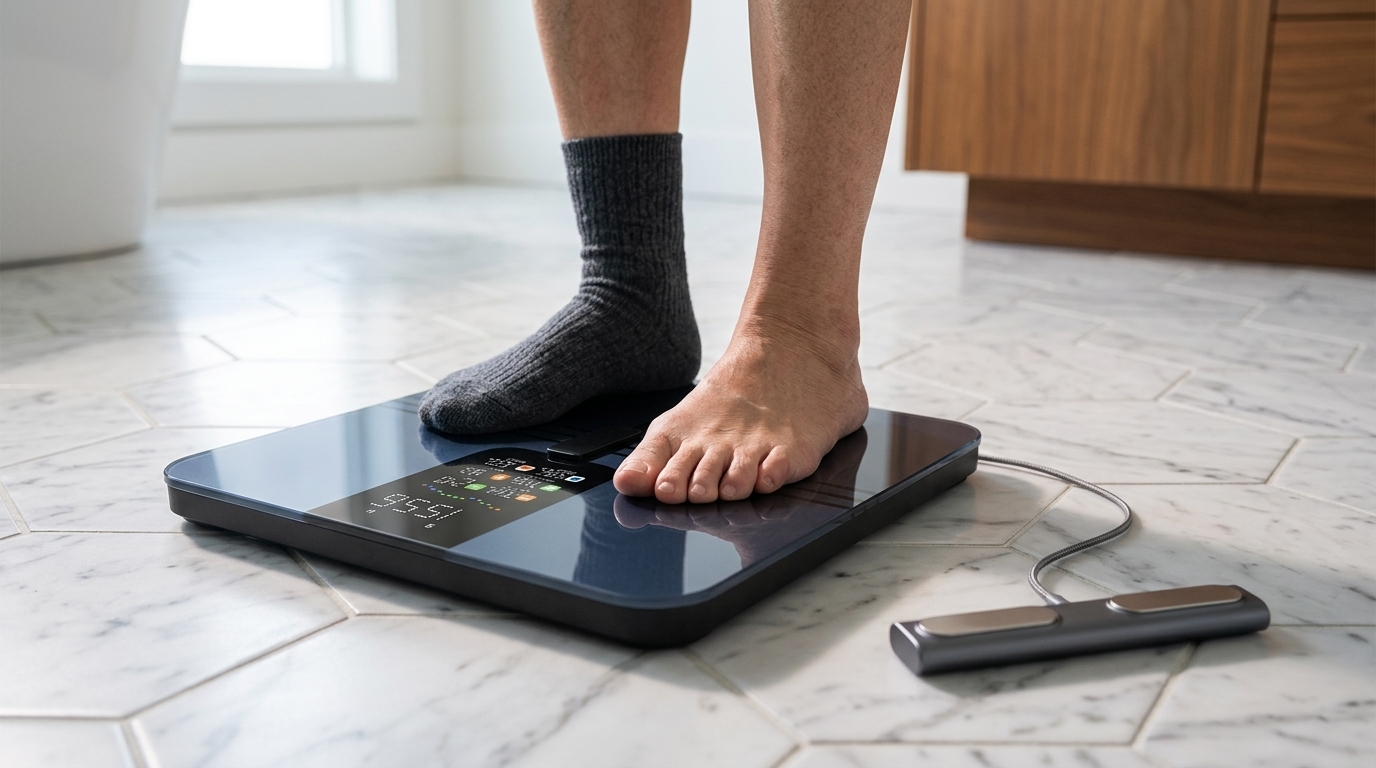
The Wyze BodyScan includes a retractable handle with integrated electrodes, allowing a low-level electrical current to pass through the entire body. This enables "segmental analysis," allowing users to see fat and muscle mass distribution specifically for each arm, each leg, and the torso. This functionality is usually reserved for professional-grade InBody machines found in gyms or medical clinics. Bringing this to a consumer device at this price point is a significant technical and commercial milestone.
The Trade-off: Bluetooth Over Wi-Fi
To achieve a $40 price reduction compared to the Ultra model, Wyze made a calculated compromise: removing Wi-Fi connectivity. The new device relies solely on Bluetooth to transfer data to the user’s smartphone. This means the Wyze app must be open and the phone must be within range for a measurement to be recorded and synced.
For many users, the lack of Wi-Fi is a notable downgrade in user experience. Wi-Fi scales offer the convenience of "invisible" syncing, where data is uploaded to the cloud in the background without any manual intervention. However, Wyze is betting that the lower price point is attractive enough for consumers to overlook this friction. Despite the lack of Wi-Fi, the scale remains compatible with Apple Health and Google Fit, ensuring that health data remains portable and integrated into broader ecosystems.
The Psychology of the Quantified Self
The proliferation of such devices strengthens the "Quantified Self" movement, where individuals use data to understand and optimize their biology. By offering metrics like heart rate, metabolic age, and water percentage, the BodyScan provides a holistic view of physical condition. Yet, the abundance of data brings challenges. Over-analyzing these numbers can sometimes lead to health anxiety, especially since home Bioelectrical Impedance Analysis (BIA) has an inherent margin of error based on the user's hydration levels.
"The democratization of health data is a double-edged sword. It empowers the user, but it also demands a level of data literacy to interpret these numbers correctly," say market analysts.
Market Competition and Future Outlook
At $80, Wyze is positioning itself directly against giants like Withings, whose flagship Body Scan scale retails for nearly $400. While the Withings offering includes clinical certifications and a 6-lead ECG feature, Wyze targets the mainstream consumer who wants advanced metrics without the premium price tag. This move is expected to force other manufacturers to re-evaluate their pricing strategies, ushering in a new era of affordable digital health diagnostics.
As we move further into 2026, the integration of AI-driven insights into these data streams will likely be the next frontier. Wyze’s hardware provides the foundation, but the software's ability to turn these segmental measurements into actionable lifestyle advice will determine its long-term value in the crowded wellness market.