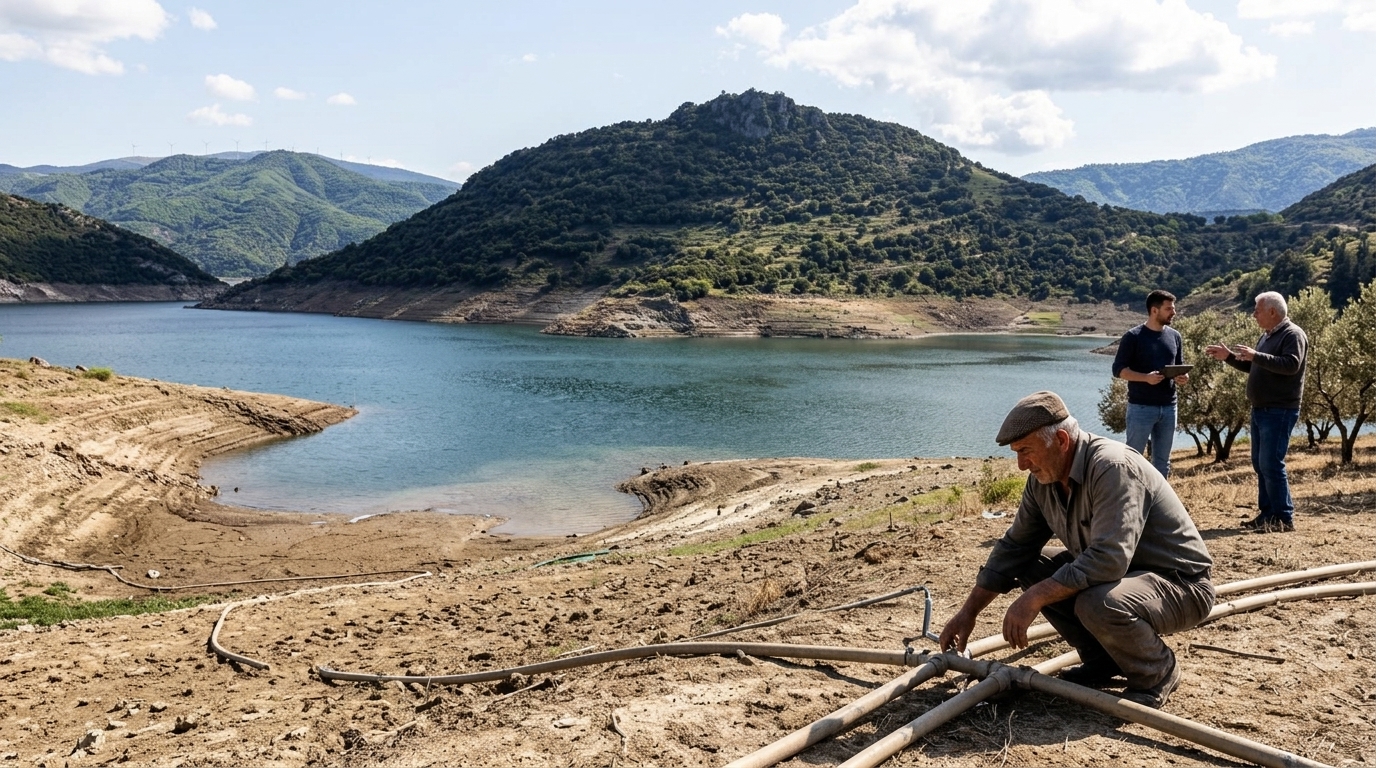
The sight of parched fields and depleted reservoirs is no longer a distant warning; it is the harsh reality of July 2026. As we navigate the height of summer, Southern Europe is experiencing some of the most intense water stress in recorded history. According to recent data from the European Environment Agency and the World Resources Institute, Greece and Cyprus consistently rank at the top of the list of countries facing the highest water deficits, with the fallout affecting every facet of social and economic life.
The Geography of Thirst: Why Greece is at Risk
Water scarcity in Greece is not a uniform phenomenon, but the areas hit hardest are the very engines of the national economy: the Aegean islands, Crete, and the Peloponnese. Water stress occurs when the demand for water exceeds the available amount during a certain period or when poor quality restricts its use. In Greece, the problem is exacerbated by a combination of declining precipitation—dropping by as much as 30% in some regions over the last decade—and rising average temperatures that accelerate evaporation from reservoirs.
Cyprus, on the other hand, serves as the ultimate case study of a nation operating under permanent water crisis conditions. With its reliance on desalination plants reaching maximum capacity, the island is in a constant race to balance the needs of its citizens with the demands of the millions of tourists who visit annually. The Mediterranean is warming 20% faster than the global average, turning the region into a climate change 'hotspot' where water is becoming more valuable than oil.
Tourism vs. Agriculture: A Conflict of Interests
Water scarcity creates a volatile conflict between two pillars of the Greek economy. Agriculture remains the largest consumer of water, absorbing over 80% of available resources. However, irrigation methods remain largely antiquated, with vast amounts of water lost due to poor management and leaky infrastructure. Simultaneously, the tourism industry, which peaks during the driest months, demands enormous quantities of water for swimming pools, luxury resorts, and golf courses.
- Water consumption per tourist is up to three times higher than that of a permanent resident.
- On islands like Santorini and Mykonos, peak season demand far exceeds the natural recharge rate of groundwater aquifers.
- Saltwater intrusion—where seawater seeps into underground reserves due to over-pumping—is now an irreversible phenomenon in many coastal areas.
The challenge for the Greek government and local authorities is to enforce a new management model that includes tiered pricing, strict drilling regulations, and investment in greywater recycling technologies. The era of 'limitless water' for the tourism sector is effectively over.
Infrastructure: The Achilles' Heel
Despite repeated promises, infrastructure remains Greece's 'open wound.' In many municipalities, the percentage of 'Non-Revenue Water' (NRW)—water lost to leaks before it reaches the consumer—exceeds 40% or even 50%. It is paradoxical to discuss building new dams or desalination plants when the existing pipes are effectively sieves.
"We don't have a water crisis; we have a management crisis. The water lost through leaks in Athens and the provinces would be enough to cover the needs of entire prefectures for years," hydrogeology experts warn.
The need for the digitalization of water networks is urgent. The implementation of smart meters and AI-driven sensors that detect leaks in real-time could reduce losses by 20-30% within five years. However, these investments require capital and, more importantly, the political will to confront local interests and the inertia of public utilities.
Technology as a Lifeline: Desalination and AI
Looking ahead, the solution lies in technological innovation. Desalination, while energy-intensive, is the only viable path for the islands. Connecting desalination plants to renewable energy sources, such as offshore wind farms or solar parks, is the next step in reducing both the carbon footprint and the cost of production. Furthermore, Artificial Intelligence is already being deployed to predict demand patterns and optimize distribution, allowing managers to adjust network pressure and prevent pipe bursts before they happen.
In conclusion, Greece and Cyprus do not have the luxury of time. Water scarcity is not a seasonal nuisance but an existential threat to their economic models. Transitioning to a 'circular water economy,' where every drop is accounted for and reused, is the only way to survive in an increasingly hot and arid world. The Mediterranean's future depends on whether we can learn to value water as the finite, life-sustaining resource it truly is.