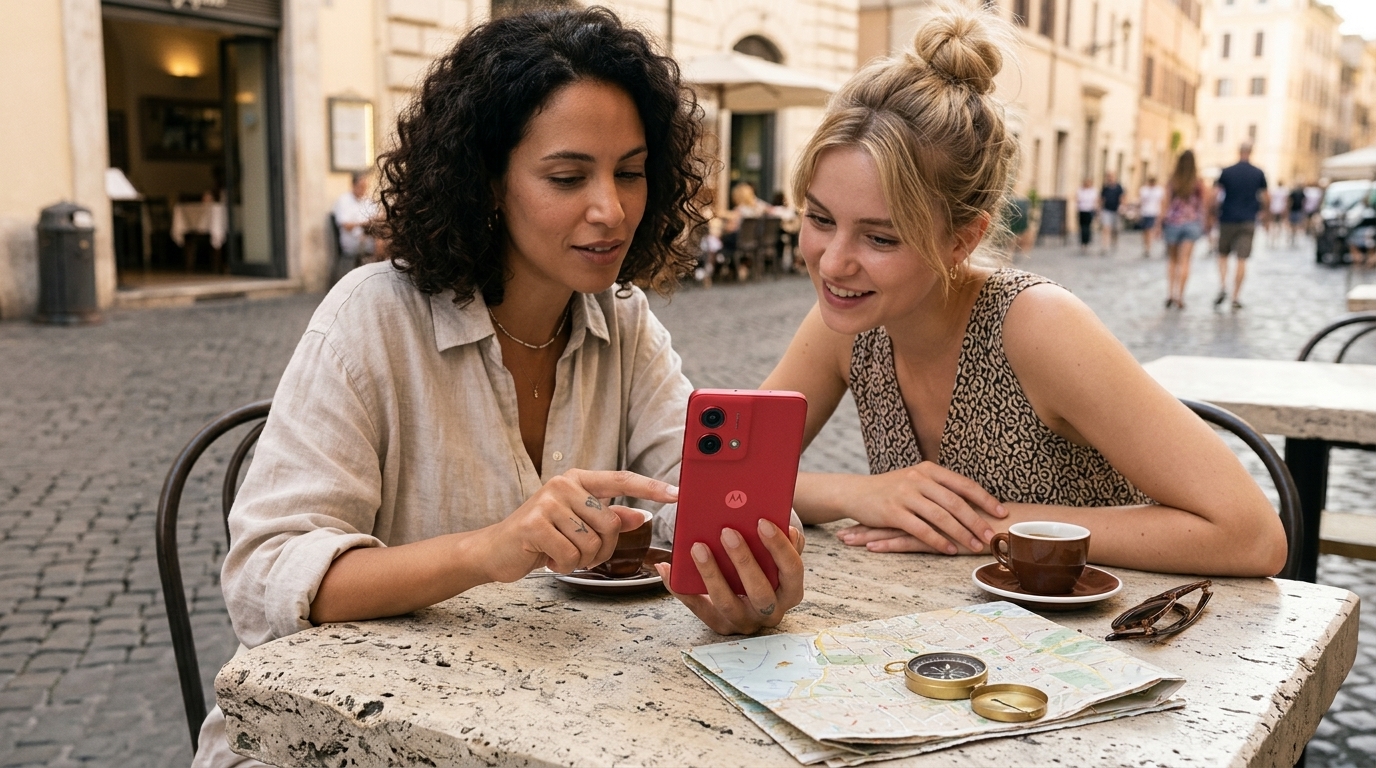
In a world where connectivity is now considered a fundamental utility, Motorola is taking a decisive step to eliminate one of the last hurdles for modern travelers: the anxiety of accessing mobile data abroad. In partnership with the platform Gigs, the historic telecommunications company has announced the integration of a native travel eSIM service into its new smartphones, allowing users to purchase and activate local data plans without the need for a physical SIM card or searching for third-party apps.
The Strategic Partnership with Gigs
This move is not merely a technical addition but a strategic partnership with Gigs, a startup often described as the "Stripe of connectivity." Gigs provides the "Telecom-as-a-Service" (TaaS) infrastructure, which enables hardware manufacturers and software providers to embed telecommunications services directly into their products. For Motorola, this means it can offer a seamless user experience (UX) that starts at the operating system level.
Users of supported Motorola devices will be able to access a dedicated section in their device settings or via the "Moto" app, where available data plans for over 200 countries will be displayed. The process is designed to be as simple as possible: select a country, choose a plan, pay, and activate instantly. This removes the need to visit local mobile shops at airports or deal with complex APN settings that often plague less tech-savvy users.
Competitive Advantage and Market Positioning
Motorola, now owned by Lenovo, has been working hard in recent years to redefine its identity in the premium smartphone market, competing against giants like Samsung and Apple. While Apple has aggressively pushed eSIM technology—even removing the physical SIM slot in US models since the iPhone 14—Motorola's approach is more "traveler-friendly," offering a pre-installed solution that doesn't require the user to hunt through the App Store.
- Ease of Use: System-level integration reduces activation steps by 50%.
- Cost Transparency: Users see the final price without hidden roaming charges from their primary carrier.
- Flexibility: Ability to keep the primary number for calls/SMS while using the eSIM exclusively for data.
This move comes at a time when the travel eSIM market is exploding. Companies like Airalo and Holafly have already built massive user bases, proving that consumers are willing to pay for convenience. By integrating this feature, Motorola is attempting to "lock" users into its own ecosystem, offering added value that goes beyond camera specs or screen quality.
Challenges and the Future of Telecom
Despite the obvious benefits, challenges remain. Global eSIM adoption is not uniform. Some carriers in developing markets still resist the technology, fearing a loss of control over their customers. Furthermore, Motorola will need to ensure that the prices offered through Gigs remain competitive compared to local prepaid cards, which have traditionally been the cheapest option.
"Integrating connectivity directly into hardware is the next logical step for mobile telephony. You are no longer just buying a device, but a passport to the digital world," industry analysts suggest.
In the future, we are likely to see this trend expand. If Motorola's move proves successful, it is certain that other Android manufacturers will follow suit. The idea of a "global phone" that works everywhere without needing to change settings is nearing reality, radically changing how we perceive national borders in the digital space. For international travelers, such technologies reduce the cost and complexity of communication, enhancing digital freedom and ensuring that the "roaming bill shock" becomes a relic of the past.