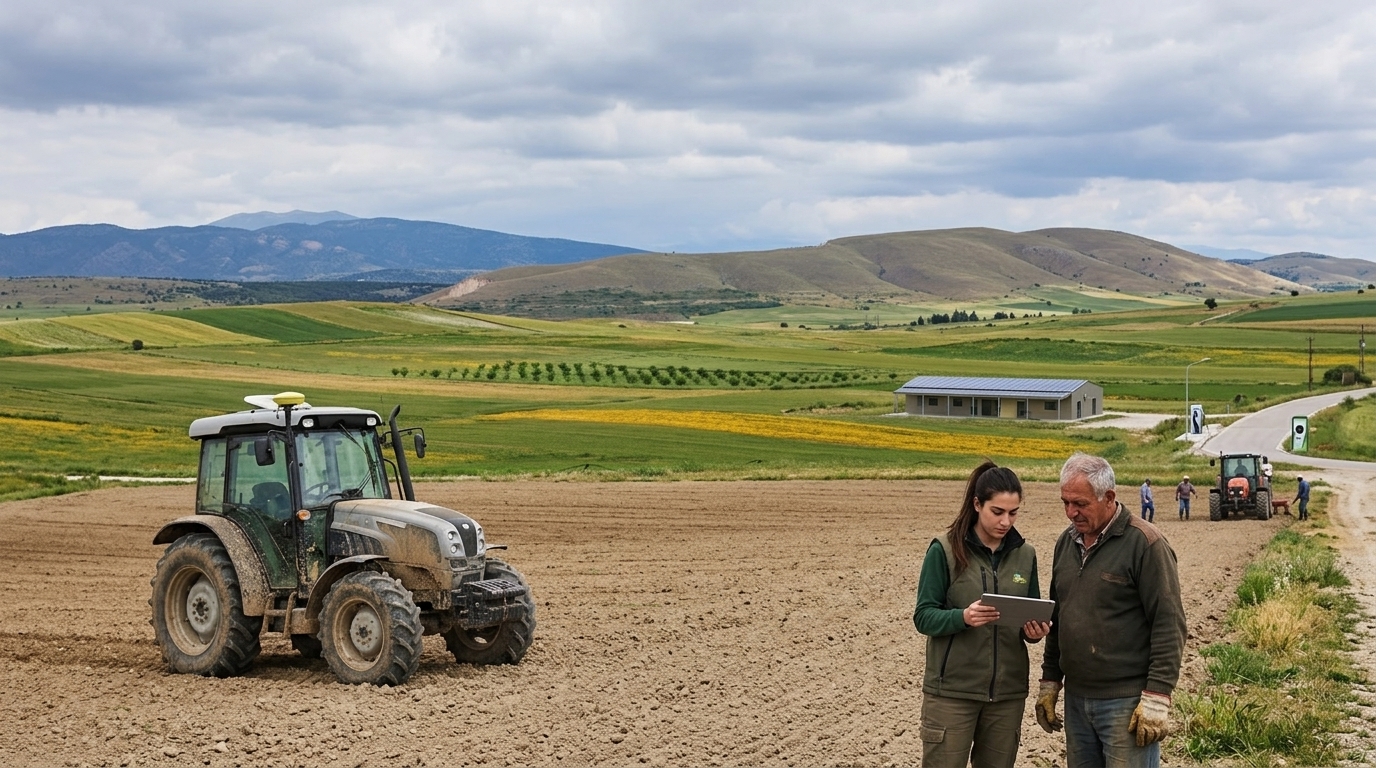
July 1, 2026, marks a pivotal moment for Greek primary production as the Integrated Administration and Control System (OSDE) for the year officially opens. This is not merely another bureaucratic deadline; it represents the full implementation of a long-awaited digital transformation. This year is defined by the close cooperation between OPEKEPE (the Payment and Control Agency for Guidance and Guarantee Community Aid) and the Independent Authority for Public Revenue (AADE), a move aimed at eliminating errors and accelerating direct aid payments.
Integration with AADE: Transparency and Speed
The core feature of OSDE 2026 is the automated retrieval of data from AADE’s information systems. For the first time, data regarding land parcels, leases, and the financial standing of producers will be cross-referenced in real-time. This means that producers will no longer need to submit a mountain of paperwork to prove legal land tenure. The system will automatically recognize electronic lease agreements, drastically reducing application processing times.
This reform is not just about reducing citizen inconvenience; it is also about cracking down on fraud. In the past, overlapping land parcels and declarations of "phantom" areas were the greatest drain on the subsidy budget, often leading to fines from the European Union. Under the new system, every square meter of land will be identified and linked to the beneficiary's Tax ID, ensuring that CAP (Common Agricultural Policy) resources reach those who are actually producing.
Digital Submission and Pre-filled Forms
The introduction of pre-filled declarations is the next major step. Farmers whose farming activities have not changed since the previous year will be able to finalize their applications with just a few clicks. The use of satellite data from the Copernicus program now allows for remote crop monitoring, replacing time-consuming on-site inspections.
- Automated data cross-referencing with E9 property forms and AADE electronic leases.
- Use of mobile applications for geotagged photos taken by the farmers themselves.
- A 40% reduction in payment clearing time compared to the previous three-year period.
- Integration of eco-schemes with clear instructions and automated subsidy calculations.
Challenges and the Adaptation Wager
Despite the optimism, challenges remain. The agricultural population in Greece is characterized by a high average age, making the digital transition difficult for a significant portion of producers. Here, the role of Application Reception Centers (KYD) remains critical. KYDs are called upon to act more as consultants and less as mere processors, guiding farmers through the new requirements of the CAP’s "green" architecture.
"The digitalization of OSDE is not just a technical upgrade; it is a paradigm shift. We are moving from an era of suspicion and control to an era of trust and automated verification," sources from the Ministry of Rural Development noted.
Furthermore, 2026 payments will be closely linked to the implementation of eco-schemes. Producers must be particularly careful with their declarations, as failure to comply with environmental commitments could lead to significant cuts. The system now "sees" everything via satellite, and the accuracy of the declaration is the only path to the timely payment of the advance in October.
Conclusions for the Future
OSDE 2026 forms the foundation for a more modern and competitive Greek agriculture. The reduction of red tape frees up resources and time for the producer, allowing them to focus on the essence: producing quality products. The integration with AADE permanently closes the "loopholes" of the past and creates a fair environment for all. The challenge now is the technical robustness of the platform, ensuring it can handle the massive volume of data and avoid the delays that plagued the sector in previous years. The success of this venture will determine the state's credibility toward the most vital sector of the Greek countryside.