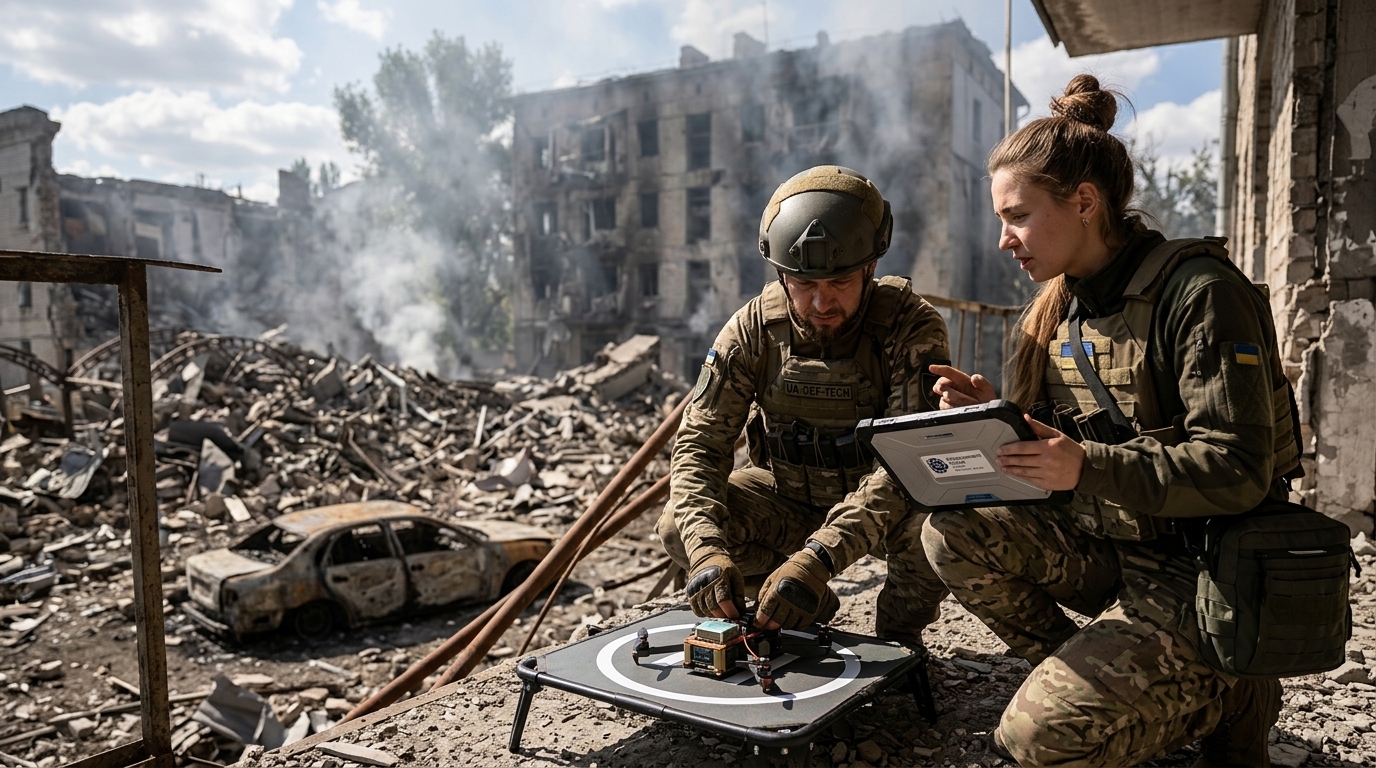
Ukraine's announcement regarding the creation of a formal mechanism that allows international partners to purchase weapons and military technology directly from Ukrainian manufacturers marks a historical turning point in the conflict's evolution. This is not merely an attempt to secure funds; it is a comprehensive restructuring of the country's defense ecosystem, shifting from a passive recipient of aid to an active producer and exporter of cutting-edge technology.
From Dependency to Autonomy
For over two years, Ukraine's defense strategy relied almost exclusively on donations from NATO stockpiles. However, the exhaustion of Western arsenals and bureaucratic delays forced Kyiv to invest in its domestic industry. The new mechanism, presented as part of the 'ZBROYARI: Manufacturing Freedom' initiative, seeks to bridge the gap between Ukraine's vast production capacity and its limited financial resources.
The Ukrainian defense industry now has the capacity to produce weapons worth over $20 billion annually, yet the state budget can only cover a fraction of that amount. By allowing third countries to 'buy' Ukrainian weapons—which in most cases remain at the front for use by Ukrainian forces—Kyiv is creating a crowdfunding model for its national defense while simultaneously boosting the local economy.
The 'Battle-Proven' Advantage
For international partners, purchasing Ukrainian technology is not just an act of solidarity but also a rational military investment. Ukrainian systems, from Magura V5 naval drones to advanced electronic warfare (EW) systems, are the only ones in the world tested and evolved under conditions of total war against a technologically advanced adversary.
- Cost-Effectiveness: Production in Ukraine is significantly cheaper than in Western nations due to lower labor costs and direct access to raw materials.
- Speed of Innovation: The development cycle for a new drone in Ukraine can take just a few weeks, as engineers receive immediate feedback from soldiers on the front line.
- Compatibility: Ukraine is now developing systems that bridge Soviet legacy with NATO standards, offering unique interoperability solutions.
Geopolitical and Economic Implications
This move carries deep geopolitical implications. Denmark was the first country to lead the way, directly funding the production of Ukrainian Bohdana self-propelled howitzers. This example is expected to be followed by other nations, creating a 'defense production alliance' network.
"Ukraine is no longer just asking for weapons. It is asking for investments in our common security through its own industrial base," Kyiv-based analysts note.
However, challenges remain. Russian strategy systematically targets Ukrainian industrial infrastructure, forcing manufacturers to decentralize production or move it to underground facilities. Furthermore, the risk of corruption and the need for transparent auditing processes are critical for maintaining the trust of foreign investors.
The Future: Ukraine as Europe's Arsenal
In the long run, Kyiv's goal is to become the primary provider of defense technology for Europe. By integrating artificial intelligence into drones and developing autonomous combat systems, Ukraine is shaping the future of 21st-century warfare. The new procurement mechanism is the first step toward the country's post-war economic recovery, transforming a war industry into a powerful export pillar that will guarantee the continent's security.