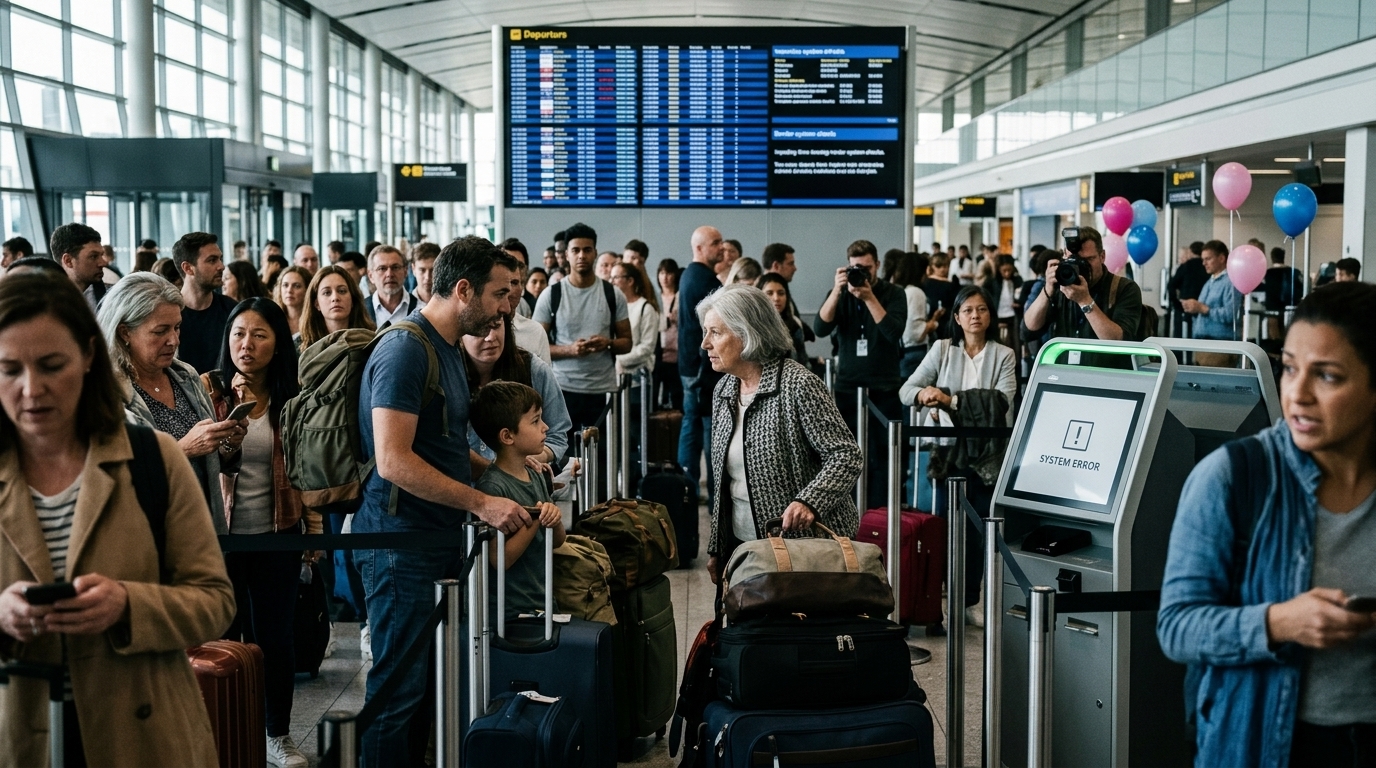
Europe stands on the precipice of one of the most significant shifts in border management since the signing of the Schengen Agreement. However, the imminent implementation of the Entry/Exit System (EES) is being met not with enthusiasm, but with palpable anxiety. Airlines, airport operators, and governments are warning of a potential "operational cardiac arrest" that could turn terminals into endless queues, jeopardizing travel during the peak of the 2026 summer season.
What is the EES and why is it causing a stir?
The EES is an automated IT system for registering travelers from non-EU countries (third-country nationals) each time they cross the external borders of the Schengen Area. It replaces traditional, manual passport stamping with a digital database that stores the traveler's name, type of travel document, biometric data (fingerprints and facial images), and the date and place of entry and exit.
While the goal is to enhance security and identify overstayers, the practical application of the system requires an infrastructure that many airports do not yet possess. The process of capturing biometric data for the first time is estimated to add two to three minutes per passenger. At hub airports like Athens International, Paris Charles de Gaulle, or Frankfurt, where thousands of passengers arrive simultaneously, these few minutes accumulate, creating a geometric increase in wait times.
The outcry from airlines
The International Air Transport Association (IATA) and Airports Council International (ACI Europe) have expressed serious reservations about the implementation timeline. In a joint letter to the European Commission, they are calling for a delay or a phased implementation of the system, pointing out that technical trials have not been completed to a satisfactory degree.
"This is not just a technical upgrade; it is a radical change in passenger flow. Without sufficient staff and space for biometric kiosks, the system will collapse under the weight of real-world traffic," says an executive from a major European airline.
The problem is exacerbated by the fact that many member states have not yet hired the necessary number of border guards to manage the new procedures. Paradoxically, automation seems to require more human supervision during the transition stage, as travelers will need guidance on using the new systems.
Impact on Tourism and the Economy
For countries like Greece, the stakes are enormous. As a nation heavily reliant on tourism from non-Schengen countries (such as the UK, the US, and Balkan nations), any dysfunction at airports or road border stations could damage the country's reputation as a destination. Queues at island airports, where space is often limited, represent the biggest headache for the Ministry of Tourism and local authorities.
Furthermore, there is a fear that delays will lead to missed connections, increasing costs for airlines due to compensation and rebooking. The Greek government, in collaboration with Fraport Greece and Athens International Airport, is trying to accelerate the configuration of spaces, but time is running out. The economic ripple effects of a disrupted travel season could be felt across the entire Mediterranean basin.
Conclusion: Security vs. Functionality
The EES is undoubtedly a step toward modernizing European borders, but the timing of its implementation remains the major sticking point. The European Commission insists that the system will bolster the EU's internal security, but industry stakeholders respond that security cannot be achieved at the expense of free movement and the economic stability of the transport sector. The solution may lie in a more flexible approach, with grace periods and a "soft launch" of the new rules, so that Schengen's digital future does not begin with global travel chaos.