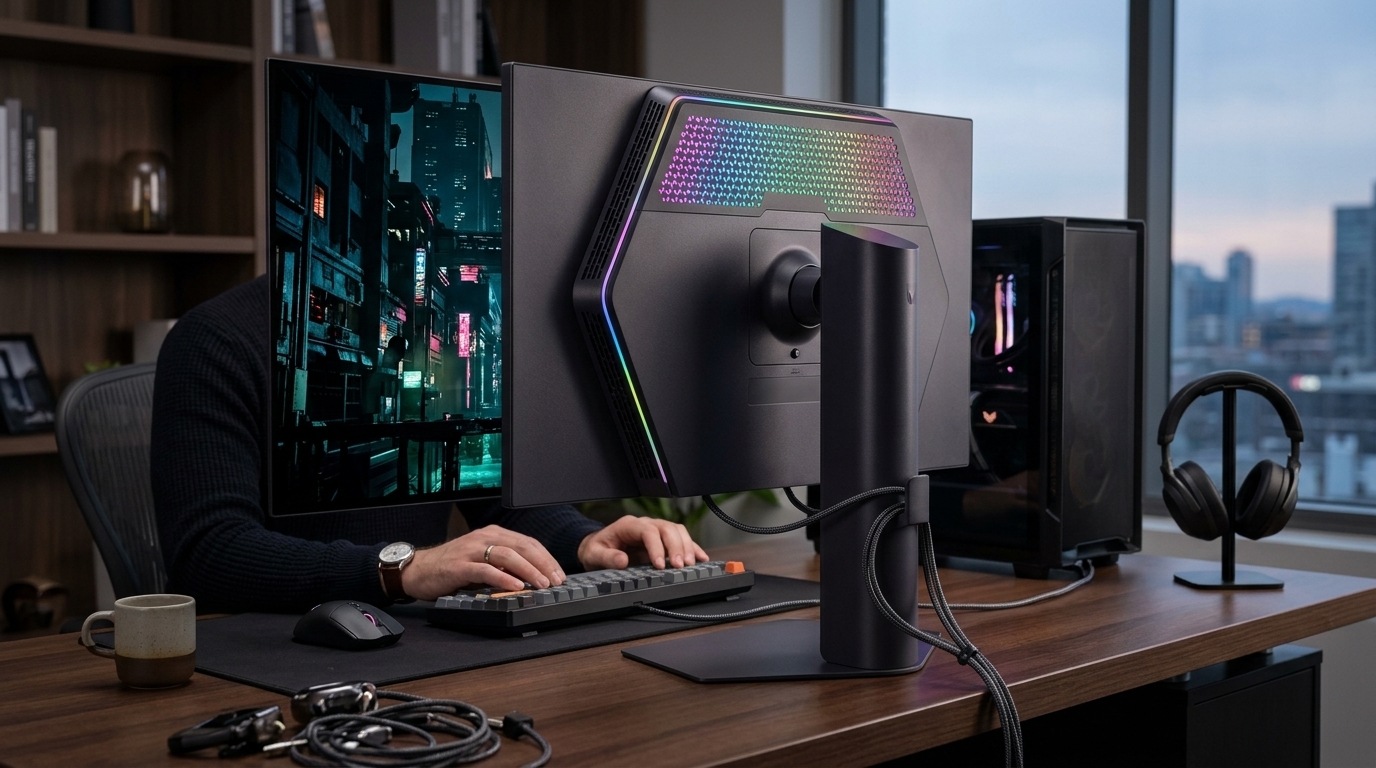
In the ever-shifting landscape of gaming hardware, OLED technology has long been the "holy grail" of image quality. However, two significant hurdles have historically hindered its universal adoption: the risk of "burn-in" (permanent image retention) and relatively low peak brightness compared to traditional LED-backlit panels. The arrival of Tandem OLED technology promised to solve these dilemmas, and LG’s recent price cut on the UltraGear 27GX700A-B marks a pivotal moment for the market in 2026.
The Technical Mastery of Tandem OLED
Tandem OLED is not merely an incremental improvement; it is a structural reimagining of how light is emitted. Instead of a single layer of organic light-emitting diodes, the panel stacks two layers on top of each other. This allows the display to achieve higher brightness levels with significantly less stress on each individual pixel. For the user, this translates into a screen that can hit 1000 nits in HDR content without compromising its longevity or accelerating degradation.
LG, having perfected this technology initially for the automotive industry and later for premium tablets like the M4 iPad Pro, is now bringing it to the desk of the enthusiast gamer. The UltraGear 27GX700A-B, featuring a 1440p resolution and a staggering 480Hz refresh rate, is a precision tool. The use of an RGB Tandem panel also improves text clarity, a traditional weak point for OLED monitors that utilize WOLED or QD-OLED subpixel arrangements which often suffer from fringing.
Market Strategy and Competition
The price drop below the psychological $500 barrier is no coincidence. As we move through the summer of 2026, competition from Samsung’s QD-OLED and emerging MicroLED solutions has intensified. LG aims to establish Tandem OLED as the new standard for the 27-inch category, which remains the most popular size among professional esports players and demanding hobbyists.
- Accessibility: This price reduction makes top-tier technology available to a broader audience that previously would have settled for high-end IPS panels.
- Durability: By leveraging the inherent longevity of the dual-stack OLED, LG addresses consumer skepticism regarding long-term reliability.
- Ecosystem Impact: This move forces competitors to re-evaluate their pricing structures, ultimately benefiting the end consumer.
Why 1440p Remains the "Sweet Spot"
Despite the industry push toward 4K, 1440p (QHD) resolution at 27 inches is widely considered the "sweet spot" for gaming. It provides the necessary pixel density for sharp imagery without demanding the astronomical computing power required to drive 4K at high frame rates, even with the latest GPU generations. Within the context of Tandem OLED, the experience becomes even more immersive, as perfect blacks meet a level of color vibrancy previously reserved for professional color-grading monitors.
"The shift to Tandem OLED isn't just about color gamuts. It's about the confidence that your investment will last more than two years without degradation," hardware analysts note.
In conclusion, LG’s decision to slash the price of the 27GX700A-B is a power move. It is not just a sale; it is a strategic positioning indicating that the future of displays is bright, durable, and finally, financially attainable. For gamers looking to upgrade, this development represents one of the most significant value propositions in recent memory, bridging the gap between niche luxury and mainstream performance.