In the digital age, attention is the most valuable currency. While social media platforms like X (formerly Twitter) and TikTok show us what is "viral" at any given moment, there is a deeper, more substantial form of collective attention that often goes unnoticed: our desire to understand the world. When a major event occurs—be it a geopolitical crisis, the passing of a celebrity, or a scientific breakthrough—humanity's first stop is not always a search for a quick news bite, but a search for context. And that context is almost always provided by Wikipedia.
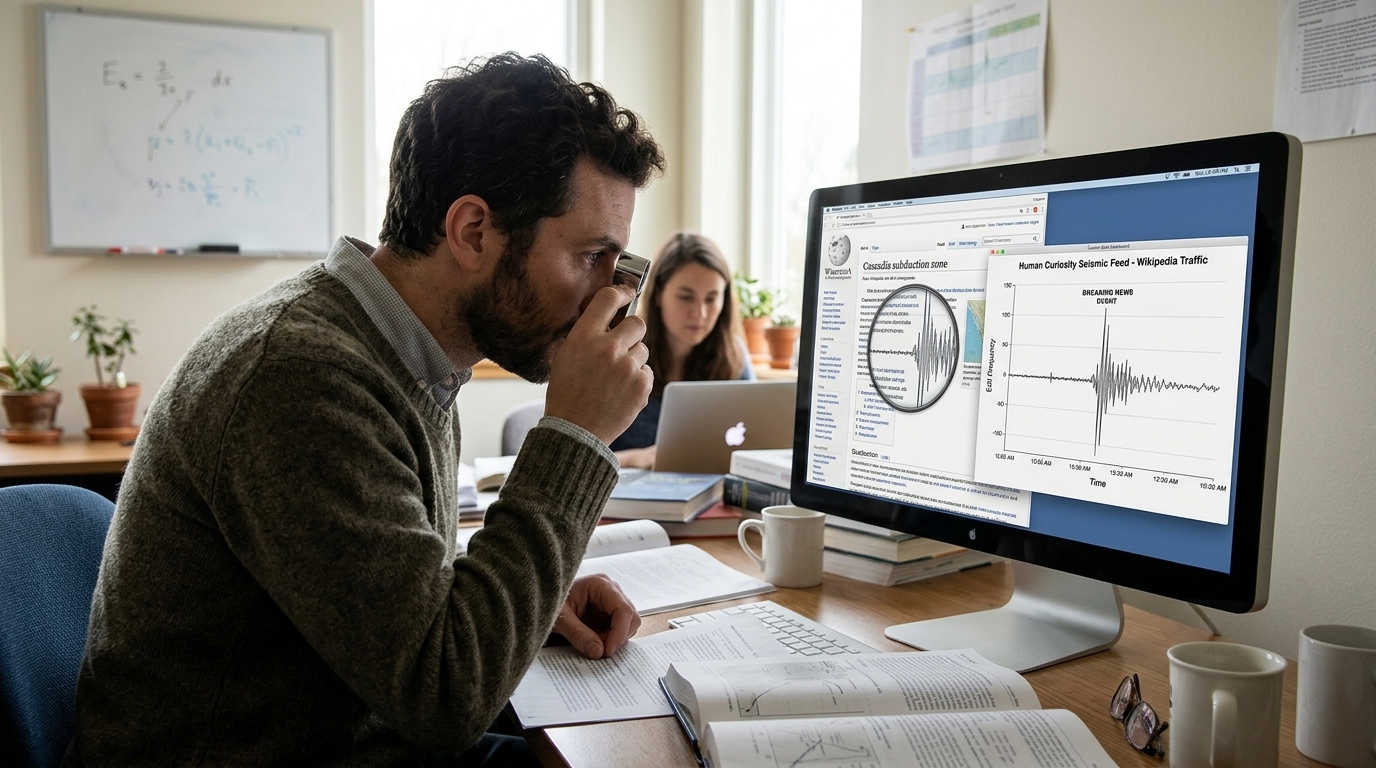
The Wikipedia Seismograph, a new free tool gaining traction among data analysts, journalists, and sociologists, promises to do exactly what its name suggests: record the "seismic shifts" of human curiosity. Instead of simply focusing on search volume, this tool analyzes abrupt spikes in article traffic, allowing us to see in real-time where the global community's interest is shifting.
The Technology Behind the Digital Seismograph
The operation of the Wikipedia Seismograph is based on open data from the Wikimedia Foundation. Wikipedia, as the world's largest encyclopedic resource, maintains public records of its page views (Pageviews API). However, this data in its raw form is difficult for the average user to interpret. The "Seismograph" acts as a visualization and statistical analysis layer.
The tool uses algorithms that identify deviations from the normal average traffic. For example, if the entry for "Nuclear Fusion" typically gets 5,000 views a day and suddenly hits 500,000, the seismograph "rings." What makes the tool unique is its ability to categorize these vibrations by language and geographic region, revealing how different cultures react to the same event. It is an X-ray of the global consciousness, captured in charts and heatmaps.
Why Wikipedia is the Most Honest Indicator
Many might wonder why we need such a tool when Google Trends exists. The answer lies in user psychology. On Google, we often search to buy, to navigate, or to find a quick answer. On Wikipedia, we enter to learn. A visit to a Wikipedia article implies a deeper engagement with the subject. When the Wikipedia Seismograph shows a rise in the entry for "Stoicism" or "Artificial Intelligence," we are not just seeing a trend, but a mass need for education.
Furthermore, Wikipedia is free from the social media algorithms that often "push" content to users. On Wikipedia, the user is the driver. Therefore, the trends recorded there are more organic and less influenced by paid advertisements or social media "outrage." It is, in a way, the purest form of democratic attention we have in the digital space.
Applications in Journalism and Market Research
For journalists, the Wikipedia Seismograph serves as an early warning system. Often, a sudden spike in an entry concerning an obscure part of the world precedes official news from major agencies, as locals or those directly interested seek information before the topic becomes a global trend.
- Sociological Analysis: Researchers can study how collective memory is activated. For instance, how the release of a period film triggers interest in historical figures.
- Political Strategy: Analysts can see which political issues truly concern citizens beyond the polls.
- Educational Trends: Universities can monitor which scientific fields are gaining public interest, adjusting their programs accordingly.
Ethics and Privacy
Despite its value, the existence of such tools raises questions about privacy, although the Wikimedia Foundation is extremely careful with user data protection. The "Seismograph" does not track individuals, but masses. However, the ability to know what the world is "thinking" at any given moment is a powerful force. In the wrong hands, this information could be used to manipulate public opinion, although Wikipedia's nature as an open platform acts as a safeguard.
In conclusion, the Wikipedia Seismograph is not just a "toy" for data enthusiasts. It is a mirror of our times. It reminds us that, despite the fragmentation of information, we remain a global community that, when faced with the unknown, turns to shared knowledge to find its answers. In a world moving at the speed of light, this digital seismograph helps us understand exactly where we stand.