History often moves in cycles, and for the French automotive giant Renault, that cycle appears to be returning to its military origins. In an announcement that has reverberated across the European business and political landscape, the Renault Group has formalized a partnership with defense technology leader Thales to establish a new entity dedicated to the design and production of unmanned aerial vehicles (UAVs). This move is more than just a business expansion; it is a strategic alignment with the 'war economy' (économie de guerre) doctrine championed by French President Emmanuel Macron.
The Strategic Convergence: Automotive Meets Defense
Renault's decision to re-enter the defense sector—a field it gradually exited after World War II—is rooted in the urgent need for mass-produced, low-cost, yet highly effective technological systems. Lessons from the Ukrainian front are unequivocal: modern warfare demands thousands of drones, and the traditional defense industry, accustomed to building a few ultra-expensive weapon systems, struggles to meet such scale.
This is where Renault's competitive advantage lies. Its expertise in supply chain management, mass assembly line production, and experience in the electric vehicle sector (batteries, electric motors) are precisely the components needed for industrial-scale drone production. Conversely, Thales provides the 'brain': guidance systems, cybersecurity, sensors, and the artificial intelligence that transform a simple flying vehicle into a sophisticated weapon or reconnaissance tool.
France's Answer to Bayraktar and Switchblade
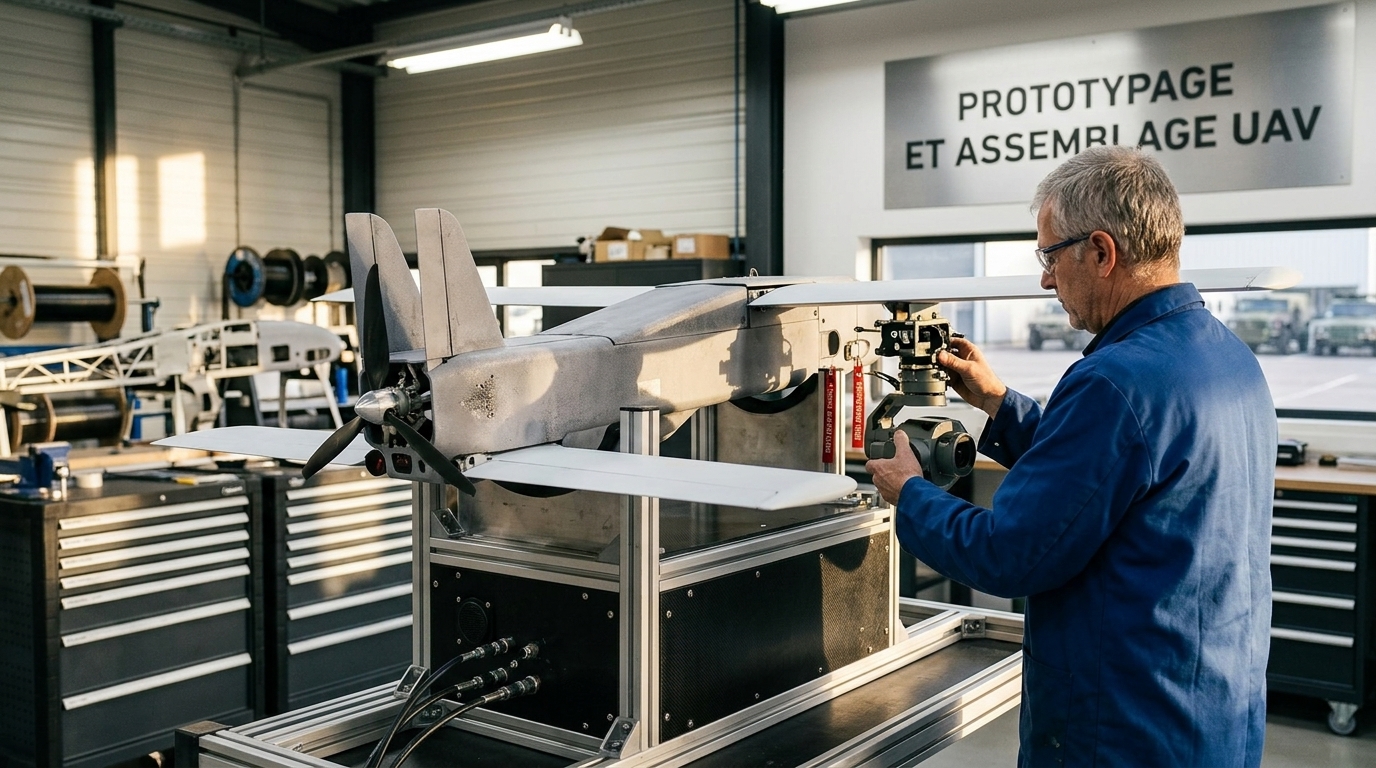
Europe has lagged in the drone race, watching Turkey's Bayraktar and the US's Switchblade dominate the market. The Renault-Thales collaboration aims to fill this vacuum. Reports suggest the new venture will focus on two primary systems: loitering munitions, commonly known as kamikaze drones, and tactical reconnaissance drones.
"It's not just about building a product; it's about building a sovereign supply chain that does not depend on external actors," a French government official stated.
The role of Artificial Intelligence will be central. These drones will be equipped with algorithms allowing them to operate in GPS-denied environments, identifying targets through real-time visual analysis. Renault, through its software division Ampere, already employs thousands of engineers working on similar technologies for autonomous driving, which can be readily adapted for military applications.
Economic and Geopolitical Implications
For Renault, this move represents a savvy revenue diversification strategy. While the electric vehicle market faces intense pressure from Chinese competition, European defense spending is projected to remain at historic highs for the next decade. Participating in state-funded armament programs ensures steady cash flows and access to government subsidies for research and development.
Geopolitically, France is cementing its position as a leader in European defense. Macron has long pushed for EU 'strategic autonomy,' and creating domestic solutions for critical technologies is the key. If Renault can produce drones at the cost of a passenger car but with the precision of a missile, it will fundamentally change the rules of the defense export game.
Challenges and Ethical Dilemmas
Despite the potential, the path is not without obstacles. Converting a civilian industry into a defense-oriented one carries risks for the company's brand image. Human rights organizations are already raising concerns about the 'democratization' of lethal weapons through mass production. Furthermore, merging the culture of an automaker, which focuses on speed and cost-efficiency, with that of a defense contractor, which prioritizes absolute reliability and security, will require careful management.
In conclusion, the Renault-Thales partnership marks the end of an era where civilian and military industries operated in silos. In the 21st century, technology is dual-use, and France is betting that the future of defense lies in the assembly lines of its car factories.