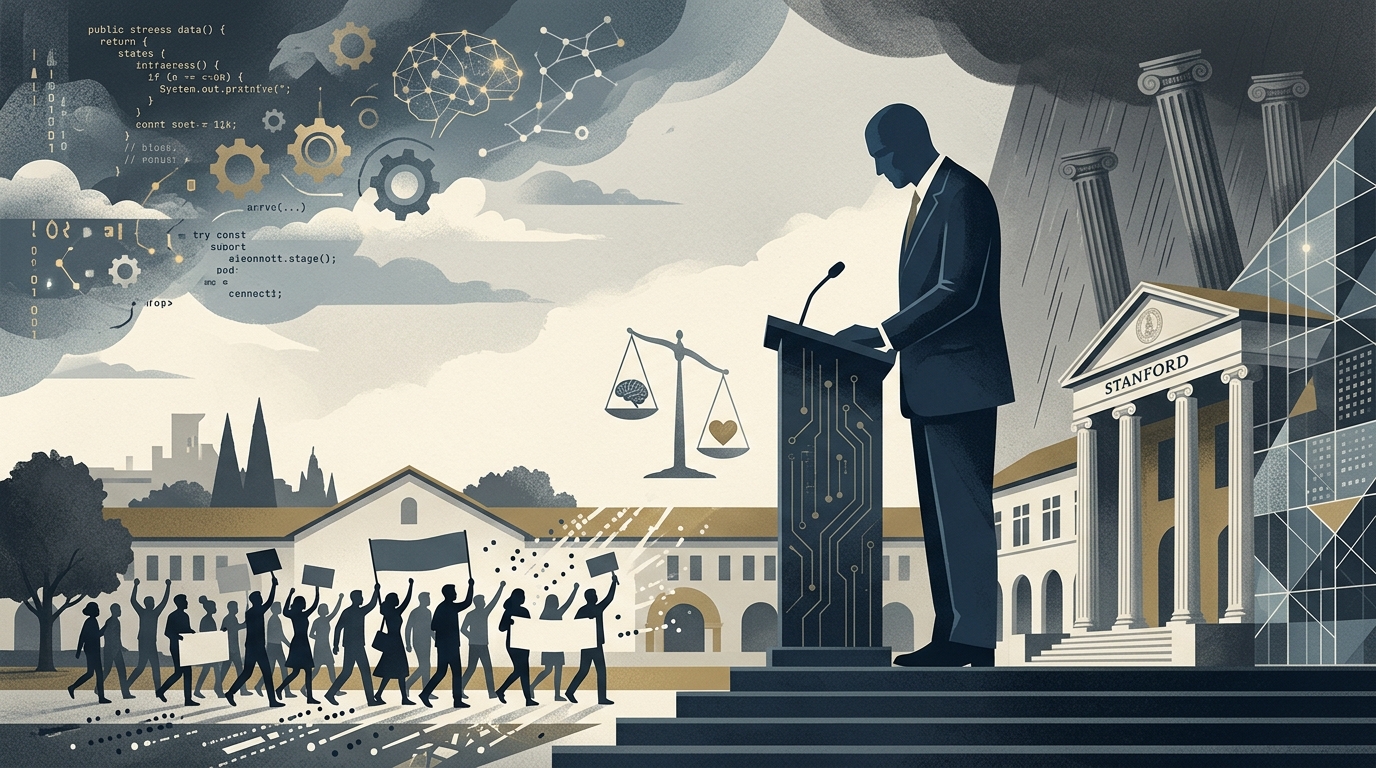
The Stanford University commencement ceremony, traditionally a celebration of academic excellence and a gateway to Silicon Valley, was transformed this year into a stage for intense political and ethical confrontation. As Sundar Pichai, CEO of Google and Alphabet, took the podium to deliver the keynote address, hundreds of students rose in silence and exited the stadium. This move was not a mere act of youthful defiance, but a resounding condemnation of the direction taken by one of the world's most powerful organizations.
The incident highlights the widening chasm between the leadership of Big Tech and the new generation of scientists destined to staff these "fortresses" of innovation. Protesting students focused their criticism on the controversial "Project Nimbus," a $1.2 billion contract shared by Google and Amazon with the Israeli government and military. For many at Stanford, Google's involvement in such projects represents a betrayal of the company's long-standing, iconic mantra: "Don't be evil."
Project Nimbus and the Militarization of Technology
The root of the anger lies in Google's increasing involvement in defense and military programs. Project Nimbus provides cloud computing and artificial intelligence services that critics argue can be used for surveillance and the suppression of populations. Despite Google's assurances that its services are intended for "civilian" needs such as healthcare and education, employees and activists contend that the lack of transparency makes it impossible to monitor the end-use of AI tools.
"We cannot celebrate our graduation while listening to a man who leads the financing of technologies used in conflicts," said one of the protest organizers.
The Stanford protest is not an isolated event. In recent months, Google has faced internal turmoil, firing employees who participated in sit-in protests at the company's offices. The management's stance, opting for the suppression of internal voices rather than dialogue, appears to have ignited a new wave of activism on campuses, where AI ethics is now a core subject rather than a footnote.
Silicon Valley's Identity Crisis
For decades, Silicon Valley projected itself as a utopian space where technology would solve humanity's problems. Sundar Pichai, with his mild-mannered rhetoric and emphasis on democratizing information, was the ideal face of this promise. However, the reality of geopolitical power and the need for continuous profitability have pushed Google into a close alliance with the state and military establishments of the U.S. and its allies.
- Growing reliance on government contracts to sustain growth.
- Pressure from shareholders for AI dominance, regardless of the moral cost.
- A shift away from the culture of open internal debate that characterized the company's early years.
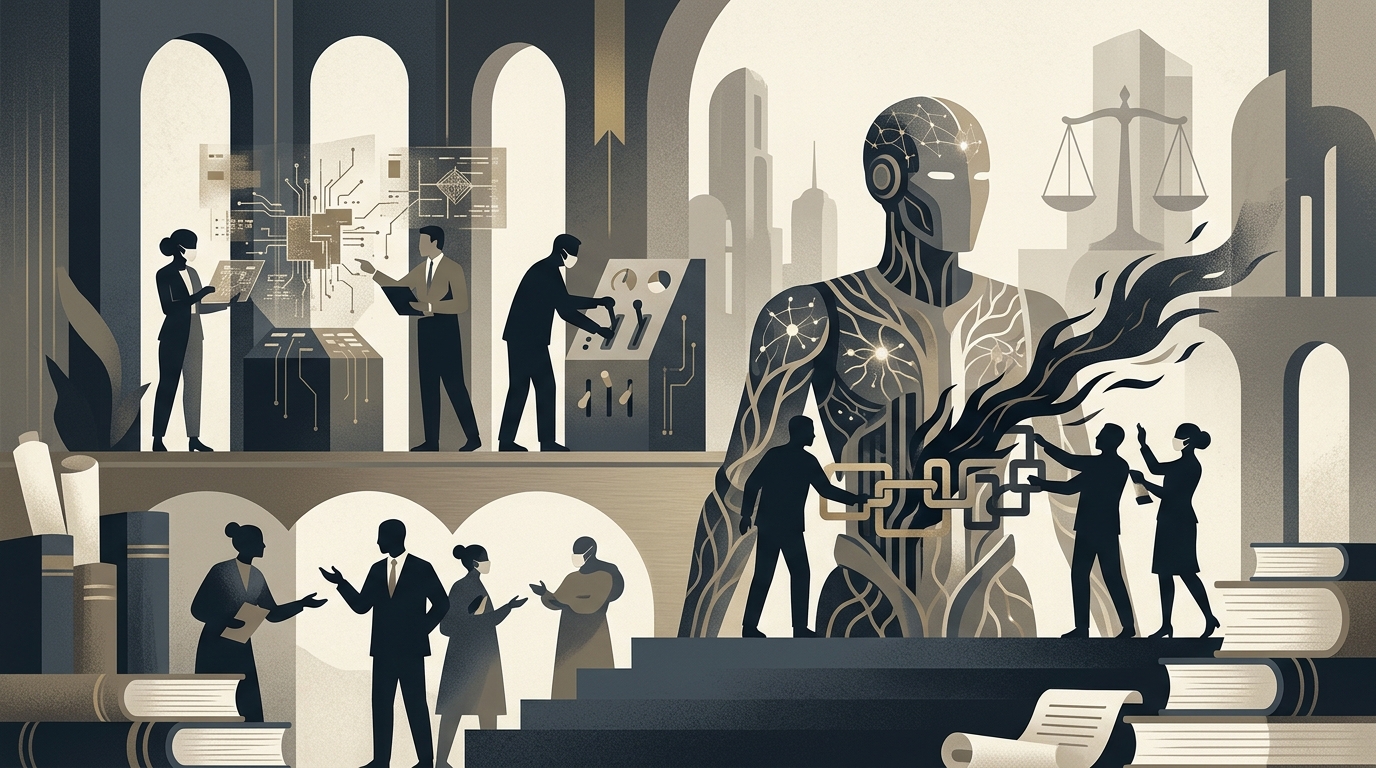
This shift has serious implications for talent acquisition. Stanford has historically been Google's primary feeder of engineers. But when the brightest graduates refuse to even listen to the CEO, the company faces an existential threat that cannot be solved with algorithms. The loss of moral high ground could lead to a "brain drain" toward smaller, more specialized firms that place ethics at the heart of their operations.
Pichai's Silence and the Path Ahead
During his speech, Pichai chose not to directly address the protest, focusing instead on the potential of AI to transform the world for the better. This "head-in-the-sand" approach may have been the safest move from a PR perspective, but it left the impression of a leadership disconnected from social reality and the concerns of the youth. Artificial Intelligence is no longer a theoretical tool; it is a force reshaping battlefields and social structures.
The message from Stanford students is clear: technological progress cannot be decoupled from human responsibility. As Google and its competitors enter a new era of military partnerships, they must decide whether they will remain "information companies" or transform into "defense contractors." The student walkout was a warning that the future of technology does not belong to those who ignore the consequences of their creations.