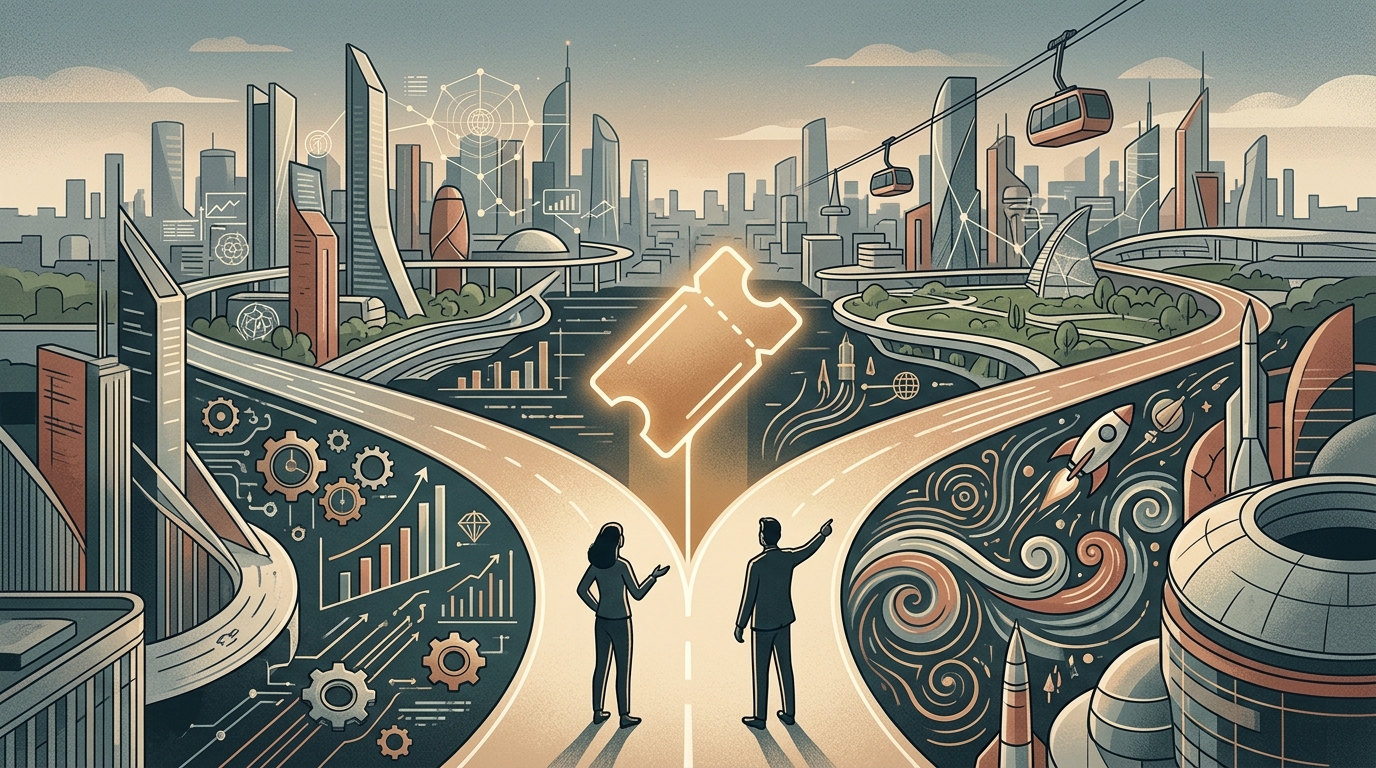
In the breakneck world of artificial intelligence, there is a critical distinction that often escapes Silicon Valley enthusiasts: the difference between AI that “just works” today and AI that lasts at scale across billions of transactions. Expedia, a titan of the travel industry, stands at the forefront of this journey, having processed billions of predictions long before “Generative AI” became a household term. Their conclusion is stark: velocity without discipline is a liability, not an asset.
The Velocity Trap and the Need for Strategic Discipline
Many companies today are rushing to integrate AI solutions, optimizing for immediate wins and flashy demos. However, Expedia’s experience suggests that this approach often leads to “technical debt” that becomes impossible to repay. “Velocity without discipline,” as they describe it, creates brittle, disconnected systems. For Expedia, the challenge was never just building a model to predict a flight price; it was building an architecture that could sustain billions of such predictions daily while maintaining surgical precision and reliability.
Strategic discipline requires organizations to ask the hard questions upfront: Is this system scalable? How does data flow between disparate departments? Expedia learned that data silos are the death of effective AI. When information about flights, hotels, and car rentals doesn’t “talk,” the user experience remains fragmented, regardless of how sophisticated the underlying algorithm might be.
From Predictive AI to the Era of AI Agents
The transition from traditional Predictive AI to autonomous AI Agents represents the next great frontier. AI Agents aren’t limited to providing answers; they have the agency to execute actions—like booking a flight or re-routing a traveler during a connection delay. However, to reach this level of orchestration, a company must first master the art of data management at an astronomical scale.
- Data Integration: The ability to connect heterogeneous data sources in real-time.
- Contextualization: Understanding the intent behind a trip, not just the destination.
- Supervised Autonomy: Building systems that act independently but remain within strict guardrails.
According to Expedia’s leadership, the success of AI Agents hinges on “trust.” If an agent makes a mistake in a booking, the reputational damage is far greater than a simple search error. This necessitates a new paradigm in model testing and validation, where discipline must trump the raw excitement for new tech capabilities.
Architecture as a Competitive Moat
In today’s environment, where open-source models are becoming increasingly powerful, the true competitive advantage lies not in the model itself, but in the infrastructure surrounding it. Expedia spent years building a platform that allows for rapid experimentation without compromising system stability. This “operational OS” for AI is what allows the company to integrate the latest Generative AI breakthroughs in a way that is sustainable, scalable, and ultimately profitable.
“AI is not a destination; it’s a way of traveling. If your engine isn’t tuned, it doesn’t matter how hard you hit the accelerator,” industry experts suggest.
Expedia’s analysis highlights that “orchestration” is the keyword for 2026. It’s not enough to have ten different AI tools; you must have a way to make them collaborate like a finely tuned orchestra. This implies shared protocols, unified data governance, and a corporate culture that values accuracy as much as it values innovation.
Conclusions for the Future of Travel
As we move deeper into the age of AI Agents, the lesson from Expedia is invaluable for every sector: AI is not magic; it is engineering at scale. The winners will not necessarily be those who adopt the latest model from OpenAI or Google first, but those who have the discipline to build on solid foundations. For the traveler, this promises a future where technology isn’t just a search tool, but a true companion that anticipates needs before they are even articulated.