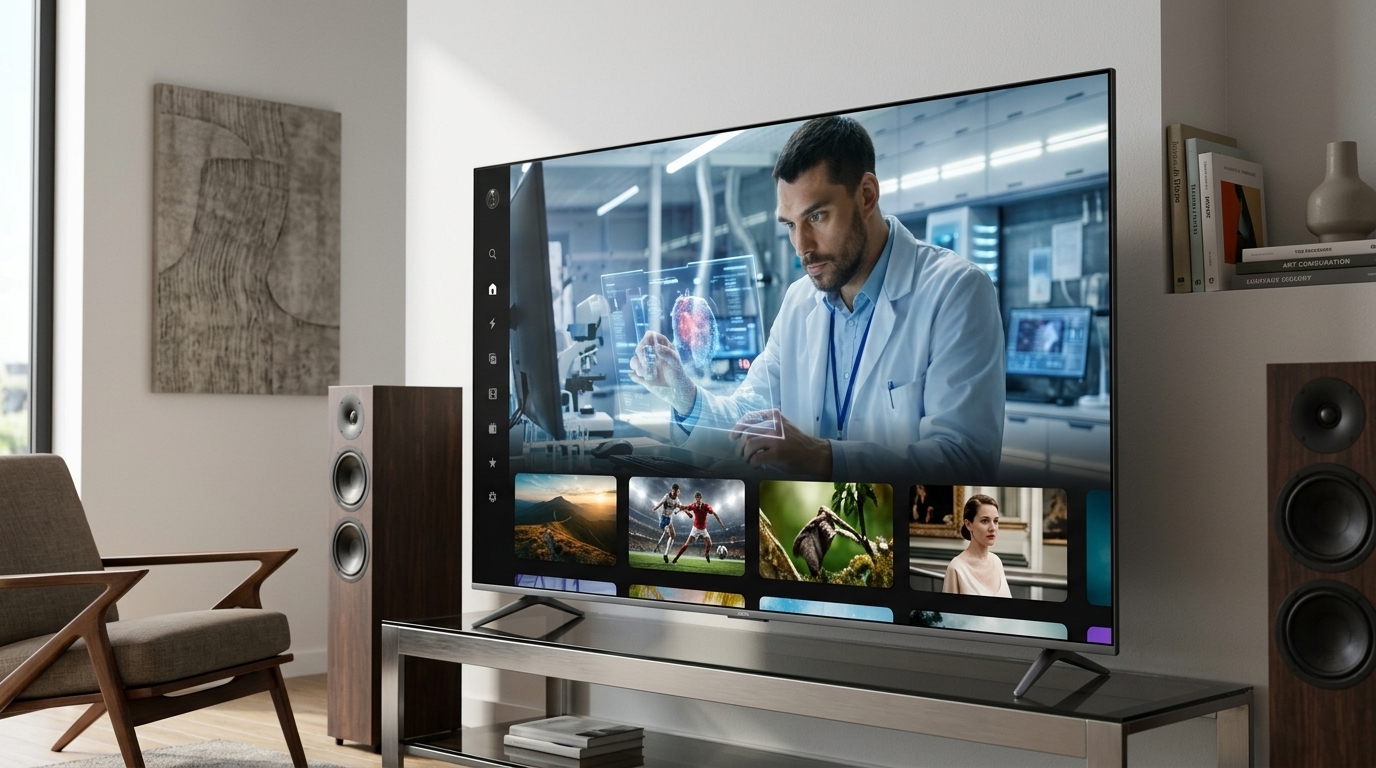
In an era of hyper-connectivity, where every household appliance—from the refrigerator to the toothbrush—requires a user account and Wi-Fi access, the search for a simple, high-quality display has become a Herculean task. Vizio, a company that once dominated the American market before falling into a period of stagnation, recently returned with a proposition that caused a stir, not for its smart features, but for the exact opposite. The company's new 65-inch Mini LED Quantum TV, released under the Walmart umbrella following the 2024 acquisition, is proving to be the ideal 'dumb' TV for those weary of the digital ecosystem of modern Smart TVs.
The Paradox of Hardware and Software
The primary argument for purchasing this specific device is the price-to-performance ratio. At a cost of approximately $398, Vizio offers Mini LED and Quantum Dot technology—features typically found in models twice or thrice the price. The brightness is impressive, the blacks are deep thanks to local dimming zones, and the color accuracy exceeds all expectations for the 'budget' category.
However, the user experience shifts dramatically once the user encounters the SmartCast software. Following the Walmart acquisition, the company's strategy appears to have shifted from selling hardware to data mining and ad serving. The interface is sluggish, cluttered with promoted content, and requires constant acceptance of privacy terms that would make even a lawyer shudder. This creates a strange phenomenon: the TV is 'too good for the money' in hardware, but 'too intrusive' in software.
The Walmart Strategy and the Data Ecosystem
Why did Walmart buy Vizio? The answer lies not in TV sales, but in the Walmart Connect advertising network. Vizio possesses one of the most sophisticated Automatic Content Recognition (ACR) systems, which tracks what the user is watching in real-time, even if they are using an external source like a Blu-ray player or a gaming console. This information is gold for a retailer looking to link advertising campaigns with consumer purchasing habits.
This approach has led to a degradation of the end-user experience. Software updates often add more advertisements rather than features, and the requirement for an internet connection becomes increasingly pushy. Herein lies the irony: the best upgrade one can make to this TV is to never connect it to Wi-Fi. By using it as a 'dumb' monitor in combination with an Apple TV or a Chromecast, the user enjoys the excellent panel without Walmart's interference.
The Return to Simplicity
Vizio's success with this model, even if unintentional, highlights a massive gap in the market. There is a significant segment of consumers looking for high image quality without the 'tax' of smart features. Manufacturers have stopped producing top-tier 'dumb' TVs because the profit now lies in data monetization rather than the device's profit margin.
- Mini LED technology allows for excellent light control, reducing blooming effects.
- The Quantum Dot filter provides vibrant colors that rival more expensive OLEDs in bright rooms.
- Disconnecting from the internet protects privacy and accelerates device startup.
- Using external media streamers remains the only solution for a clean user experience.
In conclusion, the Vizio Mini LED Quantum is a 'gift' for the informed consumer. It is a reminder that in the age of digital surveillance, the greatest freedom we have is the choice to remain offline. If you are looking for a screen that will respect your living room and showcase your films without treating you as a product, the solution is to buy this TV and throw away the ethernet cable.