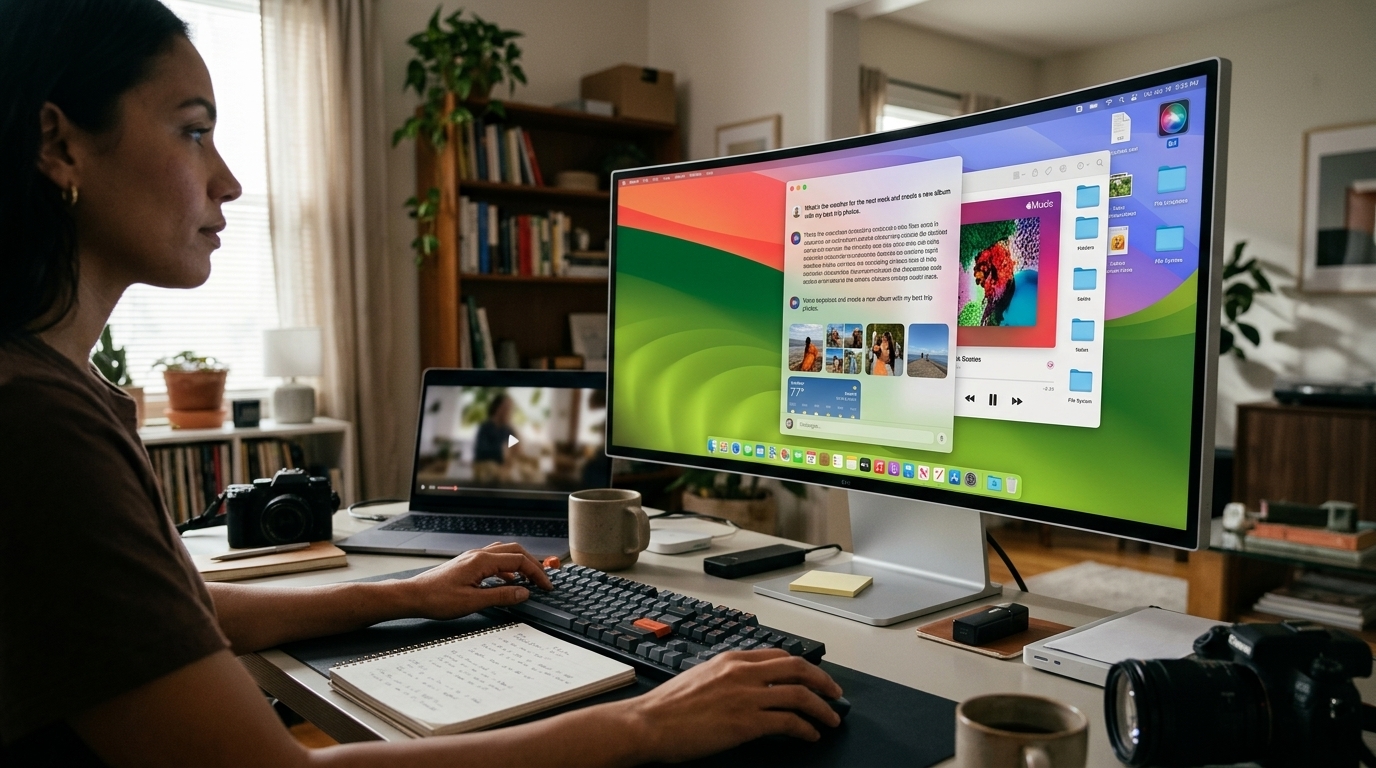
By June 2026, the promise of a truly intelligent Siri finally seems to be coming to fruition, but it comes with a price few had predicted: the fragmentation of the digital world. In a move that would once have been considered unthinkable, Apple has opened the gates of its walled garden to welcome Google’s Gemini into the very heart of the iPhone. Yet, as users in the United States enjoy a Siri that can schedule appointments, compose complex documents, and understand conversational context with startling precision, millions of others in Europe and Asia find themselves facing a "locked" version of the technology.
The Alliance of Giants: Why Google?
Apple’s decision to partner with Google, following its initial deal with OpenAI, underscores a critical realization: no single player, regardless of their size, can dominate the Large Language Model (LLM) landscape alone. Siri now functions as an "intelligent orchestrator." When a query exceeds the capabilities of on-device processing, Siri asks the user for permission to consult Google Gemini. This hybrid approach allows Apple to maintain its brand identity as a guardian of privacy while simultaneously offering the raw computational power that only Google’s infrastructure can provide.
This integration is more than just a technical upgrade; it is a strategic survival move. In a world where Generative AI defines the value of hardware, Apple could not afford to let the iPhone fall behind Android devices that already integrate Gemini at the OS level. This partnership transforms competition into a peculiar form of "cohabitation," where Apple’s hardware and Google’s software become an inseparable unit for the end-user.
The AI Iron Curtain: EU and China
Despite the technological triumphalism, the reality for the global user is starkly different. Due to the stringent regulations of the Digital Markets Act (DMA) in the European Union and requirements for local data storage and censorship in China, Apple has chosen to delay or drastically limit the rollout of its most advanced Siri features in these markets. The result is a digital exclusion reminiscent of the Cold War era.
In Europe, Apple expresses concerns that the EU’s interoperability requirements could compromise the security of Private Cloud Compute (PCC), the system it uses to process AI data in the cloud via end-to-end encryption. On the other hand, China demands that AI models be state-approved, making the use of Gemini or ChatGPT virtually impossible. There, Apple is forced to seek local partners like Baidu, creating a Siri that might speak the same language but possesses an entirely different "brain" and set of restrictions.
Privacy as the New Frontier
Apple maintains that Siri with Google Gemini is more secure than any other implementation. Through Private Cloud Compute, user requests are anonymized, and IP addresses are masked. Google does not "see" who is asking the question, nor can it use the data to train its models or for advertising purposes. However, this architecture is immensely complex and serves as the primary point of friction with regulators. EU authorities question: if Apple allows Google in, why not allow smaller players as well? Apple’s defense is security, but for Brussels, this often looks like a pretext for maintaining an ecosystem monopoly.
Conclusion: The Risk of a Fragmented Future
As we move into the latter half of 2026, the vision of a unified, global internet is crumbling. Artificial Intelligence, instead of bridging gaps, is becoming the tool that deepens them. A user in San Francisco has a Siri that acts as a personal assistant, researcher, and creator. A user in Paris or Athens has a Siri that remains, for the most part, a sophisticated kitchen timer and weather reporter. This inequality isn't just about convenience; it’s about productivity, access to information, and ultimately, the economic competitiveness of entire continents. Siri with "Google inside" is a technological marvel, but for now, it is a marvel reserved for the few.