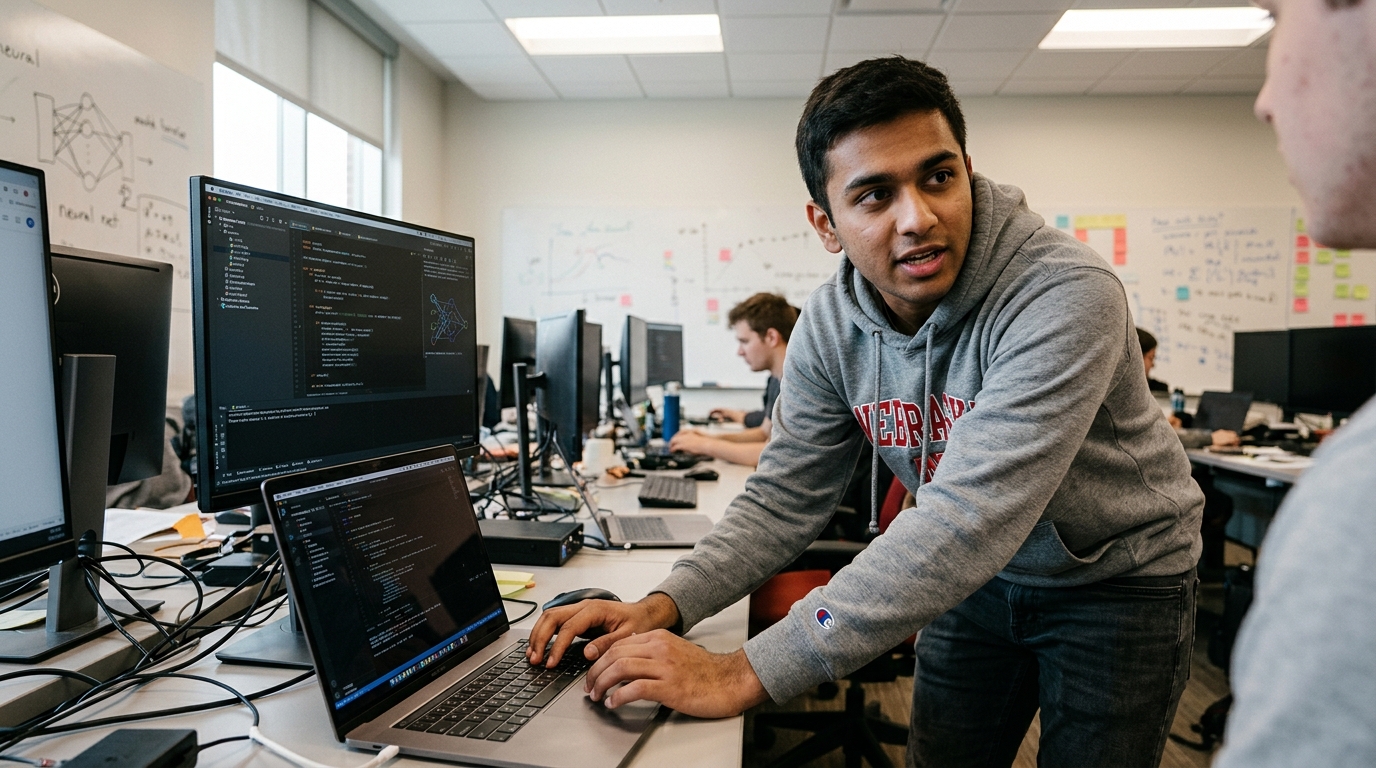
On the threshold of his academic completion and professional debut, Shivang Pandya, a student at the University of Nebraska-Lincoln (UNL), is not merely preparing for his graduation ceremony. He is preparing to redefine how individuals with visual impairments interact with the physical world. His venture, named Deep-Sighted, epitomizes a burgeoning trend in the tech industry: the shift from pure computer science theory to immediate, socially beneficial applications of Artificial Intelligence.
The Genesis of Deep-Sighted: Technology with Purpose
Deep-Sighted is not just another app searching for a problem to solve. It was born from a genuine need for inclusivity. Utilizing advanced computer vision algorithms, Pandya’s platform aims to serve as "digital eyes" for those in need. This technology can recognize objects, read text in real-time, and describe environments, converting visual data into actionable auditory information.
What sets Pandya’s endeavor apart is the speed and precision of processing. In a world where seconds matter—such as crossing a busy street or reading a prescription label—minimizing latency is the ultimate key. Pandya has managed to harness the power of neural networks in a way that response times are nearly instantaneous, offering users a sense of autonomy that previously seemed out of reach.
The Academic Greenhouse and the Raikes School
Pandya’s success did not occur in a vacuum. The University of Nebraska-Lincoln, specifically the Jeffrey S. Raikes School of Computer Science and Management, served as the ideal accelerator. The Raikes School is renowned for its hybrid approach, blending rigorous computer science education with essential business leadership skills. There, Pandya learned more than just how to write code; he learned how to build business models, seek funding, and navigate market dynamics.
According to UNL faculty, Pandya belongs to an elite group of students who view a degree not as a finish line, but as a launchpad. Support from the Nebraska Center for Entrepreneurship was also pivotal, providing the young innovator with the mentorship needed to transform an academic project into a viable startup. This synergy between academia and the market is the very model that many institutions worldwide strive to emulate to foster innovation and retain talent.
Challenges and the Future of Accessibility
Despite the initial excitement, the path for Deep-Sighted is not without hurdles. The assistive technology market is traditionally challenging, characterized by high barriers to entry and stringent regulatory requirements. Furthermore, competition from tech giants like Microsoft (with Seeing AI) and Google is formidable. However, Pandya is betting on niche specialization and user-centric adaptation.
The significant wager for the future lies in integrating his technology into wearable devices, such as smart glasses, so that users do not need to constantly hold a smartphone. As Pandya prepares to accept his diploma, Deep-Sighted stands as a testament that Artificial Intelligence, when guided by empathy, can become the most powerful tool for social justice in our era. His case serves as an inspiration for thousands of students globally: innovation does not wait for graduation; it begins the moment you decide to solve a problem.