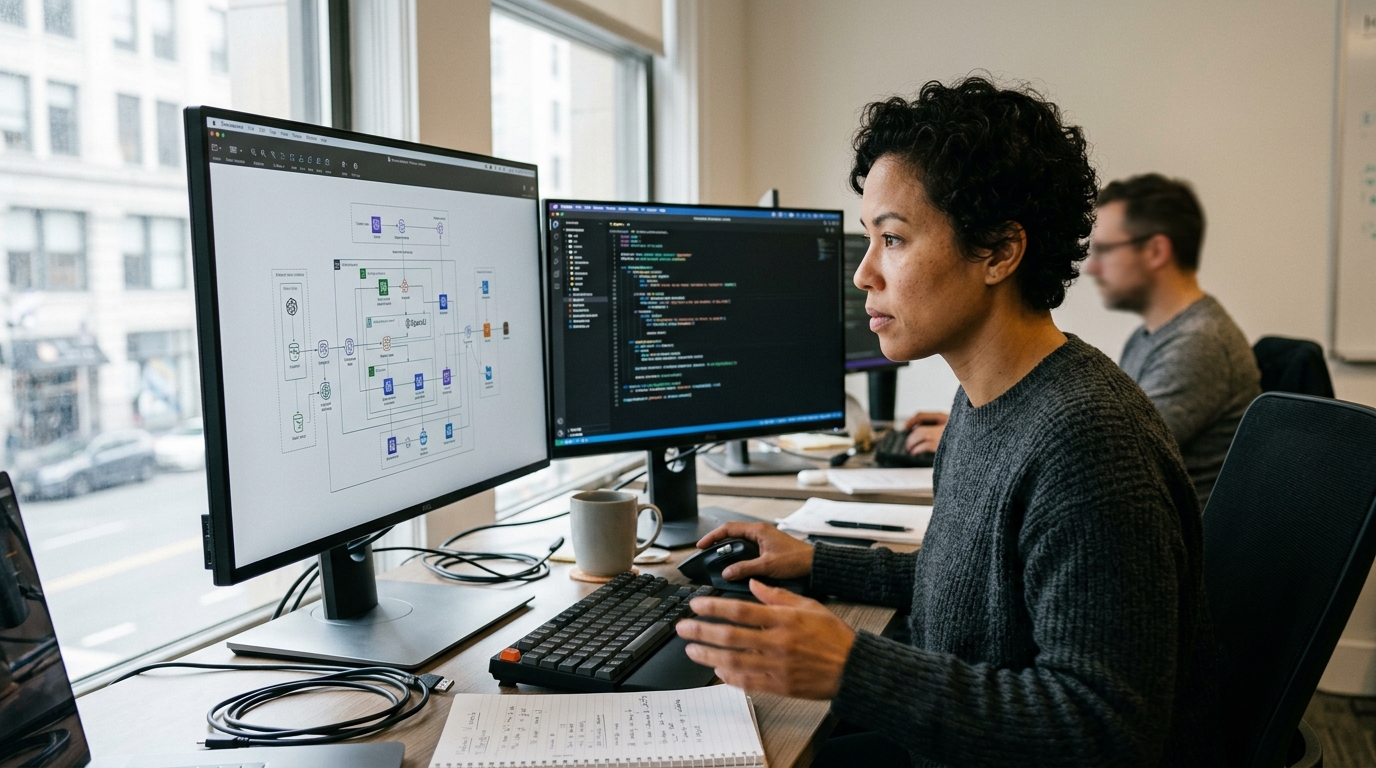
OpenAI’s announcement on April 21, 2026, marks a pivotal moment in the evolution of generative artificial intelligence. For years, image generation models like DALL-E and Midjourney have dazzled users with their ability to create surreal landscapes and digital art, yet they consistently failed in a domain critical to the professional world: accurate data representation. OpenAI’s latest model update promises to end the era of "gibberish" text within images and charts that defy logic.
The Shift from Creativity to Utility
Until now, using AI to generate slides or technical manuals was an exercise in frustration. Models struggled to maintain spatial consistency, often failing to correctly render chart axes or the logical flow of a diagram. The new update, integrated directly into the ChatGPT Plus and Enterprise ecosystems, utilizes a novel architecture that prioritizes "layout logic" over mere aesthetics.
According to early benchmarks, the model can transform complex datasets into line graphs, histograms, and pie charts with absolute text clarity. This is not just an improvement in resolution; it is a fundamental shift in how AI perceives information structure. For a data analyst or an engineer, the ability to describe a complex system and receive a visually accurate diagram in seconds is nothing short of revolutionary.
Strategic Implications for OpenAI
This move is calculated. As competition with Google’s Gemini and Anthropic’s Claude intensifies, OpenAI is seeking ways to make its technology indispensable to the corporate sector. Businesses don’t need AI that makes "pretty pictures"; they need tools that drive productivity. By bolstering its diagramming capabilities, OpenAI is moving directly into the territory of established tools like Canva, Lucidchart, and even Microsoft PowerPoint.
- Text Precision: The model virtually eliminates the typos and unintelligible characters that plagued previous iterations.
- Data Consistency: Charts accurately reflect the quantitative values provided in the prompt.
- Professional Standards: Users can choose between styles suitable for scientific journals or corporate boardrooms.
The Risks of "Polished Misinformation"
Despite the excitement, the analytical community remains cautious. The primary concern is the "hallucination of validity." When a chart looks professional and clean, users are more likely to trust it implicitly. However, if the AI model makes a subtle error in axis scaling or the correlation of variables, the result can be dangerously misleading. OpenAI emphasized that the tool should be treated as an assistant, not an autonomous source of truth.
"The challenge is no longer making AI paint; it’s making AI understand the gravity of accuracy in a scientific context," an executive stated during the launch event.
Furthermore, questions regarding intellectual property and training data persist. Many technical diagrams the model was trained on originate from academic sources and proprietary manuals. The AI’s ability to replicate similar structures raises questions about where inspiration ends and the replication of technical methodology begins.
The Future of White-Collar Work
The integration of these capabilities will radically alter daily life in offices worldwide. Creating a presentation that once took hours in specialized software can now be completed through a conversation with an AI. This lowers the barrier to entry for high-quality visual communication, allowing scientists and researchers without graphic design skills to communicate their work more effectively.
In the long run, OpenAI appears to be building an "intelligence operating system" where image, text, and code are not separate entities but different facets of the same information. The new model’s ability to "think" visually in terms of diagrams is the next major step toward Artificial General Intelligence (AGI) that can understand and reproduce human knowledge in all its forms.