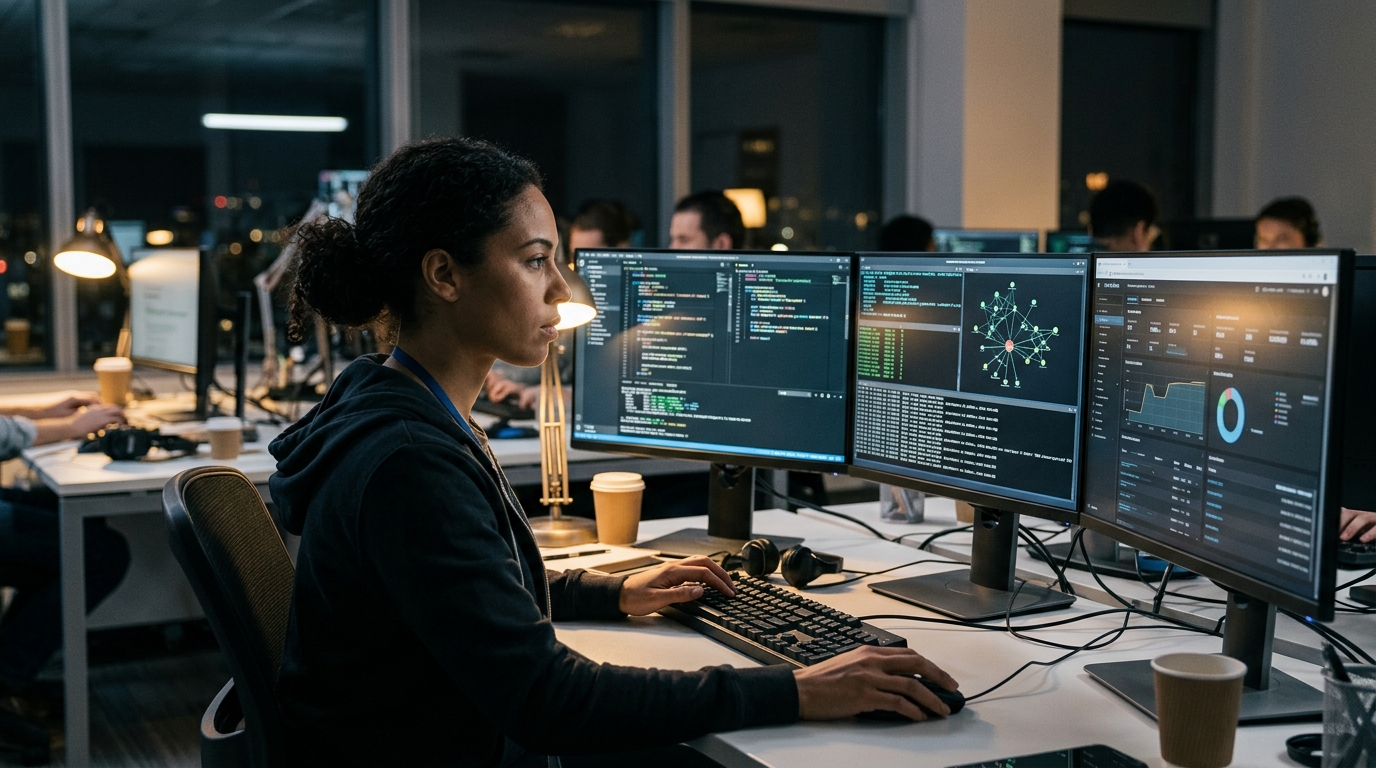
In a move poised to redefine the digital defense landscape, OpenAI has announced the launch of Daybreak, a specialized AI system focused on vulnerability detection and automated patch validation. While AI’s use in coding is well-documented, Daybreak represents a qualitative leap: it is the first large-scale model to integrate the ability to not only find flaws but also guarantee that the proposed fix will not destabilize the system.
The Revolution of Automated Patching
For decades, cybersecurity has been a grueling game of cat and mouse. Security researchers discovered vulnerabilities, developers wrote patches, and Quality Assurance (QA) teams struggled to ensure those patches didn't break the rest of the software. Daybreak promises to compress this process, which often takes weeks, into a matter of minutes. By employing advanced formal verification techniques alongside generative AI, the system analyzes source code, simulates attacks, and then generates code that 'hardens' the vulnerability.
The key to Daybreak’s potential success lies in 'Patch Validation.' One of the biggest headaches in cybersecurity is the 'regression'—when a security update fixes one problem but creates two new ones. Daybreak utilizes a sandboxed environment to execute the patch across thousands of virtual scenarios before presenting it to a human administrator, nearly eliminating the margin for error.
Offense vs. Defense: A Delicate Balance
The release of Daybreak brings the perennial dilemma of dual-use technology to the forefront. If an AI can find and fix a vulnerability, it can just as easily be used by malicious actors to exploit it before defenders can act. OpenAI, attempting to preempt criticism, stated that Daybreak will initially be available only to vetted organizations and government entities, with strict 'digital guardrails' in place to prevent its use in exploit generation.
However, history has shown that such restrictions are often temporary. The cybersecurity community remains divided. On one hand, there is hope that the 'defender's advantage' will finally increase, as companies will be able to shield their systems faster than hackers can strike. On the other, there is a fear that we are entering an era of 'automated code warfare,' where humans become mere observers in a conflict between opposing algorithms.
Economic and Strategic Implications
OpenAI’s entry into this sector poses a direct threat to traditional cybersecurity giants like CrowdStrike and Palo Alto Networks. Daybreak is not just a tool; it is a platform that can be integrated directly into CI/CD pipelines. This means security moves from the end of the production process to the beginning (shift-left security), drastically reducing the cost of application maintenance.
"Daybreak is not just a coding assistant; it is the internet's first digital immune system," an OpenAI executive stated during the launch.
At a geopolitical level, possessing such technology offers a significant strategic advantage. As state-sponsored cyberattacks rise, the ability to automatically harden critical infrastructure—from power grids to banking systems—becomes a matter of national security. The question remains: will OpenAI share this technology with the rest of the world, or will it remain a closed weapon in the hands of a few?
Conclusion: Toward a Self-Healing Internet
Daybreak marks the beginning of the end for traditional vulnerability management. While human oversight remains essential for strategic decision-making, the speed and precision of AI are now irreplaceable. The challenge for the future will not just be detecting risk, but ensuring that the very technology protecting us does not become the next point of failure. The vision of a 'self-healing' internet is closer than ever, but the path toward it requires caution, ethical commitment, and constant vigilance.