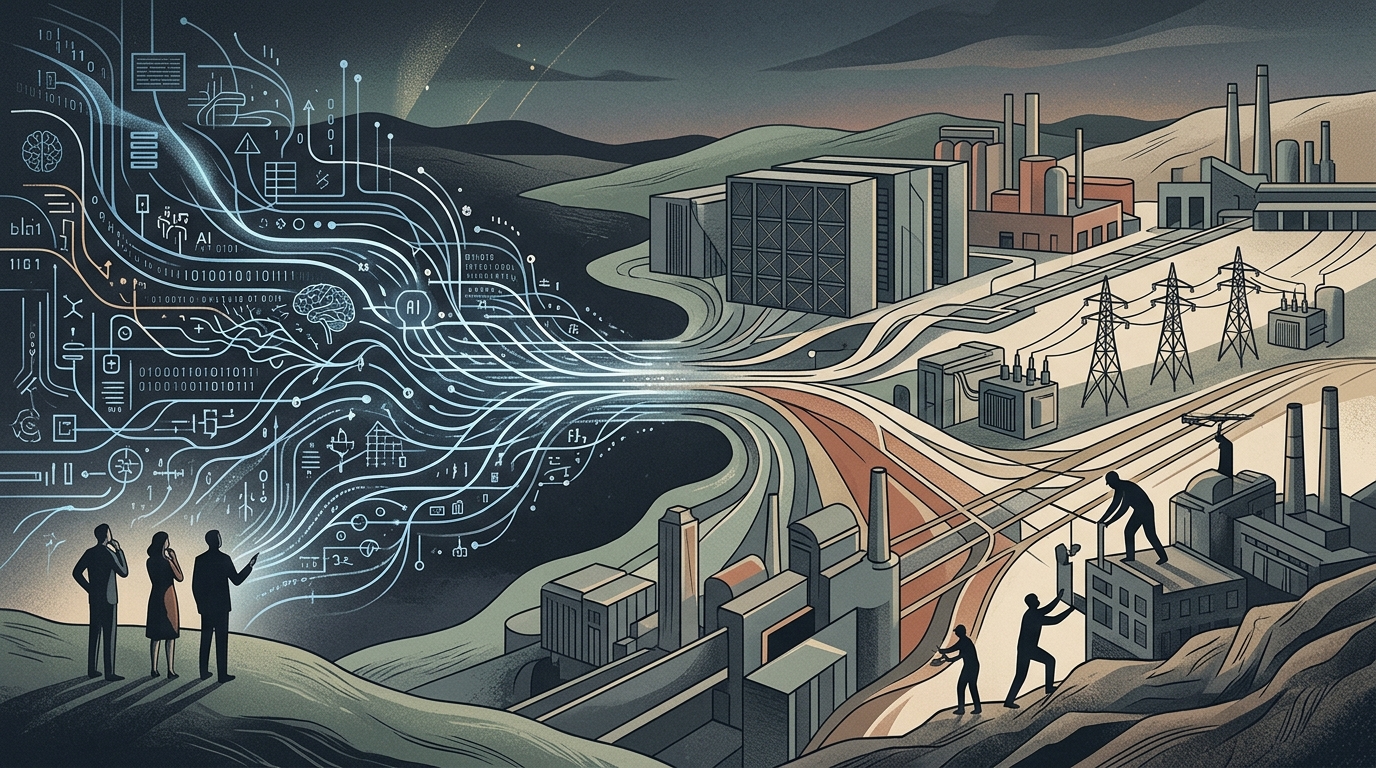
In July 2026, OpenAI made an announcement that many in the tech industry consider to be "ground zero" for the next phase of the digital economy. The evolution of Codex—the model that once powered GitHub Copilot—into a fully autonomous action system is not just a software upgrade. It is a statement of intent: artificial intelligence no longer wishes to be your assistant, but your partner, or in some cases, the replacement for your most time-consuming tasks.
The new tool, which the company presents as an "agentic" platform, has the ability to operate independently for hours. Unlike traditional chatbots that require constant prompting, the new Codex can take a general goal—such as "create a full inventory management app and connect it to our existing API"—and work autonomously, correcting its own mistakes and seeking solutions to code problems without human intervention.
From Conversation to Autonomous Execution
The key difference of this new version lies in the concept of "long-horizon planning." Until now, Large Language Models (LLMs) operated within a context of immediate response. The new Codex breaks this barrier. It can execute feedback loops, test the code it writes in virtual environments (sandboxes), and if it fails, analyze the error and try again. This process can last from a few minutes to several hours, freeing the user from the need to oversee every single step.
OpenAI argues that this approach drastically reduces the "cognitive load" on employees. However, the ability of a system to make decisions and perform actions in production environments raises serious questions about security and control. What happens if an AI agent makes a wrong decision that affects critical company data? OpenAI's response includes new layers of "AI governance," where the human remains at the top of the control pyramid, but the daily labor is performed by the model.
Impact on the Workforce and the New Economy
The introduction of tools that can work "for you and with you" inevitably brings the issue of job displacement to the fore. If an AI agent can do the work of a junior developer or a data analyst in a fraction of the time and cost, companies will be forced to redefine their roles. This is no longer about automating simple tasks, but about automating the very process of problem-solving.
Analysts point out that we are facing a "productivity explosion," but also a potential identity crisis for many professionals. The value of the worker is shifting from execution to strategic guidance and ethical oversight. In software development, for example, the programmer's role is transforming into that of a "systems architect" overseeing an army of digital Codex agents.
Challenges and the Future of Human-Machine Collaboration
Despite the excitement, technical challenges remain. The consumption of computational resources for tasks lasting hours is enormous, raising questions about the sustainability and cost of these services. Furthermore, "hallucination" remains a risk, albeit to a lesser extent due to self-correction mechanisms. OpenAI promises that the new Codex is more "aware" of its limits, asking for human help when it encounters deadlocks it cannot resolve on its own.
Ultimately, OpenAI's vision for 2026 is a world where artificial intelligence is not just a chat window in our browser, but an invisible, tireless workforce operating in the background. The success of this venture will be judged not only by its technical excellence but by how effectively it integrates into social and economic structures without causing irreparable cracks in the social contract of work.