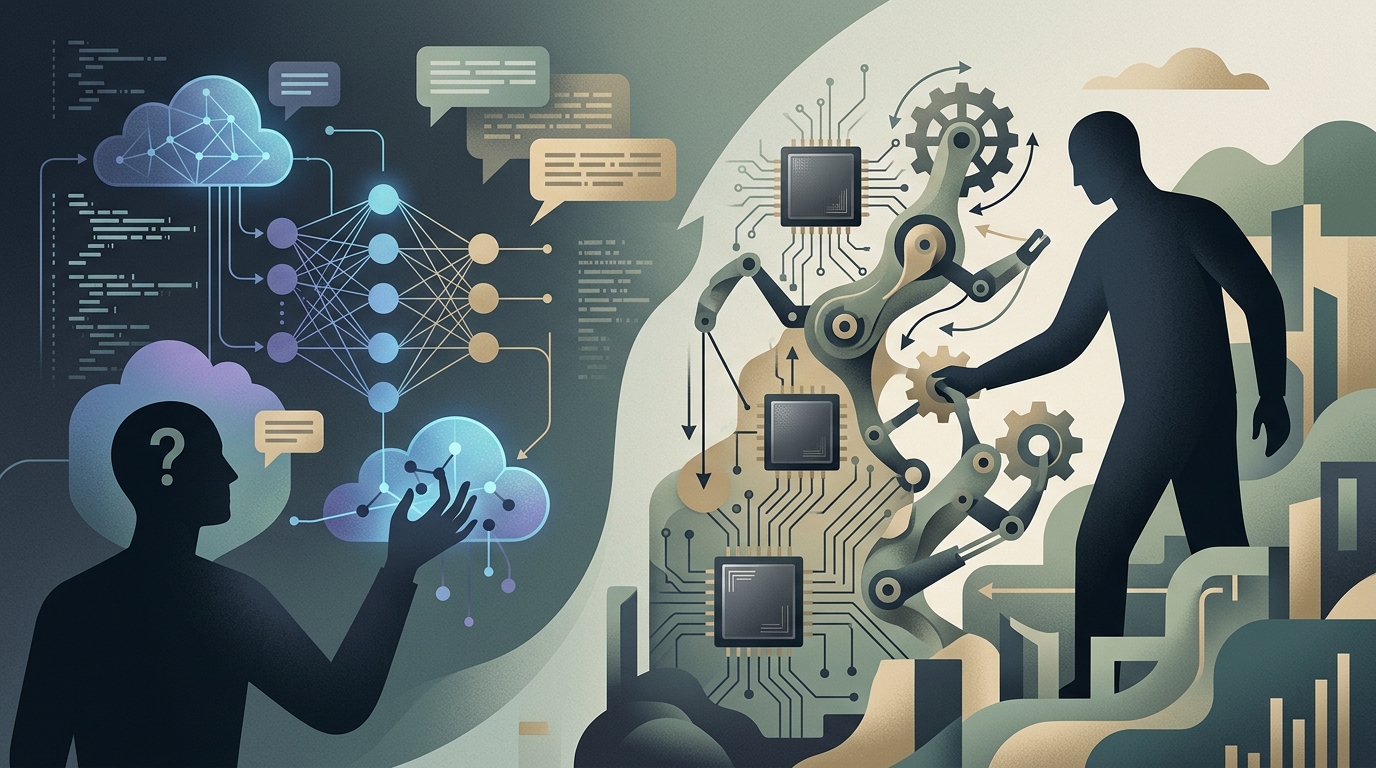
Buying a car has always been one of the most significant and emotionally charged financial decisions for any household. From showroom visits and test drives to grueling negotiations with salespeople, the process was traditionally human-centric. However, 2026 marks a pivotal turning point. According to recent analyses, a growing number of buyers are now choosing to delegate the burden of decision-making to sophisticated Artificial Intelligence systems, forever altering the automotive landscape.
Choice Paralysis and the Digital Consultant
Today's consumer faces a profound "choice paralysis." With the simultaneous existence of internal combustion engines (ICE), hybrids, and battery electric vehicles (EVs), the variables to consider have become overwhelming. AI steps in as an objective data analyst. New AI tools, integrated into platforms like Yahoo Autos and Edmunds, go beyond simple spec sheets. They utilize Large Language Models (LLMs) to understand a user’s lifestyle, daily commute patterns, local energy costs, and future resale value projections.
These systems act as personal concierges. Instead of a user searching for an "SUV under $40,000," the interaction is more of a conversation: "I need a vehicle for a family of four living in a city, who frequently travels to the mountains and wants to minimize their carbon footprint without being solely dependent on public chargers." The AI processes thousands of data points in seconds, suggesting models the buyer might never have considered.
The Retreat of the Traditional Salesperson
The rise of AI in the car market is a direct threat to the traditional dealership model. Salespeople, once the primary gatekeepers of information, now face buyers armed with deep data analytics. Trust has shifted from the person to the algorithm. This occurs because the algorithm is perceived—often mistakenly—as unbiased, unlike a salesperson motivated by commissions or the need to clear aging inventory.
- Objectivity: AI doesn't push a specific model just because there's an overstock on the lot.
- Personalization: The ability to analyze real-time financial data allows for finding the optimal financing or leasing solution.
- Efficiency: A process that once took weeks of research is now completed in minutes.
Dealerships are being forced to adapt, integrating AI tools into their own websites. It’s no longer just about selling a car; it’s about providing a technological experience that begins in the customer's living room.
Data vs. Emotion: What Is Being Lost?
Despite AI's efficiency, questions arise about what is lost in this automated process. Driving remains a sensory experience. The "feel" of the steering, the smell of the interior, the comfort of the seats—these are elements an algorithm cannot experience. However, the industry is responding by integrating Virtual Reality (VR). Buyers can now take "digital test drives," where AI simulates driving conditions based on their specific preferences.
Furthermore, there is the risk of "algorithmic bias." If an algorithm is trained on data that favors certain brands or vehicle types due to advertising partnerships, the consumer might be led toward a choice that serves the corporation rather than their own best interest. Data transparency remains the great challenge of this new era.
The Future: From Ownership to Automated Consumption
As we head toward 2030, using AI for car selection is just the beginning. The next step is the full automation of the purchase cycle, where a personal digital assistant might automatically renew a lease or trade in an old vehicle for a new one based on life changes. Car buying is transforming from a laborious event into a continuous, quiet background service.
In conclusion, Artificial Intelligence isn't just choosing a car; it's redefining our relationship with mobility. Consumers are willing to trade control for convenience, and automakers that fail to speak the "language of algorithms" risk being left behind in the rearview mirror of history.