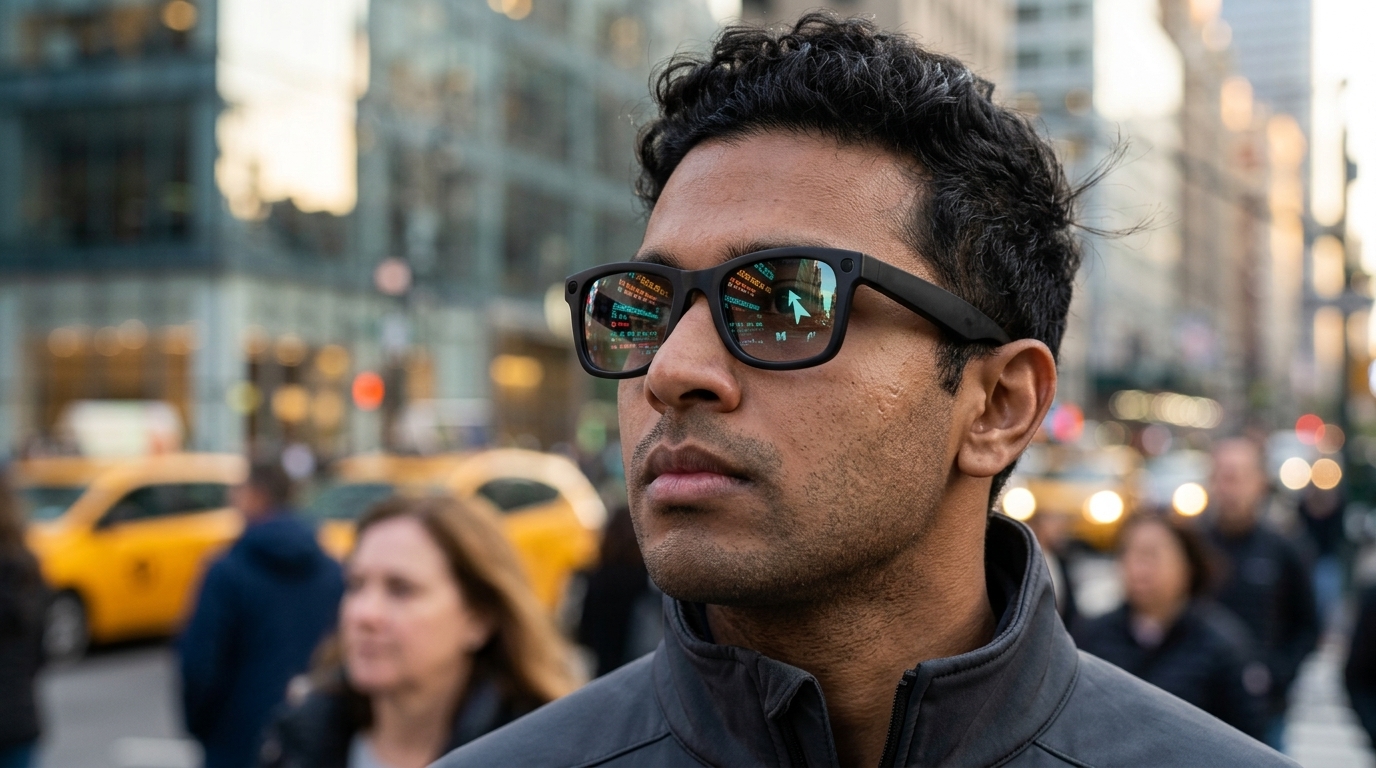
In the rapidly evolving landscape of wearable technology, Meta appears to be preparing for its next major leap—or, as some critics argue, its next significant intrusion into private life. According to recent reports from the Financial Times and The Verge, Mark Zuckerberg’s company is developing a new prototype of smart glasses internally referred to as 'super sensing.' The defining characteristic of these glasses, distinguishing them from the current Ray-Ban Meta models, is their operational mode: the device is designed to continuously record audio and snap photos every few seconds, providing Artificial Intelligence with a constant stream of data about what the user sees and hears.
The Vision of 'Ambient Awareness'
Meta’s vision is to create a digital assistant that doesn't wait for a command to activate but instead 'lives' alongside the user. Imagine looking at ingredients in your kitchen and having the AI suggest recipes without you needing to manually take a photo. Or encountering someone on the street and having the system, recognizing their face or voice, remind you where you met them. This 'multimodal' AI requires vast amounts of real-time data, and always-on smart glasses are the ideal conduit for this information.
The technical challenge is twofold. On one hand, there is the issue of processing power and battery life. Continuous photo capture and audio processing drain the tiny batteries that can fit within a glasses frame. On the other hand, there is the issue of heat dissipation. Meta is experimenting with new low-power processors, but the solution may lie in cloud computing, where data is instantaneously sent to the company’s servers for analysis.
The Ghost of Google Glass and the Social Contract
This is not the first time a company has attempted such a feat. A decade ago, Google Glass failed spectacularly, largely due to social disapproval. Users were labeled 'Glassholes' and barred from bars and cinemas. However, in 2026, the landscape is different. The TikTok generation is accustomed to continuous recording, and the success of current Ray-Ban Meta glasses suggests that the public is more receptive, provided the technology is 'invisible' and stylish.
However, 'always-on recording' crosses a critical threshold. Until now, recording required a conscious action—pressing a button or issuing a voice command. With these new glasses, recording becomes the default state. This raises massive ethical questions regarding the rights of third parties. What happens to people who fall within the user's field of vision without knowing it? How will EU regulators, such as those overseeing GDPR, react to a device that turns every citizen into a mobile surveillance camera?
Strategic Stakes and Ecosystem Control
For Zuckerberg, the stakes are existential. Meta lost the smartphone operating system battle to Apple and Google. With smart glasses, it aims to create the next great computing platform—spatial computing—where it controls the hardware, the software, and, most importantly, the data. If Meta succeeds in becoming the 'eyes' and 'ears' of millions of users, it will possess the most valuable dataset in human history: the daily first-person experience itself.
In conclusion, 'super sensing' glasses promise a life with less friction and more AI assistance, but the price is the definitive end of anonymity in public spaces. As Meta moves from prototypes to production, society will be forced to decide whether the convenience of an 'all-seeing' AI is worth the loss of the right not to be watched.