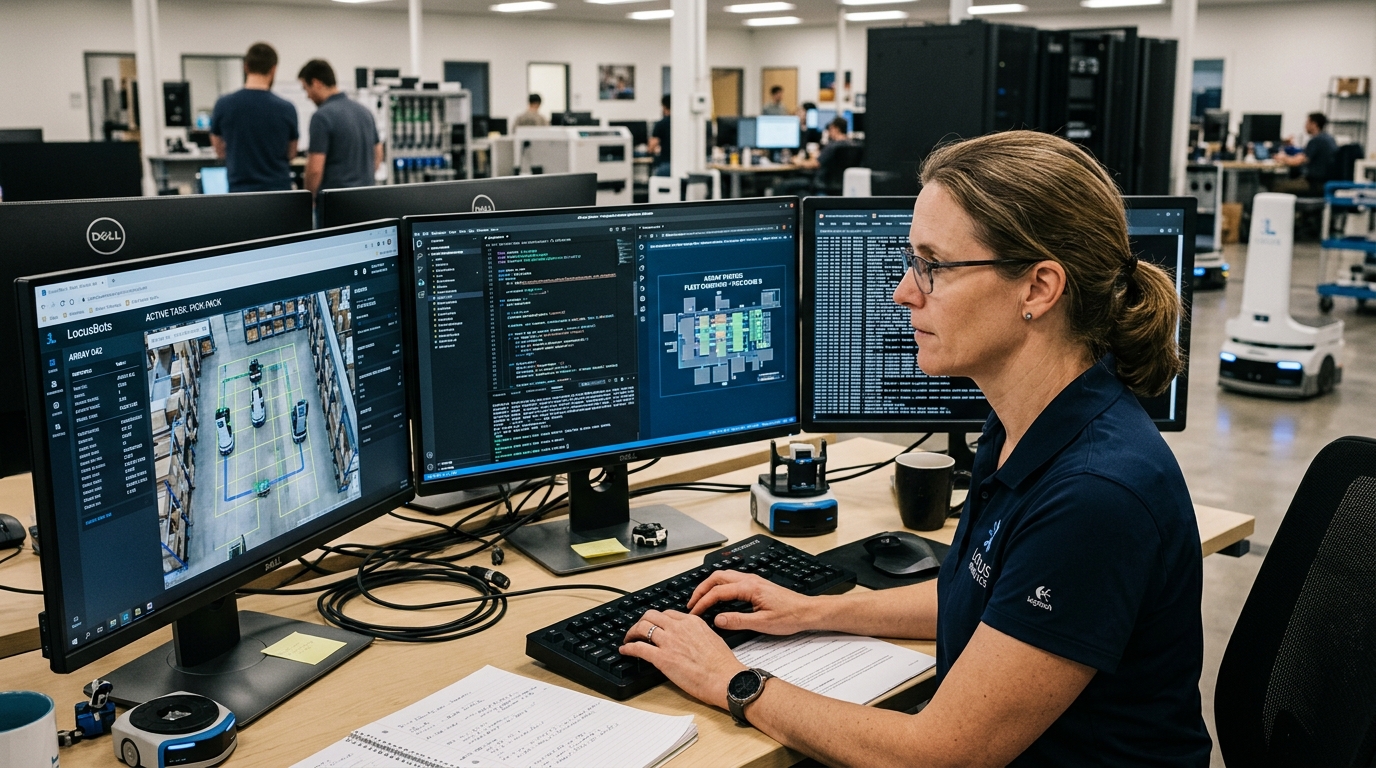
In an era where e-commerce demands speeds that push the boundaries of physics, Locus Robotics has delivered a powerful response to supply chain challenges. With the official unveiling of the Array system, the company is not just offering another robot, but a comprehensive AI-powered Automated Storage and Retrieval System (ASRS). This move marks a transition from simple Autonomous Mobile Robots (AMRs) that follow human pickers to a fully integrated storage architecture that "lives" within the shelving, optimizing every square inch of warehouse space.
Next-Generation Architecture
The Array system is designed to tackle the primary bottleneck of modern distribution centers: storage density combined with throughput speed. Traditionally, warehouses had to choose between high-density systems that are slow, or fast systems that consume vast amounts of floor space. Locus Robotics claims that Array eliminates this compromise. By utilizing advanced AI algorithms, the system predicts demand and moves high-velocity products to the most accessible slots—a process known as "slotting optimization."
The innovation doesn't end there. Array integrates seamlessly with the existing fleet of LocusBots, creating an ecosystem where robots communicate with one another. Imagine a scenario where the Array system retrieves an order from high-level shelving and hands it off to a mobile robot at ground level, which then transports it to the packing station. This "choreography" drastically reduces the time workers spend on non-productive walking, allowing them to focus on higher-value tasks.
Strategic Importance for Fashion and Retail
The debut of the system via WWD is no coincidence. The fashion industry is perhaps the most demanding when it comes to inventory management. With thousands of SKUs, seasonal rotations, and the ever-growing volume of returns (reverse logistics), apparel companies require extreme flexibility. Array allows brands to handle smaller batches with greater precision, supporting the "fast fashion" model but in a way that is operationally more sustainable and less prone to errors.
- Operational Cost Reduction: Automation enables warehouses to operate 24/7 with minimal human intervention in "lights-out" environments.
- Scalability: Businesses can start with a small installation and add Array modules as their order volume grows.
- Sustainability: Space optimization means smaller building footprints, requiring less energy for heating, cooling, and lighting.
According to market analysts, Locus Robotics is now positioning itself as a direct competitor to giants like AutoStore, but offering a more flexible and less invasive solution for existing infrastructures. The ability for Array to be installed in currently operating warehouses without requiring a complete rebuild (brownfield installations) is its strongest commercial advantage.
The Human Element in the Automated Warehouse
Despite the strong push toward full automation, Locus Robotics maintains that the goal is "augmentation" rather than full replacement of humans. However, the reality on the ground suggests a different trend. As robots take over 90% of physical tasks, the worker's role shifts to that of a systems supervisor. This transition requires a massive upskilling of the workforce, a challenge that many governments and businesses have yet to fully address.
"AI in the supply chain isn't just about robots moving fast. It's about the data guiding every movement, ensuring the right product is in the right place at the right time with the minimum possible cost," says a company executive.
In conclusion, the Locus Array is not merely a mechanical upgrade. It is the realization of the "Warehouse 4.0" vision, where artificial intelligence ceases to be a data analysis tool on a screen and becomes a physical force rearranging the material world in real-time. For global logistics hubs, such technologies are no longer a luxury but a prerequisite for survival in a hyper-competitive global market.