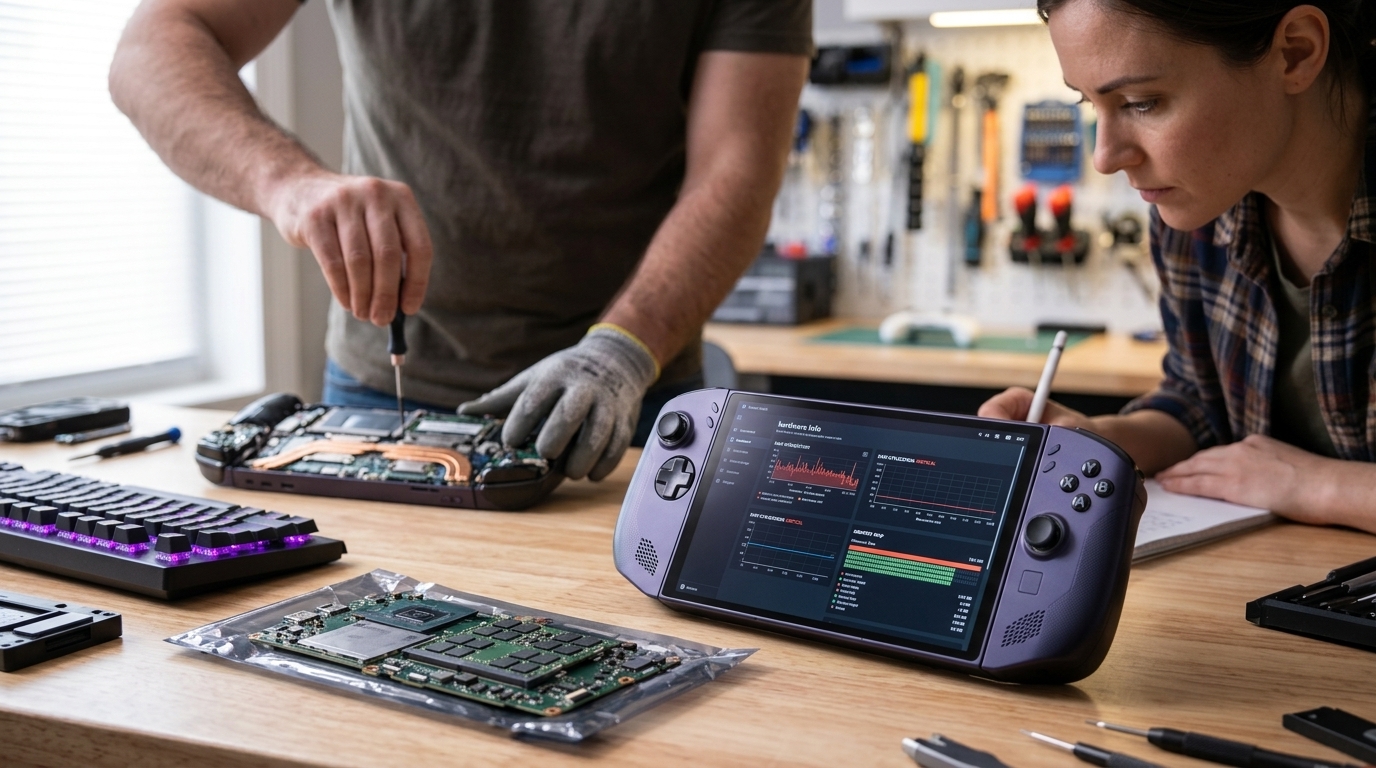
The handheld gaming PC market, which experienced explosive growth following the release of the Steam Deck, is currently facing an existential threat. What analysts are calling 'RAMageddon'—an unprecedented surge in the cost of memory semiconductors—has begun to claim its first victims. The Lenovo Legion Go S, a device that promised to deliver a premium gaming experience at a more accessible price point, appears to be surrendering, with its price skyrocketing to levels that completely alter its market identity.
Anatomy of a Financial Collapse
When Lenovo unveiled the Legion Go S last summer, the vision was clear: a powerful alternative featuring an 8-inch screen and a starting price of $829.99. However, the reality of April 2026 is starkly different. The top-tier version of the device now costs nearly double, making it inaccessible to the mass consumer base it originally targeted. The culprit is none other than the global shortage and subsequent price hike of LPDDR5X and DDR5 memory modules.
The problem is exacerbated by the fact that handhelds, unlike traditional desktops, rely on APUs (Accelerated Processing Units) where system memory is shared with the graphics chip. To run modern titles at 1080p or 1440p resolutions, these devices require at least 24GB or 32GB of high-speed RAM. As the prices of these components surged by 60-80% within a few months, manufacturers' profit margins evaporated, forcing them to either hike prices or discontinue specific SKUs entirely.
Competition and Survival Strategies
While Lenovo appears to be retreating, other market players like Asus and MSI are attempting to stay afloat, albeit at a heavy cost to the consumer. The Asus ROG Ally X and the MSI Claw 8 AI Plus remain on shelves, but with price tags that hit or exceed the psychological threshold of $1,000. This 'luxurization' of handheld PCs is shifting the landscape. Once tools for the average gamer, they are becoming status symbols for the few.
- Asus has chosen to maintain high inventory levels, absorbing some costs in hopes of future market stabilization.
- MSI is leaning into Artificial Intelligence (AI) to justify the increased price, marketing its new models as 'AI Ready.'
- Valve remains the sole outlier with the Steam Deck, primarily because it controls the software ecosystem and can subsidize hardware through game sales.
Impact on Software Development
RAMageddon doesn't just affect hardware enthusiasts. Game developers are now facing a dilemma. If handhelds become less popular due to pricing, optimizing games for these systems will cease to be a priority. We are already seeing a trend back toward cloud gaming as a necessary workaround, as players find themselves unable to upgrade their physical hardware. Lenovo’s decision to let the Legion Go S drift into prohibitive pricing tiers may signal a broader industry retreat toward more conservative designs.
'This isn't just a price hike; it's a structural shift in how we perceive access to cutting-edge technology,' market analysts noted.
In conclusion, the tragedy of the Lenovo Legion Go S serves as a reminder of the fragility of the global supply chain. In a world hungry for memory—driven by the AI explosion in data centers that consume the lion's share of production—the average gamer ends up footing the bill. The next two years will be critical in determining whether handheld gaming PCs remain a vibrant category or if they will be remembered as a brief, golden parenthesis in gaming history.