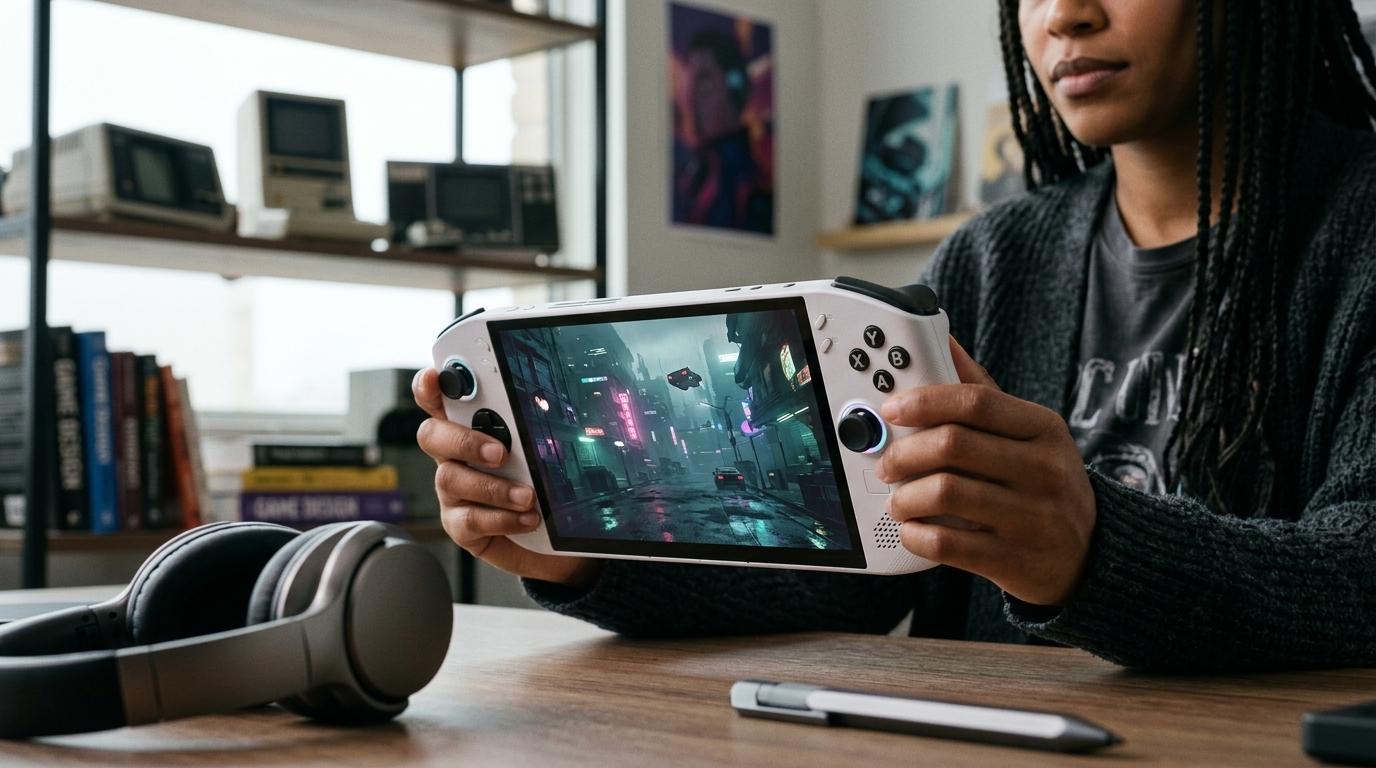
The handheld gaming PC market is currently experiencing a period of intense volatility, behaving more like a stock market index than a stable retail sector. The recent news that the Lenovo Legion Go S is now available for $549 is not merely a discount; it is a strategic maneuver on a chessboard where the reigning king, Valve’s Steam Deck, appears to be momentarily faltering due to supply chain constraints and price hikes.
The Anatomy of an Opportunity
For months, the 512GB Steam Deck OLED was regarded as the gold standard of the category, blending a superior display with a justifiable price tag. However, the sudden surge in its price to $789—a result of limited availability and sustained high demand—has left a massive vacuum in the $500-$600 price bracket. Lenovo, recognizing this opening, has positioned the Legion Go S as the ultimate alternative for the savvy consumer.
The Legion Go S is not just a 'lite' version of the original hardware in name only. It represents a calculated effort to streamline costs without sacrificing the core experience. While the original Legion Go wowed audiences with its massive 8.8-inch screen and detachable controllers, the 'S' model focuses on portability and efficiency. The inclusion of Windows 11 remains a double-edged sword: on one hand, it offers total compatibility with every game launcher (Epic, Game Pass, Ubisoft Connect); on the other, it lacks the polished 'console-like' UX that SteamOS provides.
Technical Prowess and Calculated Compromises
At the heart of the device lies AMD’s Ryzen Z1 series processor, which has proven its mettle in balancing power consumption with raw performance. At $549, the user receives a machine capable of running AAA titles at respectable frame rates—a feat that seemed impossible for this price range just three years ago.
- High-definition display with refresh rates reaching up to 144Hz.
- Ergonomic design focused on reducing wrist fatigue during long sessions.
- Full access to the Windows ecosystem, allowing the device to double as a portable workstation.
"The $549 price point is not accidental. It is the psychological threshold where a consumer stops viewing the device as an expensive toy and starts seeing it as a serious investment in their entertainment," industry analysts note.
The Future of Handheld Gaming
Lenovo’s move is forcing other major players, such as ASUS with the ROG Ally and MSI with the Claw, to re-evaluate their strategies. If Valve cannot stabilize Steam Deck OLED pricing, it risks losing the market share it painstakingly built. The Legion Go S proves that competition benefits the consumer, driving better specs into lower price tiers. However, the ultimate challenge remains the software. Lenovo continues to refine Legion Space, the application that acts as a shell over Windows, striving to make the user experience as seamless as possible.
In conclusion, the Legion Go S at $549 stands as the most rational choice in May 2026. In an era where inflation plagues technology goods, the existence of a device offering premium features at a mid-range price is a welcome anomaly that gamers should not overlook.