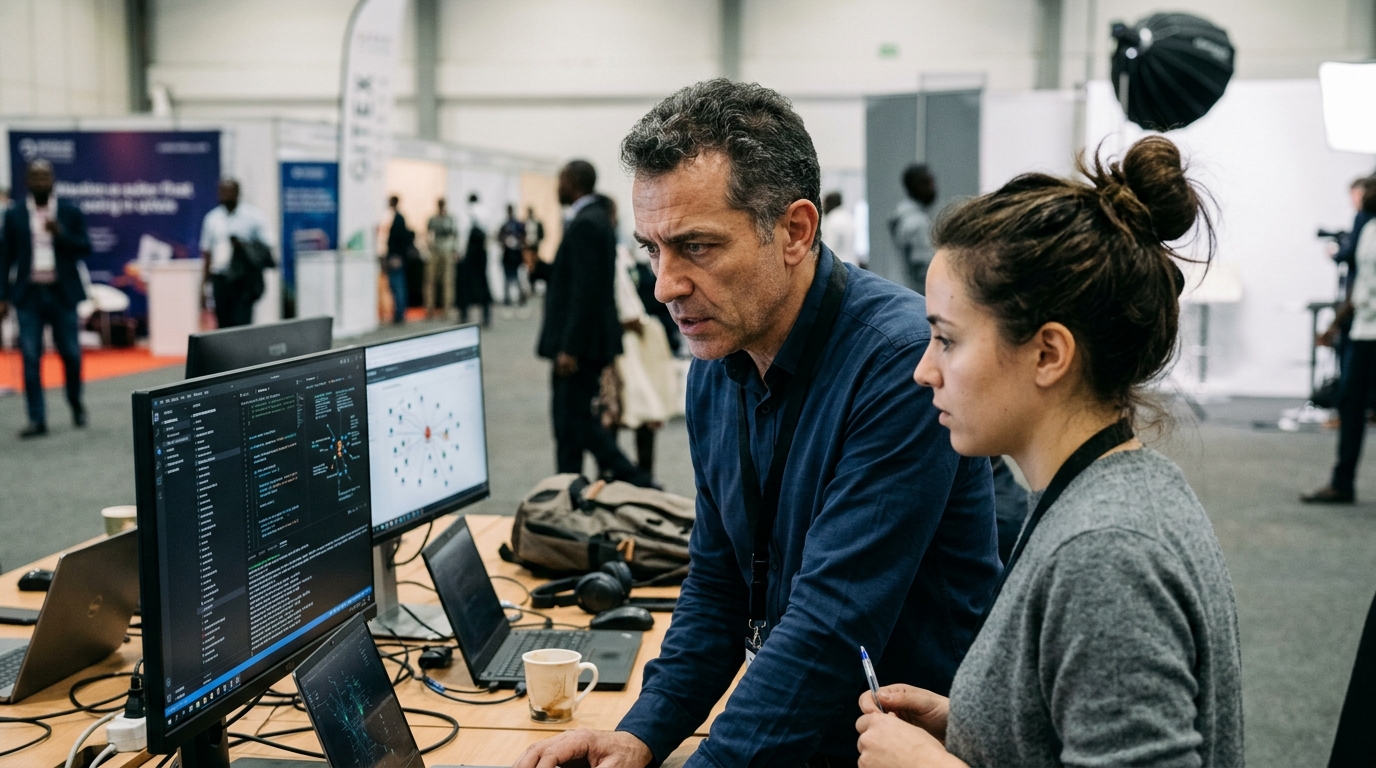
The rapid proliferation of Artificial Intelligence (AI) is not only changing the way we work and communicate but is fundamentally reshaping the cybersecurity landscape. At the recent AI Everything Kenya conference, held as part of GITEX Kenya, Kaspersky, a global leader in digital protection, presented a detailed mapping of emerging threats. The central premise is clear: AI is a double-edged sword that empowers defenders and attackers alike.
The Double-Edged Sword of Artificial Intelligence
During its presentation, Kaspersky highlighted that AI has democratized the capabilities of cybercriminals. Tools that once required deep programming knowledge and months of preparation are now accessible through automated models. The use of Generative AI allows for the creation of highly convincing phishing campaigns that lack the traditional grammatical errors that previously served as 'red flags' for users.
However, the threat does not stop there. AI is now being used to write malicious code (malware) that can automatically mutate to evade detection by traditional security systems. This creates a perpetual 'cat-and-mouse' game where security algorithms must evolve faster than attack algorithms. Kaspersky emphasized that moving from simple 'detection' to 'prediction' is the only viable strategy for the future.
Deepfakes and the Evolution of Social Engineering
One of the most concerning trends discussed in Nairobi is the rise of deepfakes. The ability of attackers to create realistic video or audio clips of corporate executives has led to a new generation of Business Email Compromise (BEC) attacks. According to Kaspersky analysts, we have already seen cases where finance department employees transferred vast sums to scammers' accounts after 'receiving' instructions via a video call from an AI-generated clone of their CEO.
"Trust is the new victim of the digital age. When we can no longer believe our eyes and ears, technological shielding must be accompanied by a profound change in the culture of verification," the company's representatives stated.
Social engineering is now becoming 'hyper-targeted.' AI can analyze vast amounts of data from social networks to create victim profiles and launch attacks that appear entirely personal and legitimate. This makes staff training more critical, yet more difficult, than ever before.
Africa as a Strategic Hub and Target
The choice of Kenya to host GITEX was no coincidence. Africa is experiencing explosive digital growth, with Nairobi often referred to as the 'Silicon Savannah.' However, this rapid digitization, without corresponding investments in security infrastructure, makes it an attractive target. Kaspersky pointed out that African businesses face a unique combination of challenges: a shortage of specialized cybersecurity personnel and the simultaneous adoption of cutting-edge technologies.
The company promotes the concept of 'Cyber Immunity.' Instead of adding security layers to existing, vulnerable systems, Kaspersky advocates for the design of systems that are inherently secure. This is particularly critical for vital infrastructure, such as energy grids and banking systems across the continent, which are targets for both state and non-state actors.
Conclusions and the Path Forward
The message from GITEX Kenya is clear: cybersecurity in the age of AI is no longer a technical issue but a matter of strategic survival. Businesses must invest in AI-driven protection solutions that can analyze user behavior in real-time and identify anomalies before they turn into breaches. At the same time, international cooperation and threat intelligence sharing are essential to tackle an enemy that knows no borders. Kaspersky pledged to continue supporting the African market, offering tools that balance innovation with security.