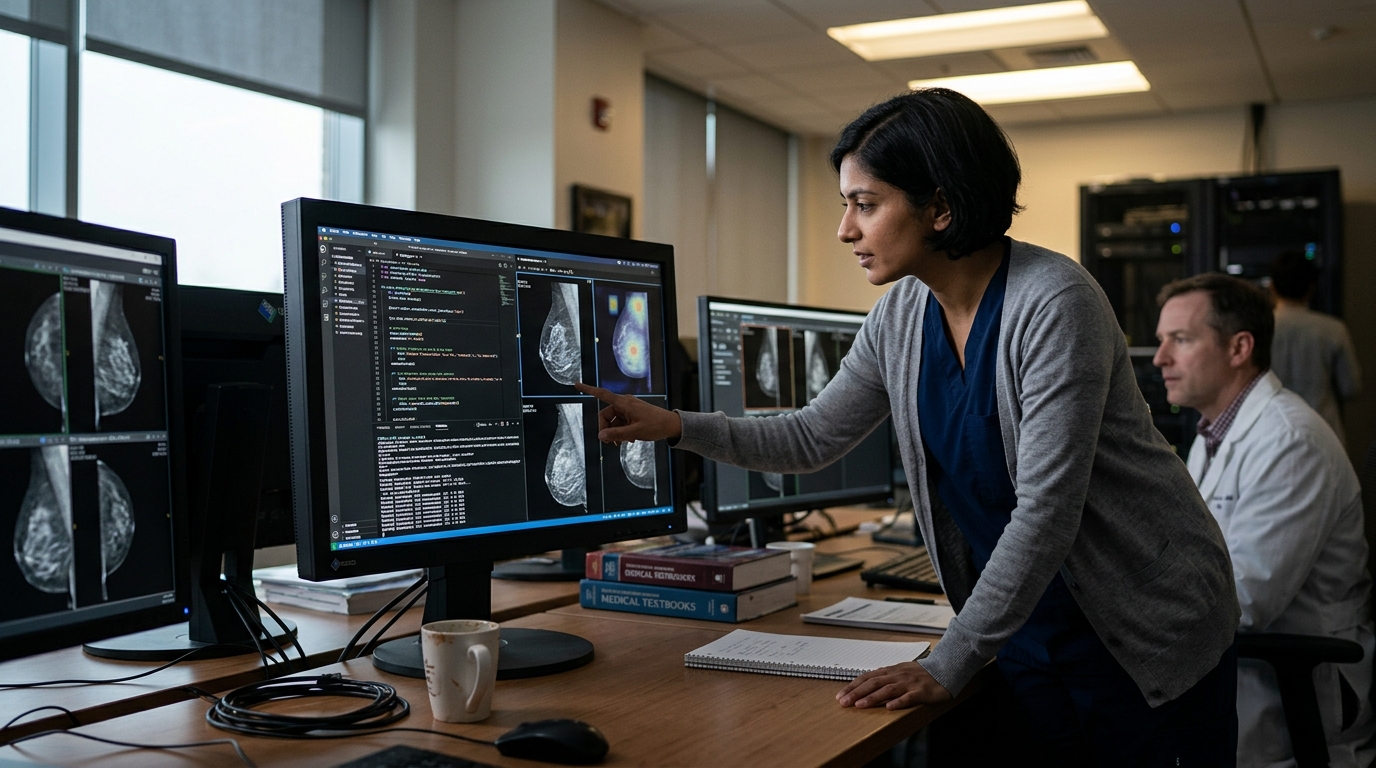
Preventative medicine is standing at the threshold of a new era as Artificial Intelligence (AI) begins to fundamentally reshape the process of mammography, one of public health's most critical tools. According to recent insights from Yale School of Medicine, AI is no longer a futuristic promise but a present-day reality that is enhancing diagnostic accuracy, reducing false positives, and providing a necessary "second set of eyes" for overburdened radiologists.
From CAD to Advanced Deep Learning
For decades, radiologists have utilized Computer-Aided Detection (CAD) systems. However, these older systems often functioned as rudimentary pattern matchers that flagged too many areas, leading to what clinicians call "alarm fatigue." Modern AI, powered by deep learning neural networks, is radically different. It is trained on millions of mammographic images, learning to discern the subtle nuances between a malignant tumor and normal tissue with a level of precision that often surpasses human capability under conditions of fatigue.
At Yale, researchers emphasize that AI can function effectively as a triage tool. In a typical clinical setting, a radiologist might review hundreds of mammograms a day. AI can immediately identify cases that appear entirely normal, allowing the physician to dedicate more time to suspicious or complex cases. This prioritization is vital in an age where the shortage of specialized radiologists is a global concern.
Reducing False Positives and Psychological Distress
One of the greatest challenges of traditional mammography is the rate of false positives. When a woman is called back for additional testing due to an ambiguous finding that ultimately turns out to be benign, the psychological toll is immense. AI helps mitigate these incidents by analyzing breast density and comparing current images with historical ones with greater granularity than the human eye can typically manage.
"Artificial Intelligence does not replace the radiologist; it makes them better. It is the partner that never gets tired and never loses focus," state Yale medical experts.
Furthermore, AI is proving exceptionally useful for women with dense breast tissue, where tumors are often difficult to spot because they appear white on an X-ray, much like the dense tissue itself. Advanced AI models can "see" through this density, identifying early-stage cancers that might have previously remained invisible until the next screening cycle.
Challenges and Ethical Considerations
Despite the enthusiasm, the integration of AI into mammography is not without its hurdles. The most significant concern involves data bias. If an AI model has been trained primarily on images from women of a specific ethnicity, it may not be as accurate for other demographic groups. Ensuring that AI is inclusive and equitable is a top priority for researchers at Yale and other leading institutions.
Additionally, the question of liability arises. In the event of a misdiagnosis, who bears the responsibility? The physician, the software developer, or the healthcare facility? These legal and ethical questions require a new regulatory framework that keeps pace with technological progress. Transparency in how AI arrives at its conclusions—known as "Explainable AI"—is essential for building trust among both medical professionals and patients.
The Future: Personalized Prevention
The next step in the evolution of this technology is the transition from generalized screening to personalized medicine. Instead of all women following the same screening schedule, AI will be able to analyze an individual woman's risk based on medical history, genetic data, and previous mammograms. This will allow for the creation of customized surveillance plans, offering more protection to those who need it and less unnecessary radiation exposure for those at low risk.
In conclusion, AI in mammography represents one of the most promising applications of technology in healthcare. With proper oversight and the continuous refinement of algorithms, we can hope for a world where breast cancer is always detected early, making it fully treatable for every woman.