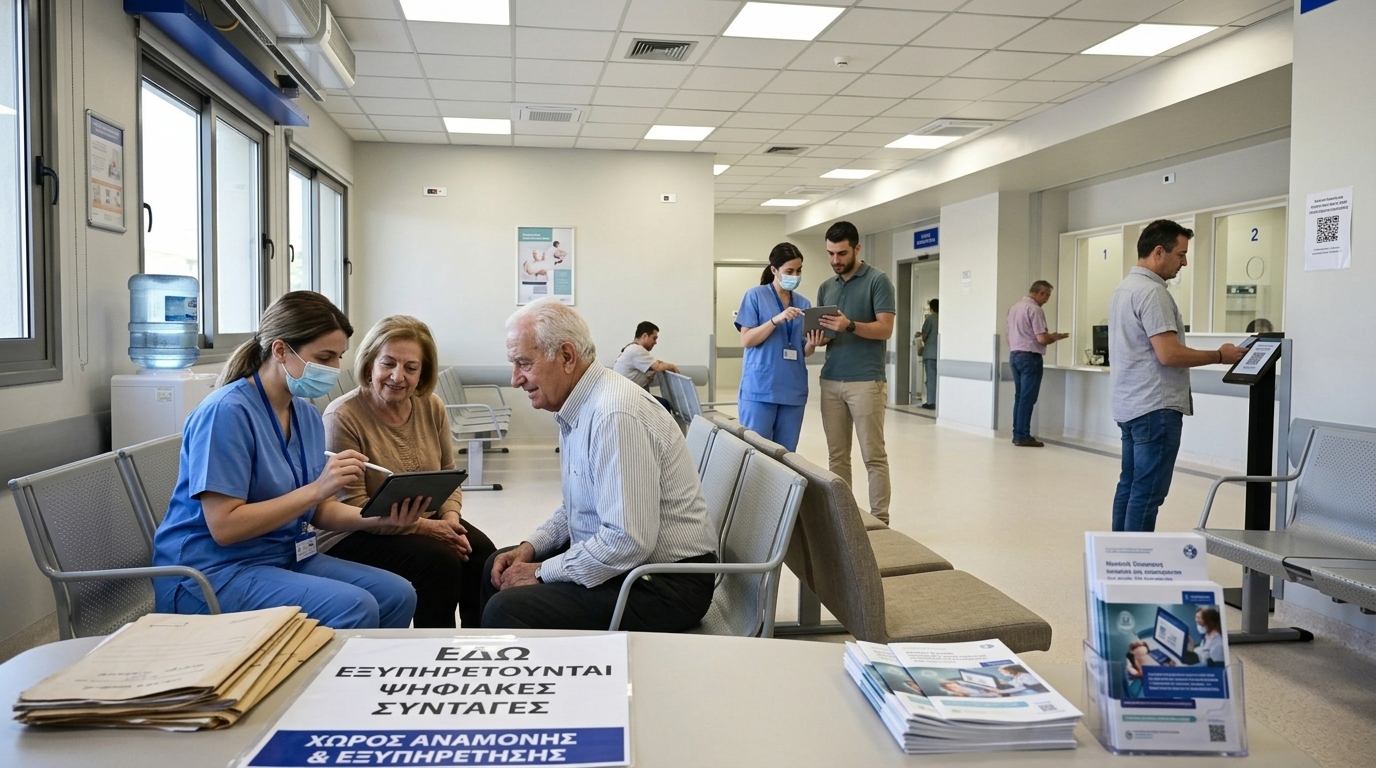
A new chapter in the history of the National Health System (ESY) is set to open on July 1st, as paperless (digital) prescribing expands within the walls of public hospitals. The announcement, made by Health Minister Adonis Georgiadis, marks the completion of a major cycle of digital transformation that began several years ago in primary care and is now penetrating the core of hospital treatment. This move is not merely a technical change but a profound shift in how medications are distributed, costs are controlled, and patients are served.
The End of the Handwritten Era
For decades, the image of hospital doctors filling out handwritten prescription pads was the trademark of Greek healthcare bureaucracy. Starting July 1st, this practice will be a thing of the past. According to the Ministry of Health, every prescription issued within a hospital for outpatients or upon discharge must be digital. This means patients will receive an SMS or email with their prescription code, eliminating the need for physical paper.
This transition is deemed essential for the integration of health data. With paperless prescribing in hospitals, every citizen's Electronic Health Record (EHR) will be updated automatically and in real-time for every medication administered, whether it comes from a private physician or the ESY. This interconnectivity is the "key" to avoiding medical errors, such as drug interactions, as the attending physician will have a complete view of the patient's history.
Transparency and Cost Control
Beyond patient convenience, the government's primary goal is to control pharmaceutical spending. Handwritten prescriptions in hospitals often represented a "black hole" for the system, as traceability was limited and retrospective audits were difficult. With the new system, every move will be digitally recorded, allowing EOPYY (the National Organization for Healthcare Services Provision) and the Ministry of Health to monitor drug consumption in real-time and identify instances of over-prescribing or fraud.
- Full traceability of expensive hospital-use medications.
- Reduction of administrative costs for managing paper prescriptions.
- Immediate data cross-referencing with hospital pharmacy stocks.
- Strict adherence to therapeutic protocols.
The Health Minister emphasized that this reform will contribute decisively to saving resources, which can then be reinvested into purchasing new, innovative drugs that previously struggled to enter the system due to fiscal constraints.
Challenges and Infrastructure
Despite the positive outlook, implementing this measure is not without challenges. Many public hospitals still face issues with their digital infrastructure, while medical and nursing staff, already burdened by shortages, will be required to adapt quickly to a new workflow. The success of the project largely depends on the stability of the IDIKA (e-Government Center for Social Security) systems and the speed of networks within nursing institutions.
"The digitalization of health is not a luxury; it is a prerequisite for the survival of the ESY," a government official stated, emphasizing that July 1st is a milestone that cannot be postponed.
In this context, the Ministry of Digital Governance is working closely with the Ministry of Health to provide technical support to hospitals that are lagging. The coming weeks will be critical for pilot testing the systems to avoid delays in patient service during the first days of full implementation.
The Future: From Prescription to Digital Folder
The expansion of paperless prescribing is just one piece of the puzzle. The ultimate goal is the complete digitalization of the ESY, including digital appointments, telemedicine, and the unified electronic health record. With these tools, Greece aims to align with European standards, reducing inequalities in access and improving the quality of services provided. The citizen ceases to be the "carrier" of documents between doctors and pharmacies and becomes the center of a system that works for them, with transparency and speed.