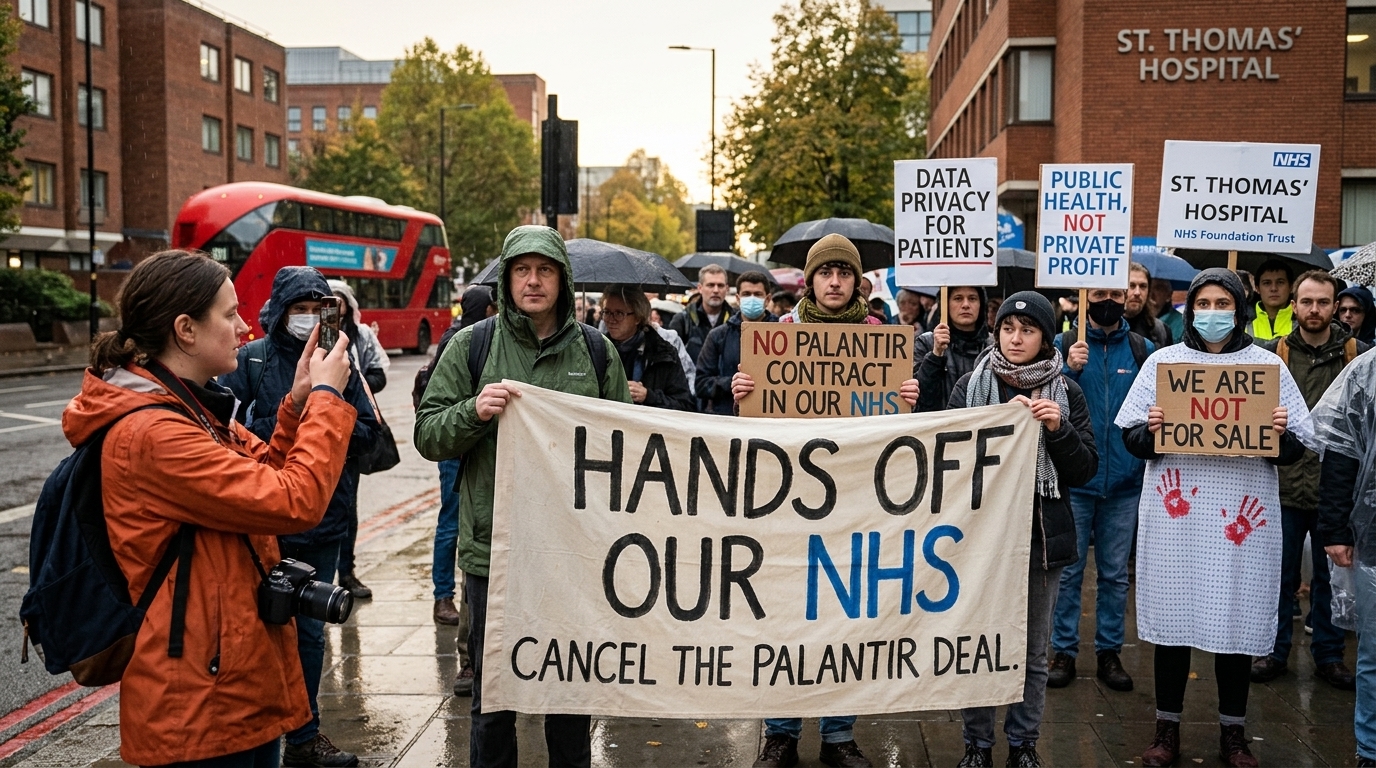
The scene outside the Manchester Central Convention Complex was fraught with tension. As leaders of the UK’s National Health Service (NHS) gathered for the annual NHS Confederation Expo, they were met by a crowd demanding not pay raises or more hospital beds, but the expulsion of an American tech giant: Palantir. Shouts of “Hands off our NHS” echoed through the streets, signaling a new phase in the resistance against Big Tech’s involvement in public healthcare.
The ‘Central Nervous System’ of Data
At the heart of the controversy lies the Federated Data Platform (FDP), an ambitious £330 million project designed to unify fragmented patient data across the NHS. The British government argues that the FDP will serve as the organization's “central nervous system,” allowing for better management of waiting lists, surgery scheduling, and supply chain optimization. However, the selection of Palantir—a company with deep roots in military espionage and national security—has sparked a firestorm of criticism.
Palantir, co-founded by billionaire Peter Thiel, is best known for its software used by intelligence agencies like the CIA and MI6. For its detractors, the transition from hunting terrorists to managing medical records is a leap that carries immense privacy risks. “We don’t trust a company built for war to manage our health,” said one of the protest organizers. The fear is that the same tools used for surveillance will now be turned toward the most intimate details of citizens' lives.
The Shadow of Peter Thiel
The persona of Peter Thiel plays a pivotal role in the intensity of the backlash. Thiel, a prominent supporter of Donald Trump and a well-known libertarian, has angered many in the UK with his comments about the NHS. In a previous speech, he likened the British public’s affection for the health service to “Stockholm Syndrome,” essentially suggesting it needs to be dismantled and modernized through private intervention.
“Trust is the currency of public health. If patients fear their data will be used for purposes beyond their care, the entire system risks collapse,” warn data privacy advocacy groups.
These remarks have fueled fears that Palantir is not merely a software provider but a “Trojan horse” for the total privatization of NHS data. Despite government assurances that Palantir will not have access to patient data without explicit permission and that the data remains under NHS control, the lack of transparency in the contracts has only deepened public suspicion. The optics of a surveillance-linked firm handling the crown jewel of British social democracy are, at best, challenging.
The Risk of Mass Opt-Outs
One of the greatest existential threats to the FDP project is the possibility of a mass “opt-out” movement by patients. In the UK, citizens have the right to request that their data not be used for purposes beyond their direct clinical care. If the distrust toward Palantir leads millions to opt out of the FDP, the platform will become effectively useless, as the resulting data sets will be incomplete and skewed.
Already, legal challenges from organizations like Foxglove have forced the government to reveal more details about the contract, but activists argue this is insufficient. The concern is not just about data security against hackers, but “mission creep”: the possibility that this data could eventually be used for insurance risk assessments or even immigration enforcement, given Palantir’s history of working with the UK Home Office. The precedent of using administrative data for hostile environment policies remains fresh in the British collective memory.
Conclusion: Ethics vs. Efficiency
The NHS’s dilemma is a microcosm of a global struggle. On one hand, the need for technological modernization is undeniable. A system still reliant on paper trails and incompatible digital silos cannot survive the 21st century’s demands. On the other hand, the choice of partners cannot be made solely on technocratic grounds. Palantir may possess the world’s most sophisticated data analytics software, but it lacks the “social license” required to operate within a public institution like the NHS. The protests in Manchester were not just about one company; they were a manifestation of a deeper anxiety regarding the future of public health in the age of surveillance capitalism. Can a public treasure survive the embrace of private giants?