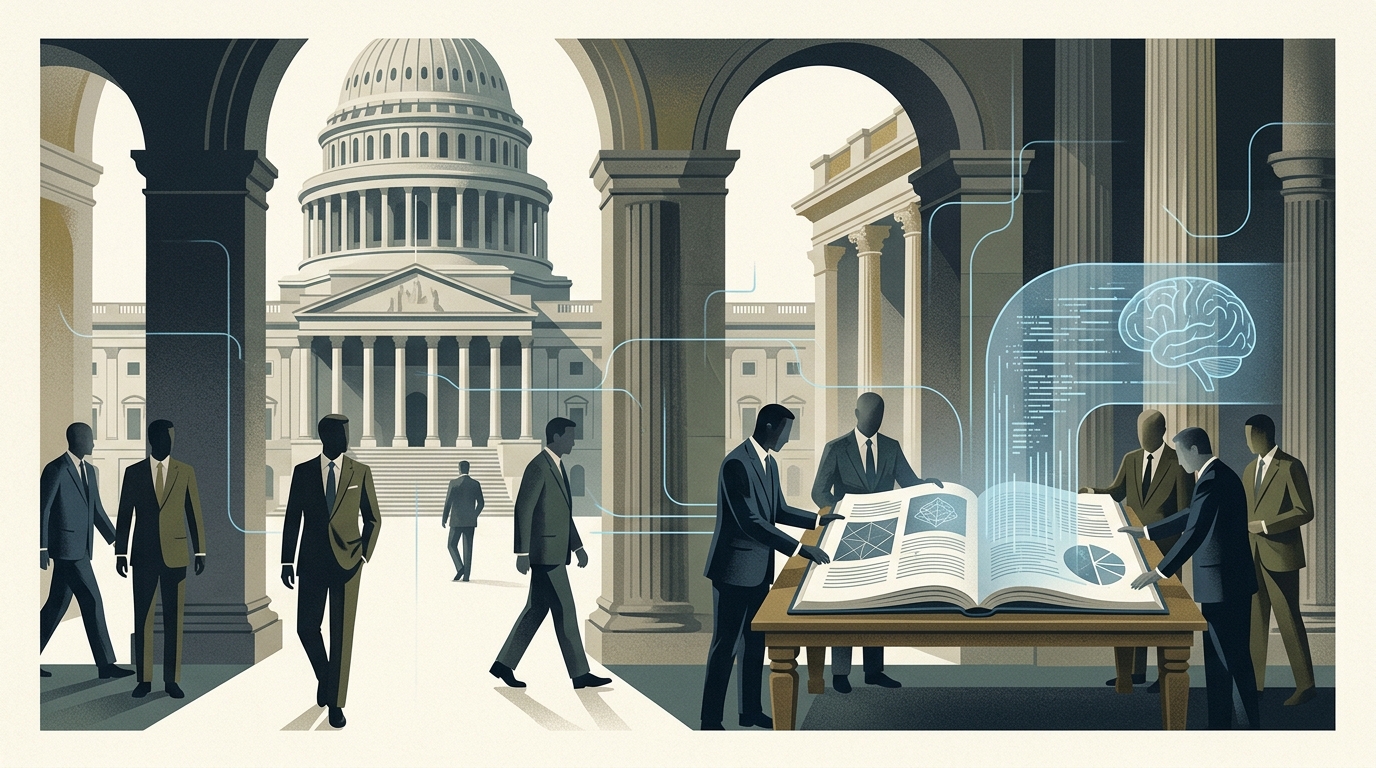
It is the summer of 2026, and the disruption caused by Artificial Intelligence (AI) in content creation and scientific research is no longer viewed as a 'future' prospect, but as an established, albeit turbulent, reality. The traditional 'blank page' process has been replaced by a dialogic relationship with intelligent systems, where the speed of production has skyrocketed, raising critical new questions about the value of originality and the validity of knowledge.
The New Architecture of Research
Research, once a painstaking process of searching through libraries and later through endless pages of Google results, has been transformed into a process of 'semantic synthesis.' Modern language models no longer function merely as indices but as analysts capable of cross-referencing thousands of scientific publications in seconds. The ability of AI to summarize complex data and identify patterns that elude the human eye has accelerated scientific discovery in fields ranging from pharmacology to climatology.
However, this convenience carries risks. Reliance on algorithmic summarization can lead to 'cognitive bias' or 'cognitive laziness,' where the researcher accepts the machine's conclusion without understanding the underlying methodology. The challenge for 2026 is maintaining critical thinking in a world where information is hyper-accessible but often detached from its original context.
Content Creation: The Shift to Multimodality
In the field of content creation, the revolution is simultaneously visual, auditory, and textual. The rise of multimodal AI models allows a single creator to produce professional-grade video, music, and text using only prompts. The democratization of production tools means that the barrier to entry for creating high-quality content has almost vanished.
- Automated Editing: AI now selects the best shots and synchronizes music automatically.
- Dynamic Adaptation: Content changes form in real-time based on the audience it addresses.
- Personalized Storytelling: The ability to generate thousands of variations of an ad or article for different demographic profiles.
This flood of content has created the phenomenon of 'digital noise' or 'AI slop.' With production now cheap and abundant, value has shifted from creation to curation. The question is no longer 'who can write an article,' but 'who can provide a unique, human perspective that the machine cannot simulate.'
Ethical Dilemmas and the Crisis of Authenticity
As AI tools become more sophisticated, the distinction between human and machine work is becoming nearly impossible to discern. This has led to a crisis of trust. Social media platforms are flooded with 'synthetic media,' raising concerns about misinformation and intellectual property. Creators worldwide are demanding rights for the use of their work in training models, while the EU and other jurisdictions attempt to enforce mandatory labeling of AI-generated content.
"AI will not replace the creator, but the creator using AI will replace the one who does not."
This adage, while cliché, captures the economic reality. The job market for copywriters, graphic designers, and researchers is being reshaped. Roles that required simple execution are disappearing, while new ones are emerging that require 'strategic machine guidance' and 'ethical data oversight.'
The Future: Symbiosis as the Only Path
Looking ahead, the challenge is ensuring that AI serves as an amplifier of human creativity rather than a substitute for it. Research must remain a quest for truth, not just a quest for the most statistically probable answer. Content creation must continue to move and provoke, which requires human experience, trauma, and emotion—elements that, at least for now, remain beyond algorithmic reach.