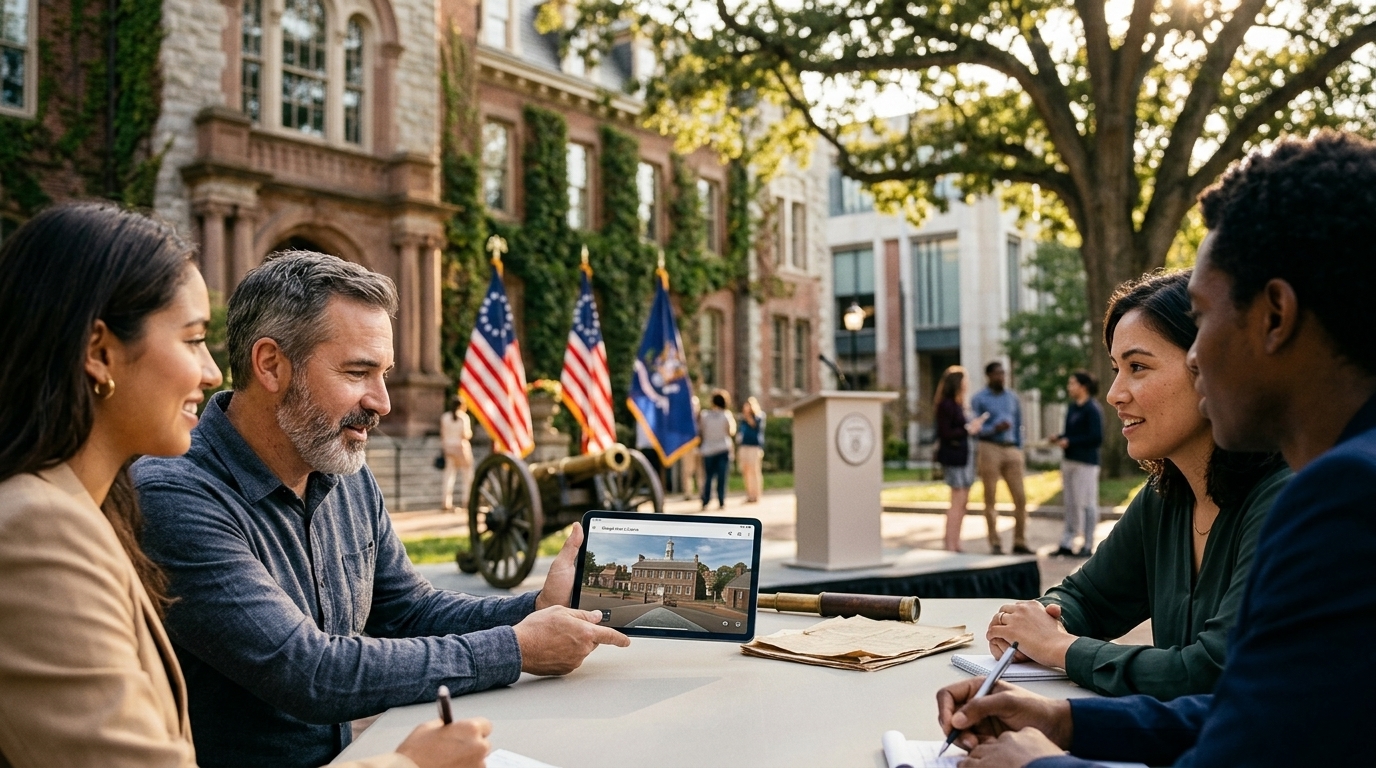
As the United States approaches the historic milestone of its 250th anniversary in 2026, technology is stepping into the role of custodian of national memory. Google Arts & Culture, in an ambitious partnership with the National Archives and Records Administration (NARA) and dozens of cultural institutions, has unveiled 'Celebrating America,' a digital odyssey that redefines how the public interacts with founding documents and pivotal moments in American history. This is not merely a digitization of documents; it is an effort to democratize access to historical knowledge through artificial intelligence and interactive media.
Digitizing the 'Charters of Freedom'
At the heart of this initiative lies the high-resolution digitization of the so-called 'Charters of Freedom': the Declaration of Independence, the Constitution, and the Bill of Rights. For decades, these documents have been objects of pilgrimage in Washington D.C., protected behind bulletproof glass and specific lighting conditions. Today, Google enables every internet user, from New York to Athens, to study every detail of Thomas Jefferson's handwriting or the revisions made during the Founding Fathers' debates.
The collaboration with the National Archives goes beyond simple imaging. Through Optical Character Recognition (OCR) technology and machine learning, thousands of pages of handwritten records are now searchable. Researchers and students can locate specific references to historical figures or concepts within seconds—a process that previously required weeks of physical presence at the archives. This 'open access' forms the foundation of a new digital historiography, where information is no longer the privilege of the few.
Interactive Storytelling and Augmented Reality
The 'Celebrating America' project is not limited to texts. Google utilizes Augmented Reality (AR) technology to bring historical monuments and sites to life. Users can virtually tour Independence Hall in Philadelphia or explore the intricate details of the Statue of Liberty through 3D models. This approach primarily targets the younger generation, the 'digital natives,' who demand a more experiential relationship with information.
Furthermore, the platform includes curated exhibits that highlight lesser-known aspects of the American journey. From the suffragettes' fight for the right to vote to the Civil Rights Movement of the 1960s, Google Arts & Culture attempts to weave a mosaic of voices. The use of AI helps connect seemingly unrelated events, allowing the user to see how 18th-century ideas influenced the social demands of the 20th and 21st centuries. This contextualization is vital for understanding the evolution of democratic principles over two and a half centuries.
The Challenge of Historical Objectivity
However, entrusting historical narrative to a tech giant is not without its challenges. The selection of documents, the order of presentation, and the emphasis on specific events are inherently political and educational decisions. Google, working with historical consultants, must balance the celebratory nature of the anniversary with the need for an honest, critical approach to the past. Including the experiences of Indigenous populations and the profound impacts of slavery is crucial for the project's integrity and credibility.
This digital initiative also serves as an experiment in the future of 'data diplomacy.' As nations seek ways to preserve their identity in a globalized digital world, public-private partnerships in cultural heritage are becoming the norm. The model Google is implementing for the U.S. Semiquincentennial is expected to serve as a blueprint for similar milestones in other countries, reinforcing the company's role as humanity's de facto digital librarian. It raises important questions about who owns the digital copy of a nation's soul.
Conclusions for the Future
The 2026 anniversary will not only be a celebration of the past but also a demonstration of the possibilities of the future. The Google Arts & Culture initiative proves that technology can act as a bridge, connecting dusty parchments to smartphone screens. In an era of intense political polarization, returning to common historical roots through an accessible and engaging medium may offer a rare opportunity for national and global reflection. The remaining question is whether the ease of digital consumption will lead to deeper understanding or if history will simply become another piece of 'content' to be scrolled past among millions of others.