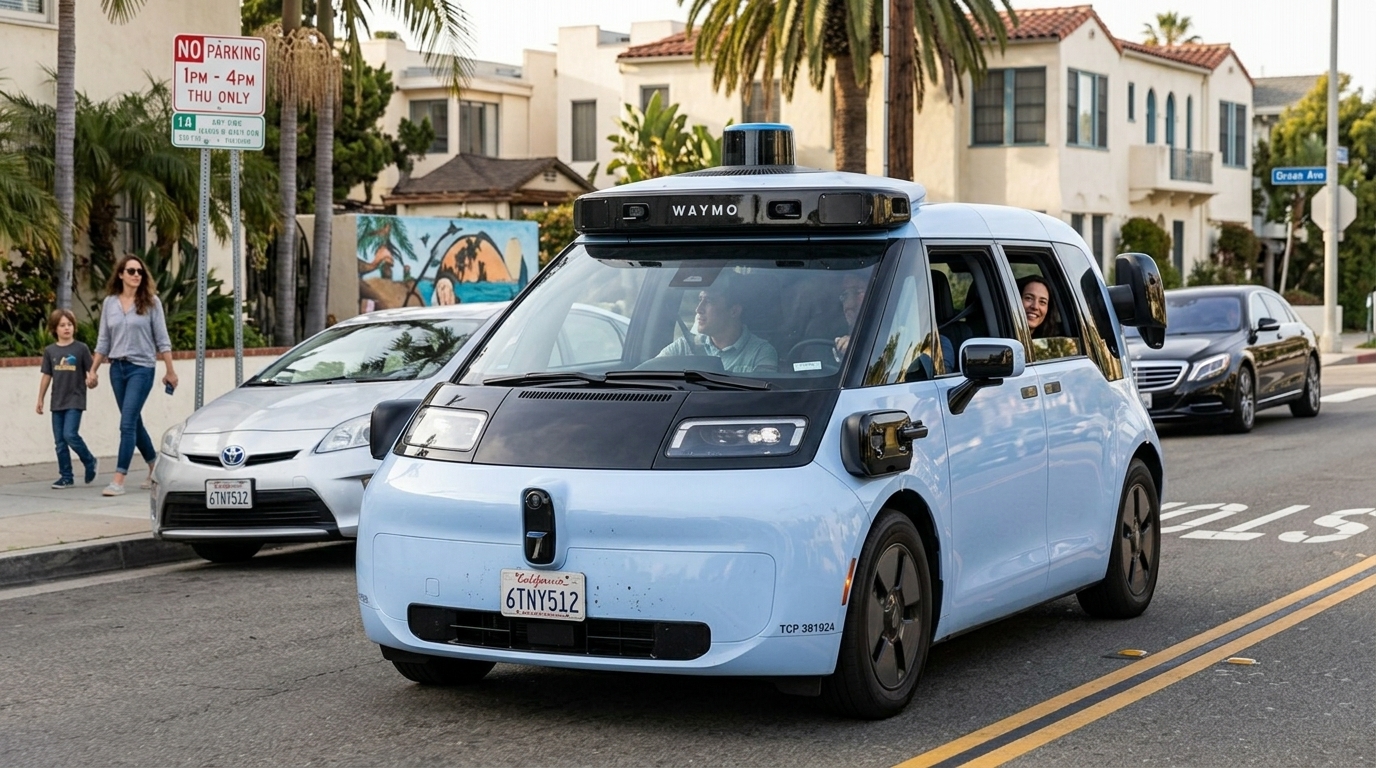
In the heart of Silicon Valley, where surveillance capitalism meets technological utopia, the concept of "free" is usually the bait in a very sophisticated trap. However, for residents of San Francisco and Los Angeles, the current wave of free rides in Waymo’s autonomous vehicles isn't a philanthropic gesture; it is the result of a paradoxical regulatory quirk within California’s oversight agencies. Waymo, the Alphabet subsidiary leading the robotaxi race, has recently begun deploying its new vehicle, codenamed "Ojai" (built by Zeekr), but a delay in permit modifications means the company cannot yet legally charge passengers for rides in these specific models.
The CPUC Regulatory Bottleneck
The California Public Utilities Commission (CPUC) is the body that dictates when and how autonomous vehicle companies can collect fares. While Waymo already holds permits to charge for rides in its existing fleet of Jaguar I-PACE vehicles, the introduction of an entirely new vehicle platform requires a fresh round of approvals. The "Ojai" vehicle, designed from the ground up for autonomy in partnership with Chinese automaker Zeekr, is viewed legally as a new entity that must undergo rigorous safety and operational scrutiny before commercial exploitation is permitted.
This process, which often takes months, has created a "gray zone." Waymo is eager to get these vehicles on the road to gather real-world data and acclimate the public to the new design, which lacks traditional controls like a steering wheel (though current test versions feature temporary controls for regulatory compliance). Since the fare-collection permit is pending, the only legal way to operate the Ojai with passengers is to offer the rides for free.
Ojai: A Future Without Steering Wheels
The Ojai vehicle is more than just an upgrade; it is a statement of intent. Unlike the Jaguars, which were retrofitted electric SUVs, the Ojai is a "native" autonomous vehicle. It features a lower floor for easier ingress, significantly more interior volume, and a sensor suite integrated more seamlessly into the chassis. For Waymo, scaling this fleet is critical to reducing long-term operational costs, as mass-producing purpose-built vehicles is more economical than retrofitting luxury SUVs.
However, the reliance on Zeekr (owned by Geely) introduces geopolitical risks. With rising tensions between the US and China regarding technology and EV tariffs, Waymo is walking a tightrope. Deploying these vehicles now, even for free, allows the company to bake in its technology before political shifts might make their importation more difficult or prohibitively expensive.
The Strategy Behind the "Free" Model
While the loss of fare revenue might seem like a setback, for a company with Alphabet’s market capitalization, data is far more valuable than a $15 fare. Each free ride provides Waymo with critical insights into how users interact with the new interior, how the software performs in dense urban traffic, and the level of social acceptance for steering-wheel-less robotaxis.
- Real-time data collection to refine AI driving models.
- Building consumer trust through risk-free trials.
- Applying pressure on regulators via high consumer demand.
- Generating marketing buzz that overshadows competitors like Tesla and Cruise.
This situation also highlights the rigidity of the regulatory framework. While technology moves at the speed of light, California’s laws remain tethered to processes designed for the era of traditional taxis. This velocity mismatch is what created this "gift" to consumers, but it simultaneously raises questions about how safety will be governed as these vehicles become more autonomous and ubiquitous.
Social and Political Pushback
Not everyone views Waymo’s expansion—even the free version—favorably. Driver unions and road safety activists argue that free rides are a form of predatory pricing aimed at eliminating competition from traditional taxis and ride-hailing services like Uber. Furthermore, recent reports of autonomous vehicles obstructing emergency services have made the public more skeptical.
Waymo maintains that its vehicles are safer than human drivers and that the free rides are merely a transitional phase. Nevertheless, California’s "regulatory quirk" offers a rare opportunity for citizens to participate in an experiment that will define the future of mobility without having to open their wallets—at least for now.