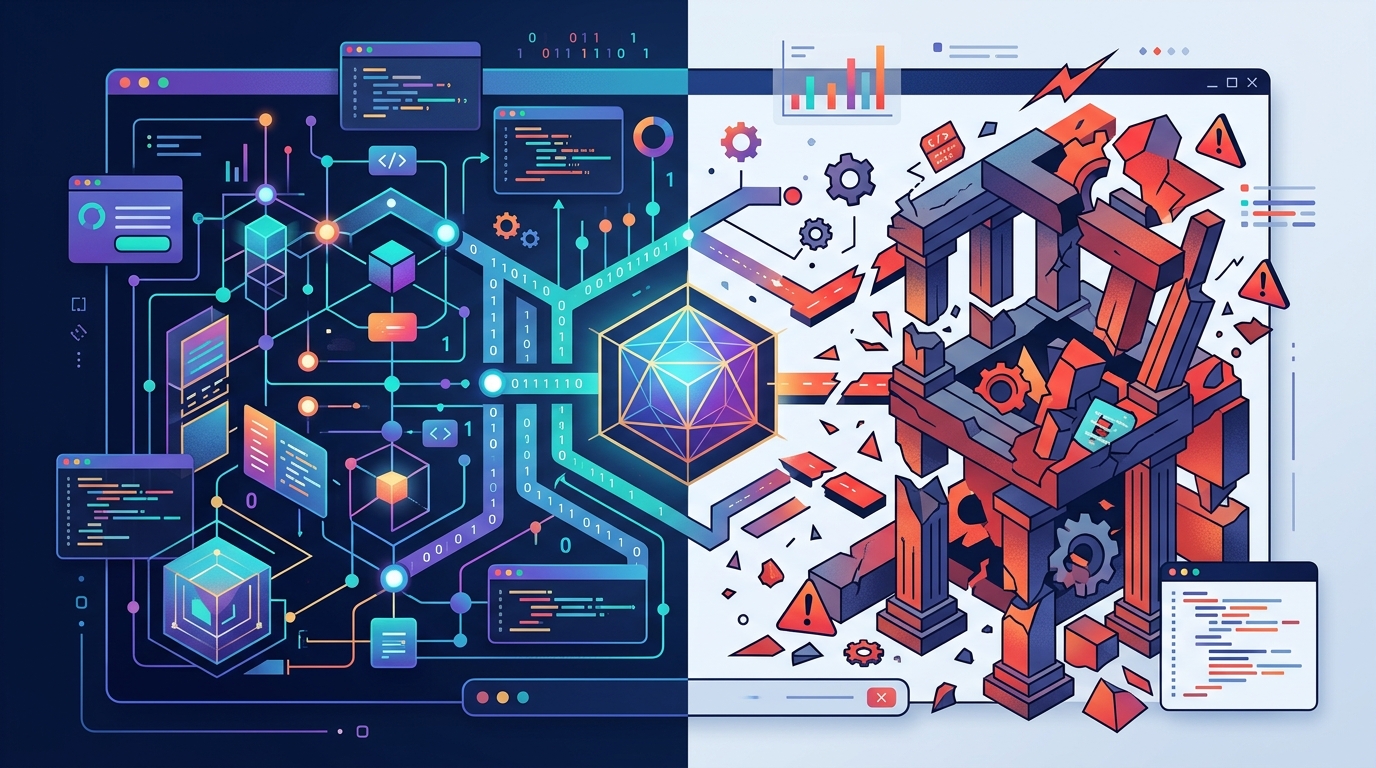
The era where developing specialized Artificial Intelligence (AI) models required an army of data scientists and machine learning (ML) engineers is coming to an end. A fundamental shift is occurring in how enterprises approach technology: the ability to train models directly from production workflows. This means that every query processed by an application and every correction made by a Subject Matter Expert (SME) is automatically converted into a training signal, improving the model in real-time.
The Shift from Static to Dynamic Models
Until recently, the process was linear and rigid. A company would collect data, clean it, hand it over to an ML team to train a model, and then deploy it. If the model made a mistake, the process had to start from scratch. Today, the concept of the 'Data Flywheel' is changing everything. Next-generation tools allow enterprises to capture the knowledge generated during daily operations. When a legal professional corrects an automatically generated contract or a doctor modifies a diagnosis suggested by AI, that action isn't just a fix; it's the most valuable training data available.
The key lies in automating the collection of these 'signals.' Instead of relying on manual data labeling, organizations are now using systems that monitor user interactions and evaluations. This dramatically reduces the cost and time required to adapt Large Language Models (LLMs) to the specific needs of a business, making the technology accessible even to medium-sized companies that lack the budgets of Google or Microsoft.
Eliminating the ML Expert Bottleneck
The shortage of Machine Learning talent has been one of the biggest barriers to AI adoption. Salaries for ML engineers have skyrocketed, making the development of custom solutions prohibitive for many. However, the new approach shifts the power from the developer to the user. Subject Matter Experts—the people who deeply understand their field—become the true trainers of the model without needing to write a single line of Python code.
- Immediacy: Improvements happen as users work, not months later in a lab.
- Accuracy: Data comes from real-world usage conditions, not synthetic datasets.
- Cost: Eliminating the need for permanent ML teams reduces operational expenses (OpEx).
This evolution doesn't mean ML engineers will disappear, but their role will shift toward building the infrastructure that enables these automated flows, rather than micro-tuning every individual model.
The Value of the Continuous Feedback Loop
In a traditional setup, models are 'frozen' once deployed. They don't learn from their mistakes unless a human manually intervenes in a new training cycle. By contrast, production-based training creates a living organism. For instance, in customer support, if an AI provides a wrong answer and the agent corrects it, the system learns the correct context for the next time. This 'on-the-job' training is far more effective than any pre-training on generic internet data.
Strategic competitive advantage will no longer come from using the best base model (like GPT-4 or Claude), as these are becoming commodities. Instead, the advantage will lie in the proprietary data flywheel an enterprise builds—the unique feedback loop that makes their AI smarter at their specific business than any general-purpose tool could ever be.
Challenges and Ethics
Despite the excitement, training models from production data carries risks. The primary concern is data quality. If users input incorrect corrections or if the system misinterprets an interaction, the model can suffer from 'data poisoning' and begin producing inferior results. Furthermore, privacy and data security become more complex when sensitive production data is used directly for training.
'The challenge is no longer whether we can train a model, but whether we can trust the process that improves it automatically,' industry analysts note.
Enterprises must establish strict AI Governance frameworks to ensure that automated learning does not lead to bias or violations of regulations like GDPR or the EU AI Act. Balancing speed and safety will be the next big challenge for corporate AI.