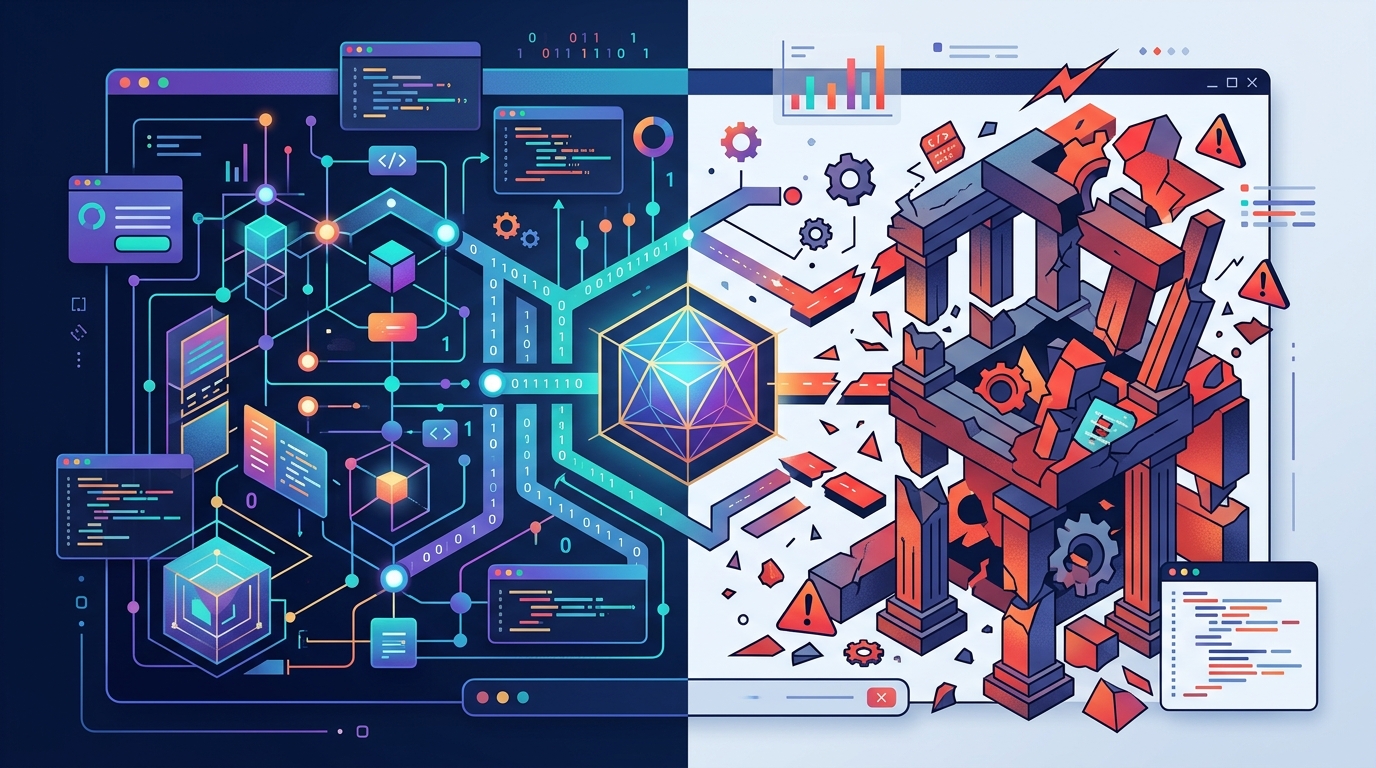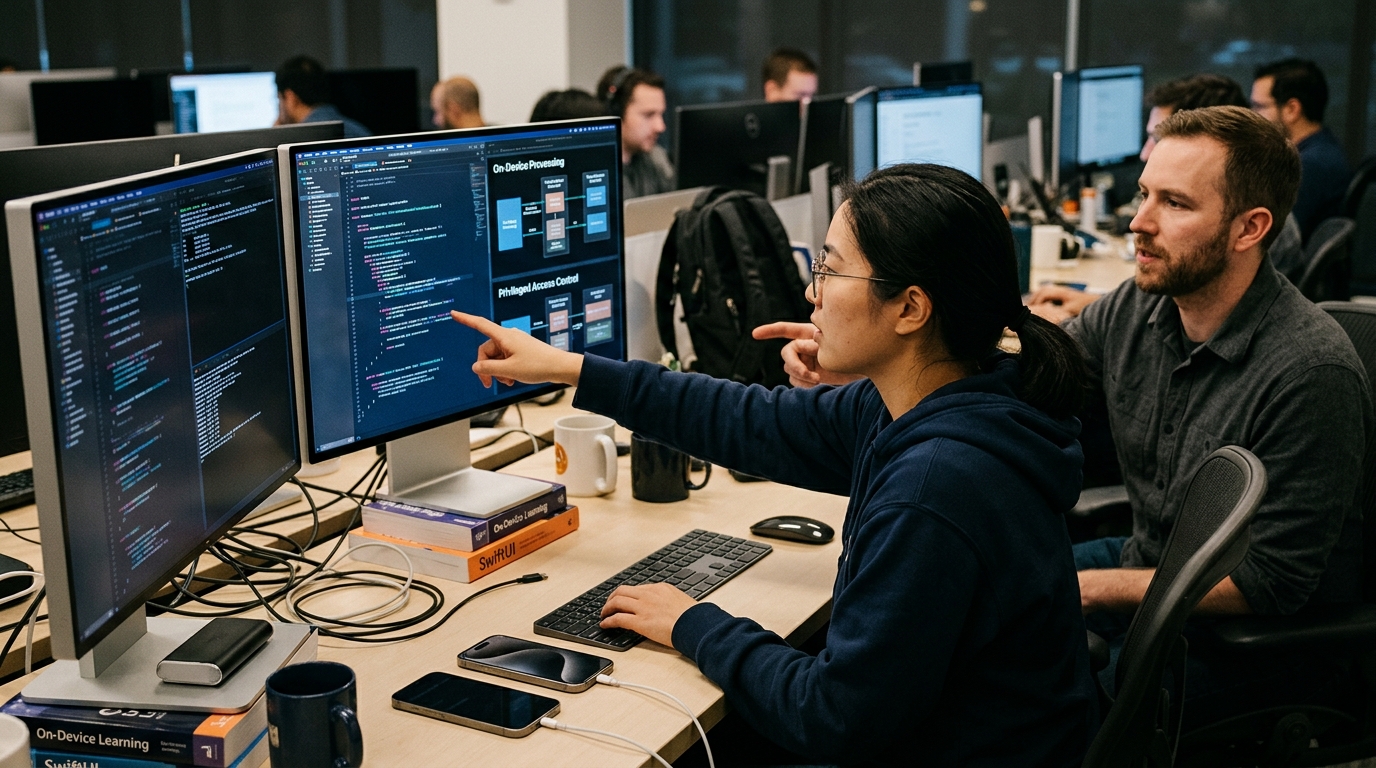
The global programming landscape is witnessing a seismic shift originating from the East. DeepSeek-TUI, a framework powered by the models from the Chinese AI lab DeepSeek, has rapidly ascended the GitHub charts. Its meteoric rise isn't just about raw performance; it's centered on a disruptive promise: the ability for absolute beginners to develop fully functional applications for less than 10 Yuan (approximately $1.40). This marks a turning point where coding ceases to be an elite craft and becomes a ubiquitous utility.
DeepSeek’s Strategy: Efficiency as a Competitive Edge
While Silicon Valley giants like OpenAI and Google lean into ever-larger models requiring massive compute clusters, DeepSeek has carved a niche in extreme optimization. By leveraging Mixture-of-Experts (MoE) architectures and refined training methodologies, they have produced models that rival GPT-4 in reasoning and coding capabilities at a fraction of the inference cost. DeepSeek-TUI capitalizes on this affordability, allowing users to iterate through thousands of tokens without the financial anxiety associated with high-end proprietary APIs.
The focus on Terminal User Interfaces (TUIs) is particularly strategic. In an era of bloated graphical interfaces, TUIs remain the gold standard for developers due to their speed, low latency, and efficiency. DeepSeek-TUI enables users with zero knowledge of libraries like 'ncurses' or 'ratatui' to describe their vision in natural language and receive executable, sophisticated terminal apps in seconds. It bridges the gap between the conceptual 'what' and the technical 'how'.
The 10-Yuan Litmus Test: Erasing Entry Barriers
Recent benchmarks shared on the Chinese tech news outlet 36kr—and subsequently validated by the GitHub community—demonstrate the staggering cost-efficiency of the tool. Building a robust task management system or a real-time cryptocurrency tracker involved API costs totaling less than $1.50. For a traditional developer, such a project would entail hours of boilerplate coding, environment setup, and debugging. With DeepSeek-TUI, the process is compressed into a few minutes of prompting.
The most compelling feature for beginners is the model's autonomous debugging capability. If the generated code fails to compile or run, the tool analyzes the stack trace and self-corrects. This closed-loop feedback system is what truly drives down costs, as it minimizes the need for expensive human intervention. Users are no longer just purchasing 'code snippets'; they are purchasing 'functional outcomes'.
Geopolitical and Economic Implications
The success of DeepSeek-TUI highlights a broader trend: the democratization of high-tier AI. China, through entities like DeepSeek (backed by High-Flyer Quant), is proving that it can lead in the 'applied AI' space. While Western discourse often fixates on the existential risks of AGI, Eastern developers are delivering tools that augment the productivity of the average citizen today. This is giving rise to a new class of 'digital artisans'—individuals who may lack formal computer science degrees but possess the architectural vision to build software using AI as their primary tool.
However, this shift raises critical questions for the labor market. If a novice can perform the tasks of a junior developer for the price of a snack, the market value of syntax proficiency will inevitably plummet. Computer science education must pivot from teaching 'how to write' to teaching 'how to architect' and 'how to audit'. Critical thinking and system design are becoming the new high-ground, as the act of writing code becomes a cheap commodity.
Conclusion: A Future Defined by Low-Cost Innovation
DeepSeek-TUI is not the death of programming; it is the liberation of it. When the cost of experimentation falls below the price of a cup of coffee, innovation is unleashed from the constraints of capital and formal training. Those who once feared the command line are now using it as a canvas for their ideas. The challenge for the global tech community is to integrate these tools responsibly, ensuring that ease of use does not lead to a deluge of insecure software, but rather to a new renaissance of human-centric creation.