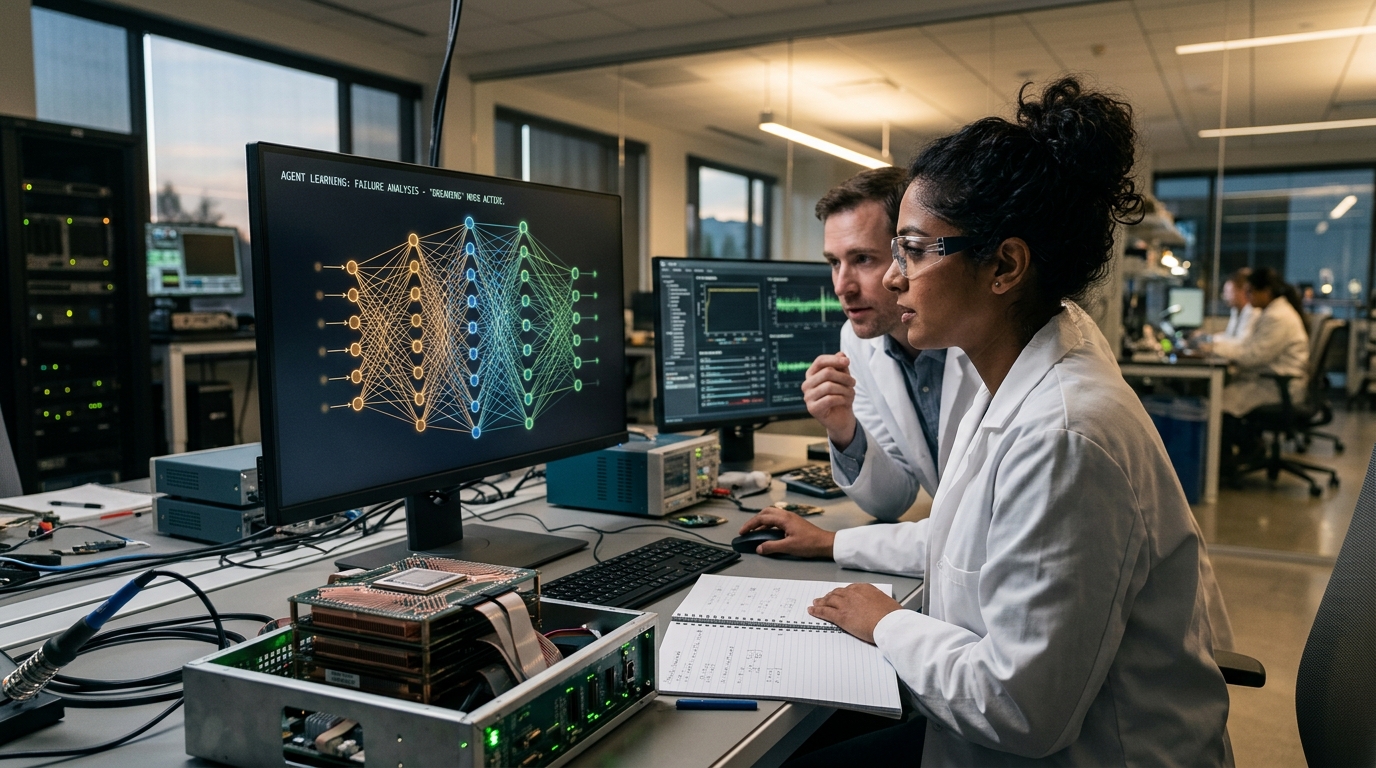
The era of static large language models that merely respond to prompts is giving way to a more dynamic reality: the rise of agentic AI capable of self-reflection. At the second annual "Code with Claude" developer conference in San Francisco, Anthropic introduced a groundbreaking feature called "Dreaming." Integrated into the Claude Managed Agents platform, this capability allows AI systems to analyze their past sessions, identify where they failed, and correct their behavior without direct human intervention.
The Mechanics of Machine ‘Dreaming’
Despite its poetic name, Dreaming is rooted in rigorous technical methodology. At its core, the system utilizes synthetic data generation and a process known as retrospective analysis. When an AI agent completes a task—be it writing software or managing a complex logistical workflow—the Dreaming function activates during idle periods. It reviews execution logs, simulates alternative scenarios, and tests different approaches to determine if a more optimal outcome could have been achieved.
This process is strikingly similar to how the human brain processes the day's experiences during sleep, strengthening neural connections and discarding ineffective strategies. For Anthropic, the goal is to minimize the "human-in-the-loop" requirement, allowing developers to focus on high-level architectural design rather than the tedious, repetitive fine-tuning of prompts and instructions.
From Chatbots to Autonomous Partners
This move marks a significant strategic pivot for Anthropic, shifting focus from "intelligent conversationalists" to "autonomous partners." Claude Managed Agents are no longer just tools waiting for a query; they are entities capable of managing entire software projects. With the addition of Dreaming, the reliability and consistency of these agents are expected to reach unprecedented levels.
One of the primary challenges with the current generation of AI agents is "drift" or the tendency to repeat the same error in similar contexts. Dreaming addresses this by creating an internal feedback loop. For example, if an agent failed to connect to a database due to a minor syntax error, it would, during its next "dreaming" cycle, iterate through hundreds of variations until it discovers the correct path, which it then encodes into its permanent operational policy for that specific task.
Safety, Ethics, and the Competitive Landscape
True to its reputation as a safety-first AI company, Anthropic emphasized that Dreaming operates within a strictly controlled sandbox environment. These simulations do not touch live user data or execute in production environments until they are validated. This safeguard is critical for enterprises that fear an autonomously learning agent might take unpredictable or unauthorized actions.
Meanwhile, the competition with OpenAI and Google is intensifying. While OpenAI focuses on raw scaling and multimodal capabilities, Anthropic appears to be betting on "procedural intelligence." Dreaming is a direct response to the need for more efficient models that do not require massive amounts of new internet data but instead maximize the utility of their own experiences. In a world where high-quality training data is becoming a scarce resource, the ability of a model to learn from itself is the industry's "Holy Grail."
The Future of Work with Claude
During the keynote, Anthropic engineers demonstrated cases where agents using Dreaming reduced coding errors by 40% within just three cycles of self-improvement. The implications for productivity are staggering. Imagine a digital assistant that is slightly more capable every morning, having spent the night analyzing and resolving the friction points of the previous day's work.
However, questions remain regarding the energy costs associated with these continuous training cycles and whether this "synthetic experience" can truly replace human judgment in scenarios requiring ethical nuance. Anthropic maintains that Dreaming is an optimization tool, not a replacement for human oversight, but the line between the two is becoming increasingly blurred as agents become more autonomous.