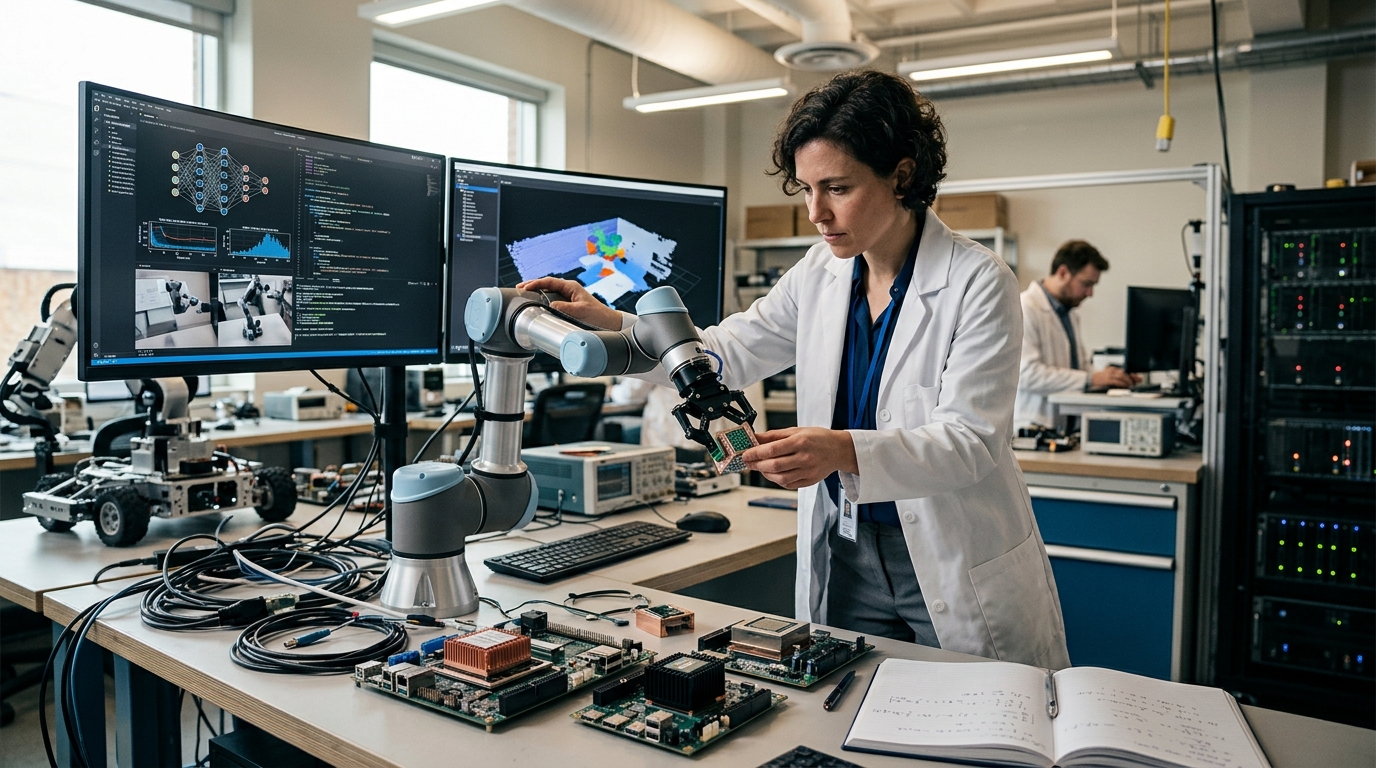
The history of artificial intelligence in recent years resembles an athlete who has overdeveloped their mind while completely neglecting their body. While Large Language Models (LLMs) can compose poetry, write complex code, and pass bar exams, they still struggle with the simplest physical tasks a five-year-old performs with ease, such as folding a towel or unloading a dishwasher. This is the famous "Moravec’s Paradox," and the startup Generalist AI, backed by a staggering $2 billion valuation, claims to have found the key to unlocking it.
The Data Scarcity Conundrum in Robotics
Why is training a robot so difficult compared to training a chatbot? The answer lies in the data. ChatGPT was trained on nearly the entire written history of human civilization available online. Robots, however, lack an equivalent "Internet of Actions." Every movement, every interaction with physical matter, must be recorded, encoded, and fed into a model. Historically, robotics has relied on specialized models: a robot would learn to perform one specific task in a highly controlled factory environment.
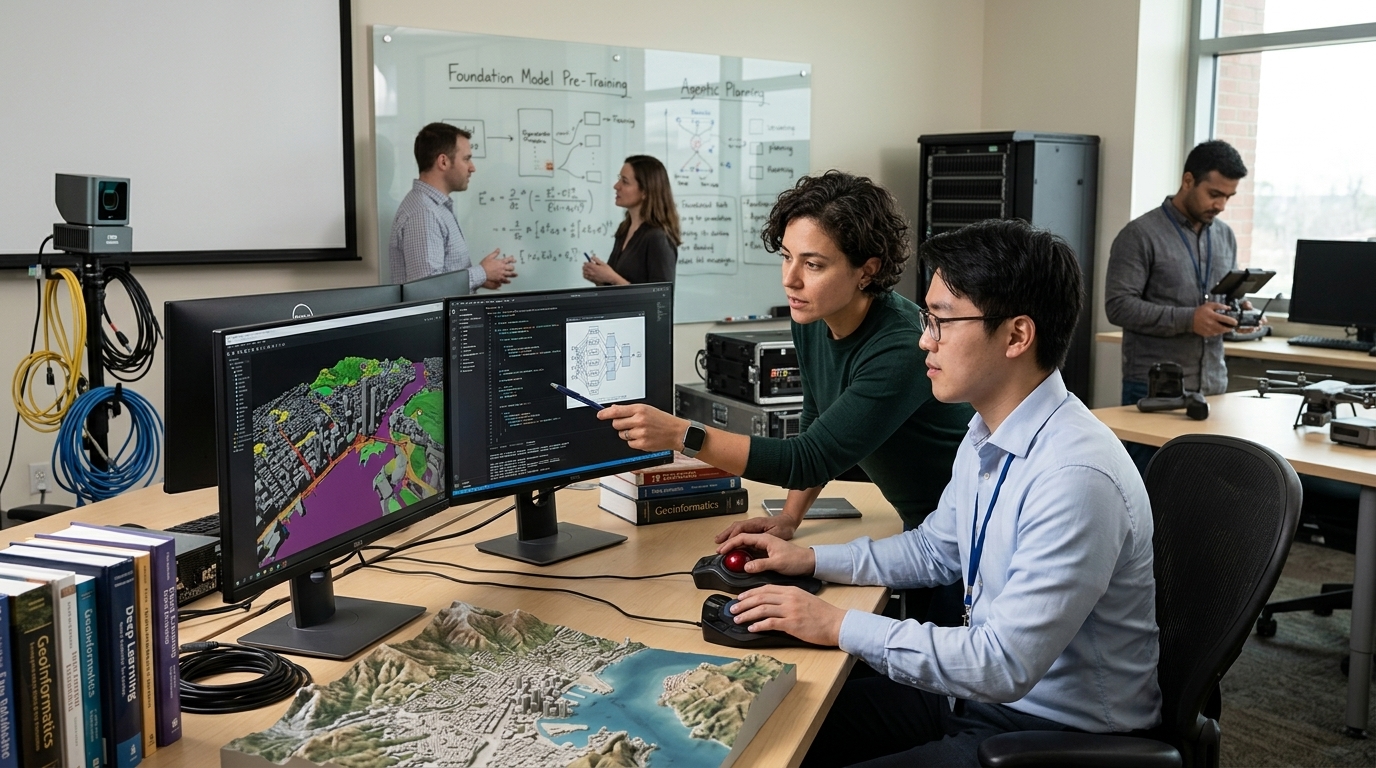
Generalist AI seeks to flip this paradigm. Instead of specialization, it proposes the creation of a "Foundation Model for Physics." This is a unified AI brain that doesn't just learn to move a gripper but understands the fundamental principles of physics, material resistance, and spatial geometry. The hypothesis is that if a model is trained on millions of diverse tasks, it will develop a form of "physical common sense," allowing it to adapt to new challenges without manual reprogramming.
The $2 Billion Strategy
The company's massive valuation, even before releasing a commercial product, reflects Silicon Valley's conviction that the next great frontier isn't screens, but atoms. Heavyweight investors are betting that Generalist AI can create the "operating system" for every robotic platform, from humanoids to industrial arms and autonomous delivery bots.
- Large-Scale Data Collection: Utilizing teleoperation, where humans perform tasks while wearing sensor suits to "teach" the model by example.
- Synthetic Data: Leveraging advanced physics simulations to generate billions of hours of "experience" in digital environments.
- Cross-Platform Learning: The model learns from different types of robotic hardware, extracting universal rules of motion.
"We aren't building a robot. We are building the intelligence that will allow any machine to understand the world as we do," say sources close to the company's leadership.
Economic and Social Implications
If Generalist AI succeeds, the implications will be tectonic. The global supply chain could reach levels of automation that currently seem like science fiction. Manufacturing could return to high-labor-cost countries as robots become as flexible as humans but far more efficient. However, this raises profound questions about the future of labor in unskilled manufacturing and service sectors.
The question remains: Is this approach enough to overcome the complexity of the real world? The physical world is chaotic, unpredictable, and full of edge cases. The ability of a model to generalize from training to reality—the "sim-to-real gap"—is the holy grail of robotics. With $2 billion in the bank, Generalist AI has the runway to fail multiple times before getting it right—or to prove that intelligence without a body was actually the easy part of the equation.
Conclusion: The Dawn of Physical AI
We are at a turning point. The transition from "AI of Information" to "AI of Action" will define the next decade. Generalist AI is not just competing with other startups; it is competing with human dexterity itself. If they manage to encode the experience of touch and motion, the boundary between the digital and physical worlds will begin to fade permanently.