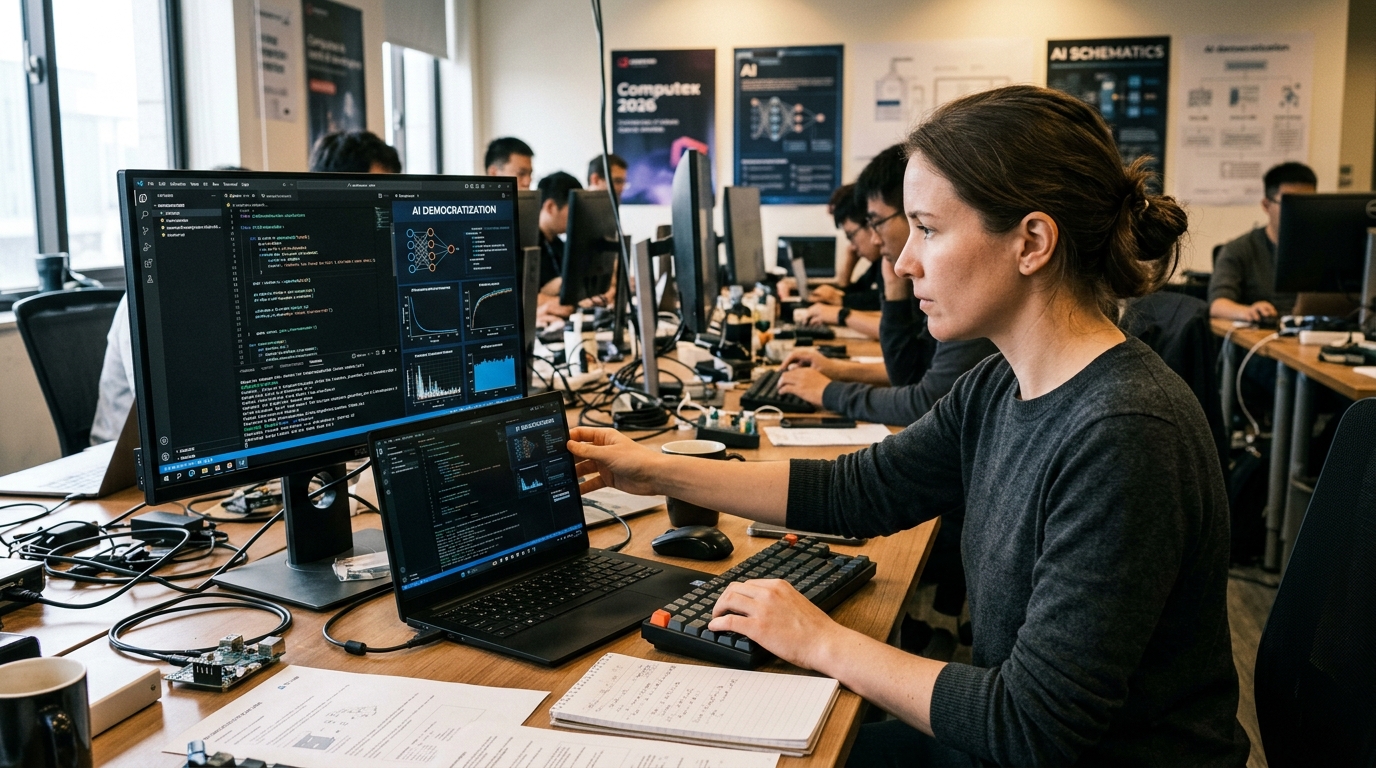
In the heart of Taipei, where the pulse of global technology beats louder than anywhere else, Computex 2026 opened its doors with a promise that until last year seemed utopian: the complete democratization of Artificial Intelligence. If 2024 was the year of "discovery" and 2025 the year of "integration," 2026 is undoubtedly the year of "accessibility." The news that dominated conversations was not just the new quantum processors or monstrous graphics cards, but the emergence of the first Windows AI laptops with a starting price of $300.
The $300 Revolution: AI for Everyone
Microsoft, in close collaboration with manufacturers like Acer, ASUS, and Lenovo, introduced a new category of devices based on optimized ARM processors and low-power x86 chips from Intel and AMD. These machines, despite their low price, feature specialized Neural Processing Units (NPUs) exceeding 45 TOPS (Trillions of Operations Per Second), the threshold set by Microsoft for full support of Copilot+ features.
The significance of this development is immense for education and developing economies. A student in Vietnam or Greece can now have access to local Large Language Models (LLMs) running directly on their device, without the need for cloud subscriptions or a permanent internet connection. This reduces the digital divide and provides creativity and productivity tools that previously required equipment worth thousands of euros.
NVIDIA and the 'Rubin' Architecture: Dominance Continues
At the other end of the spectrum, NVIDIA's Jensen Huang revealed more details about the "Rubin" architecture, the successor to Blackwell. The new supercomputers presented are not just faster; they are "energy-intelligent." With the energy crisis threatening the growth of data centers, NVIDIA focused on liquid-cooled systems that reduce energy consumption by 40% compared to the previous generation, while offering five times the power for training next-generation models.
- New HBM4 chips for unthinkable data transfer speeds.
- CPU-GPU unification with the new Vera system, promising to change the landscape of high-performance computing.
- Omniverse platforms that now allow for full digital control of factories in real-time with zero latency.
Software as the Connecting Link
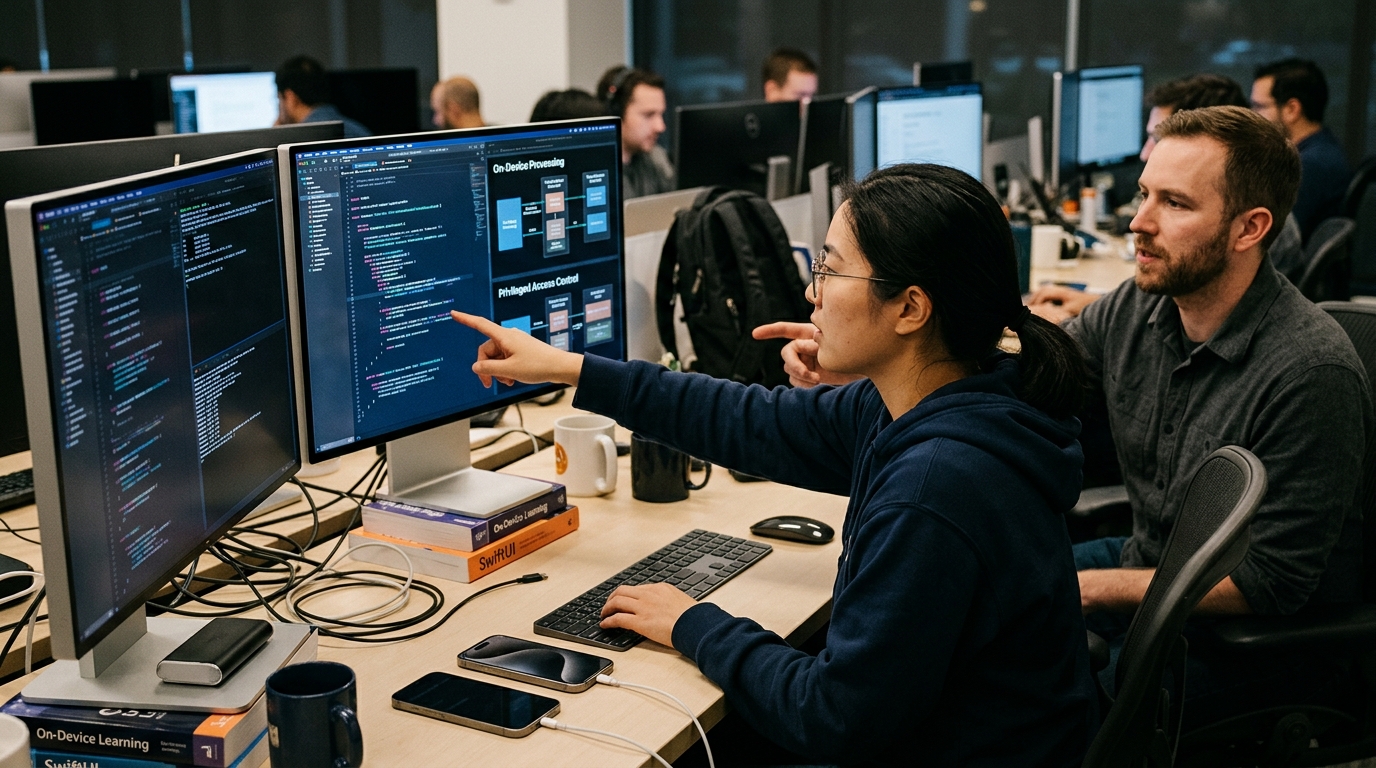
Computex 2026 was not just about hardware. The emphasis was on how software can leverage the power of new NPUs. We saw video editing applications that render in seconds using local AI, and security systems that detect malware at the hardware level before code is even executed. Microsoft confirmed that the next major Windows update will be entirely based on "AI Agents" that learn from user habits, offering a personalized experience without violating privacy, as data never leaves the device.
"Technology has no value if it is not accessible. Today, in Taipei, we are breaking the chains of cost and bringing intelligence to every home," said an industry executive during the keynote.
The Geopolitics of Silicon
We cannot ignore the political context. Holding Computex in Taiwan remains a statement of supply chain power. Despite efforts by the US and Europe to diversify semiconductor production, Taiwan remains the irreplaceable hub. The presence of CEOs from the world's largest companies here underlines the need for stability in a region at the center of global competition. The shift towards cheap AI laptops is also a strategic move to dominate the standards of the next decade, as whoever controls the average user's device also controls the application ecosystem.