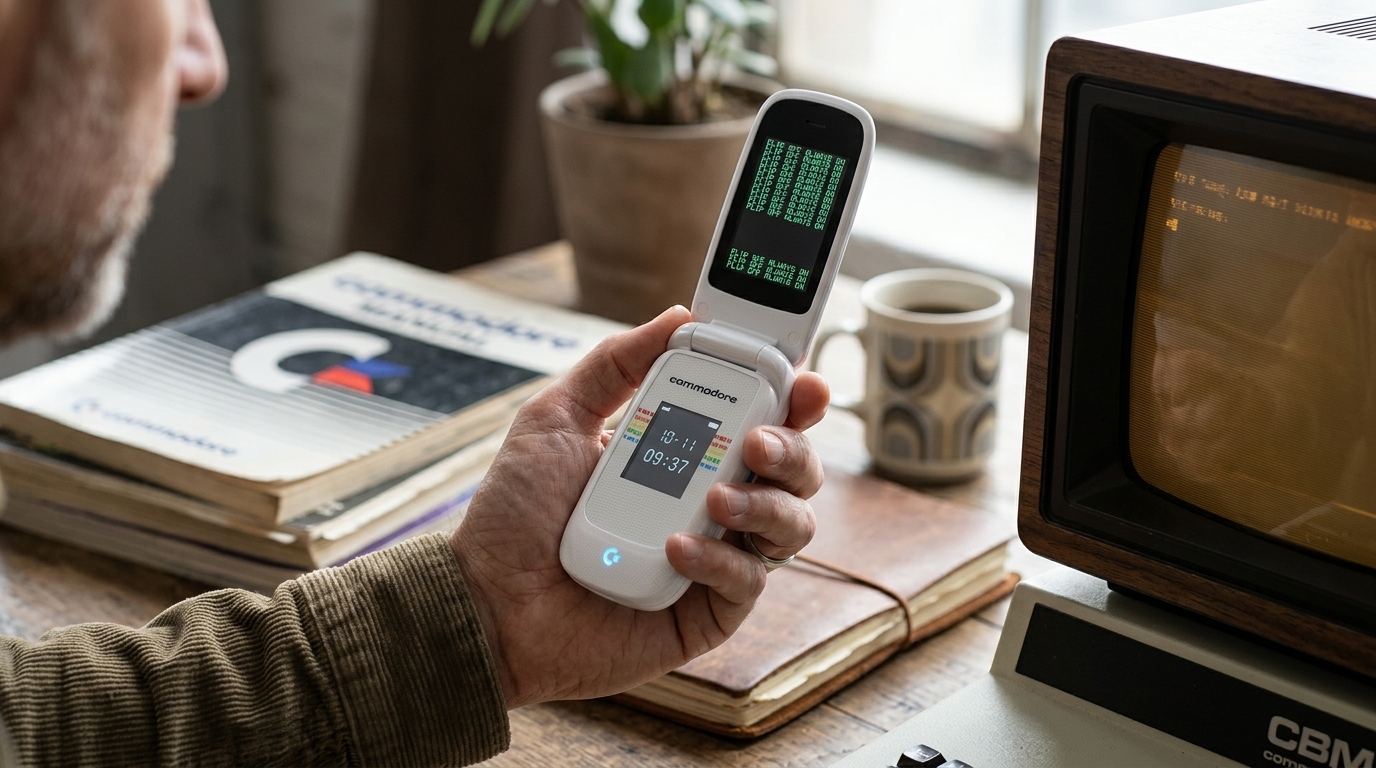
In an era where the "attention economy" seems to have captured every waking second of our lives, the emergence of the Commodore Callback 8020 is not merely a nostalgic stunt, but a political act of resistance. The revival of the iconic Commodore name doesn't come through a new computer, but via a flip phone that refuses to be labeled "dumb," even though its primary mission is to help us disconnect from the digital noise.
The Philosophy of Selective Connectivity
The Callback 8020 is the answer to the dilemma many modern users face: how can one escape the addictive algorithms of Instagram and TikTok without losing the ability to hail an Uber or listen to music on Spotify? Commodore's device runs a heavily modified version of Android that only permits "utilitarian" applications. Google Maps, WhatsApp, and banking apps are present, but the infinite scroll has been pre-emptively blocked.
This approach of "intentional technology" targets an audience weary of information overload. The use of a T9 keyboard for messaging isn't just a retro aesthetic choice; it's a way to slow down communication. When typing requires effort, the message becomes more meaningful. Users are forced to think about what they want to say, rather than firing off incessant, often hollow, short sentences.
Design and Nostalgic Aesthetics
Design-wise, the Callback 8020 is a masterpiece echoing the golden age of mobile telephony in the early 2000s. With its signature "click" upon closing, it offers a tactile satisfaction that modern flat-screen smartphones have long since lost. Commodore, a brand that once dominated homes with the C64 and Amiga, uses its logo as a symbol of an era when technology was a creative tool rather than a surveillance medium.
- 3.5-inch high-contrast display for sunlight readability.
- Battery life reaching three days on a single charge.
- Physical backlit T9 keyboard.
- 5G support for fast mapping and music streaming.
The build quality is robust, reminiscent of the "indestructible" phones of the past. Unlike today's glass marvels that shatter upon the first impact, the Callback 8020 seems designed to withstand the rigors of real life, reinforcing the idea that the phone should serve the human, not the other way around.
The Social Phenomenon of Digital Detox
The rise of devices like the Commodore Callback 8020 reflects a broader societal shift. Gen Z, the first generation to grow up entirely digitized, is now leading the movement toward dumbphones. The need for mental health protection and the desire for "presence" in personal moments make these devices the ultimate status symbol of the new era. Not being available 24/7 on Slack or Instagram is now considered a luxury.
"The Callback 8020 isn't a phone that limits you. It's a phone that gives you back your time," says the Commodore design team.
However, the challenge remains: can a device solve a problem deeply rooted in human psychology and social structures? The dopamine addiction provided by likes doesn't simply vanish because the hardware changed. It requires a conscious decision from the user. The Commodore Callback 8020 is merely the facilitator of that decision, providing the necessary digital crutches (GPS, payments) without the temptations of the social media abyss.
Economic Implications and the Niche Market
The smartphone market has reached a saturation point where innovations are marginal. In this environment, niche devices focusing on specific needs—such as privacy, durability, or digital detox—are finding fertile ground. Commodore is betting that a significant percentage of consumers is willing to pay a premium for a device that does less, but does it better.
In conclusion, the Callback 8020 is a bold proposition. It isn't for everyone, and it certainly won't replace the iPhone or Samsung Galaxy for the masses. But it speaks to those who feel their lives have been held hostage by a screen and seek an elegant, functional exit. It is a return to basics, with the glorious Commodore logo reminding us that technology can once again be personal and controlled.