The eternal battle between the human immune system and invading pathogens is entering a sophisticated new chapter. For decades, the scientific community has sought to decode the precise mechanics of how antibodies bind to and neutralize viruses. However, traditional imaging techniques often left us with static, incomplete snapshots—akin to trying to understand a complex machine from a single, blurry photograph. Now, a pioneering study utilizing nanodisc technology is changing the landscape, allowing researchers to witness antibody attacks with unprecedented clarity and precision, paving the way for rationally designed vaccines.
The Challenge of Realistic Modeling
The primary obstacle in virology has always been the environment. Viruses are dynamic entities, often enveloped in a lipid membrane that is critical to the structural integrity of their surface proteins. Historically, scientists used detergents to isolate these proteins for study, a process that frequently caused them to denature or lose their natural shape. It was the biological equivalent of studying a fish out of water; the resulting data didn't reflect how the virus actually behaves inside a living host.
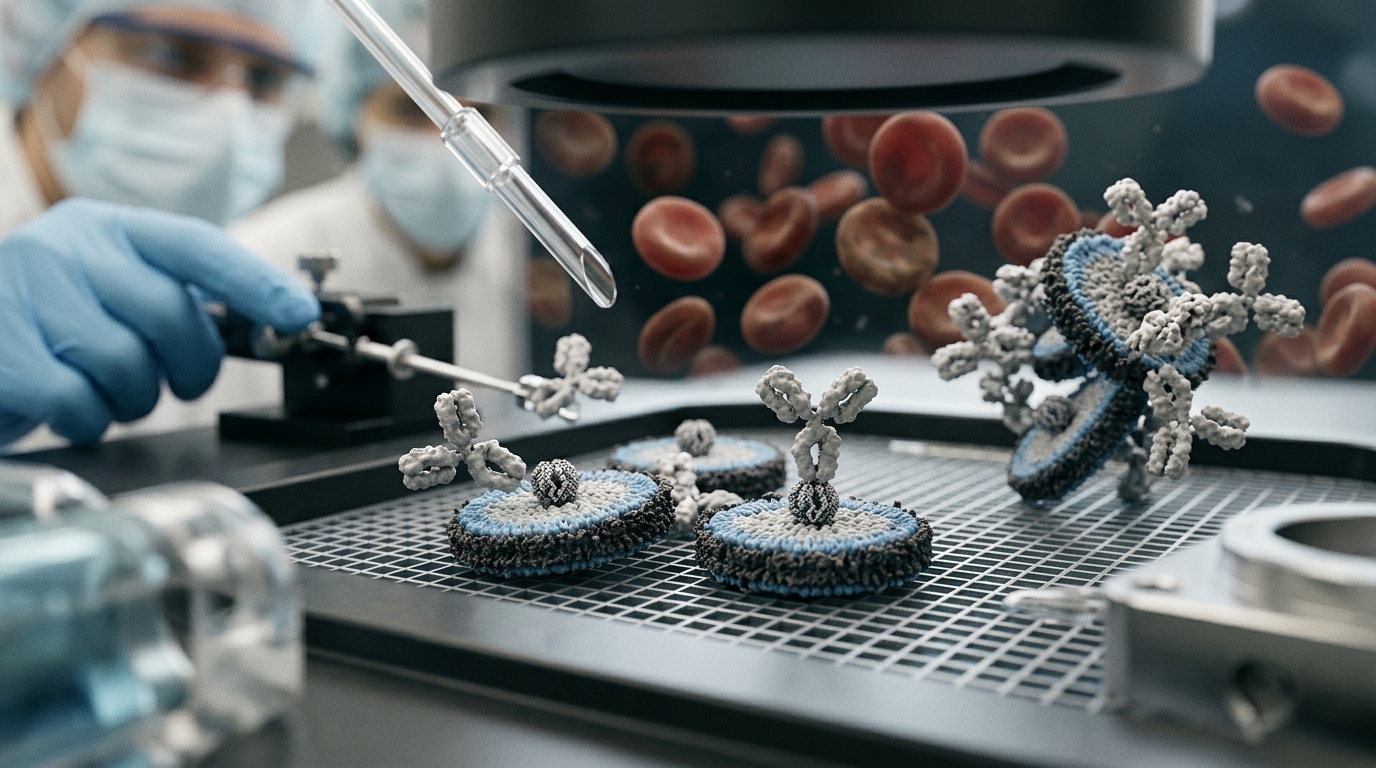
Nanodiscs solve this fundamental problem. These synthetic membrane models, composed of lipids and stabilizing proteins, act as microscopic "islands" that mimic the cell surface. Within these discs, viral proteins maintain their native configuration. When combined with advanced Cryo-Electron Microscopy (Cryo-EM), this setup allows scientists to capture high-resolution, three-dimensional images of antibodies as they lock onto their targets in a realistic setting.
Exposing the Virus's Hidden Weaknesses
The research has revealed that antibody neutralization is far from a blunt instrument. Instead, it is a highly specific tactical strike against regions called epitopes. Until now, many of these epitopes remained hidden because they only manifest when the virus is in a specific energetic state or when its membrane is intact. By using nanodiscs, researchers have identified "vulnerability pockets" that viruses previously used to evade immune detection.
- Precision Engineering: Understanding the exact angle and force of an antibody's attachment allows for the creation of vaccines that train the immune system to produce only the most potent defenders.
- Broad-Spectrum Protection: By identifying "conserved" regions of the virus—parts that do not change even as the virus mutates—scientists can develop vaccines that offer long-lasting protection against multiple variants.
- Reduced Side Effects: Higher precision in vaccine design translates to fewer off-target immune responses, potentially reducing the incidence of adverse reactions.
The Synergy with Artificial Intelligence
While this breakthrough is rooted in structural biology, its implications for Artificial Intelligence are profound. The high-fidelity data generated by these observations serves as the ultimate training set for machine learning models. AI systems like DeepMind's AlphaFold can now be fed more accurate structural information, enabling the simulation of billions of antibody-virus interactions in a fraction of the time it would take in a wet lab.
"We aren't just looking at a picture; we are reading nature's blueprint for defense," noted one of the lead researchers.
The integration of this visual data into "digital twins" of the human immune system could revolutionize how we respond to emerging threats. Future vaccines might be optimized in virtual environments before the first physical dose is ever synthesized. This could compress the timeline for pandemic response from months to mere weeks, fundamentally altering the global public health landscape.
The Future of Preventative Medicine
This discovery extends far beyond COVID-19 or seasonal influenza. Nanodisc technology is already being deployed to study HIV, RSV, and other pathogens that have evaded effective vaccination for decades due to their structural complexity. The ability to watch an antibody "embrace" a viral spike protein in a realistic lipid environment is the key to the "Holy Grail" of immunology: the universal vaccine.
In conclusion, science is transitioning from an era of trial-and-error to an era of absolute structural comprehension. The use of nanodiscs is more than a technical milestone; it is a paradigm shift. As our visualization of molecular processes becomes sharper, humanity gains the tools not just to react to diseases, but to outsmart them with a level of foresight that was once the stuff of science fiction.