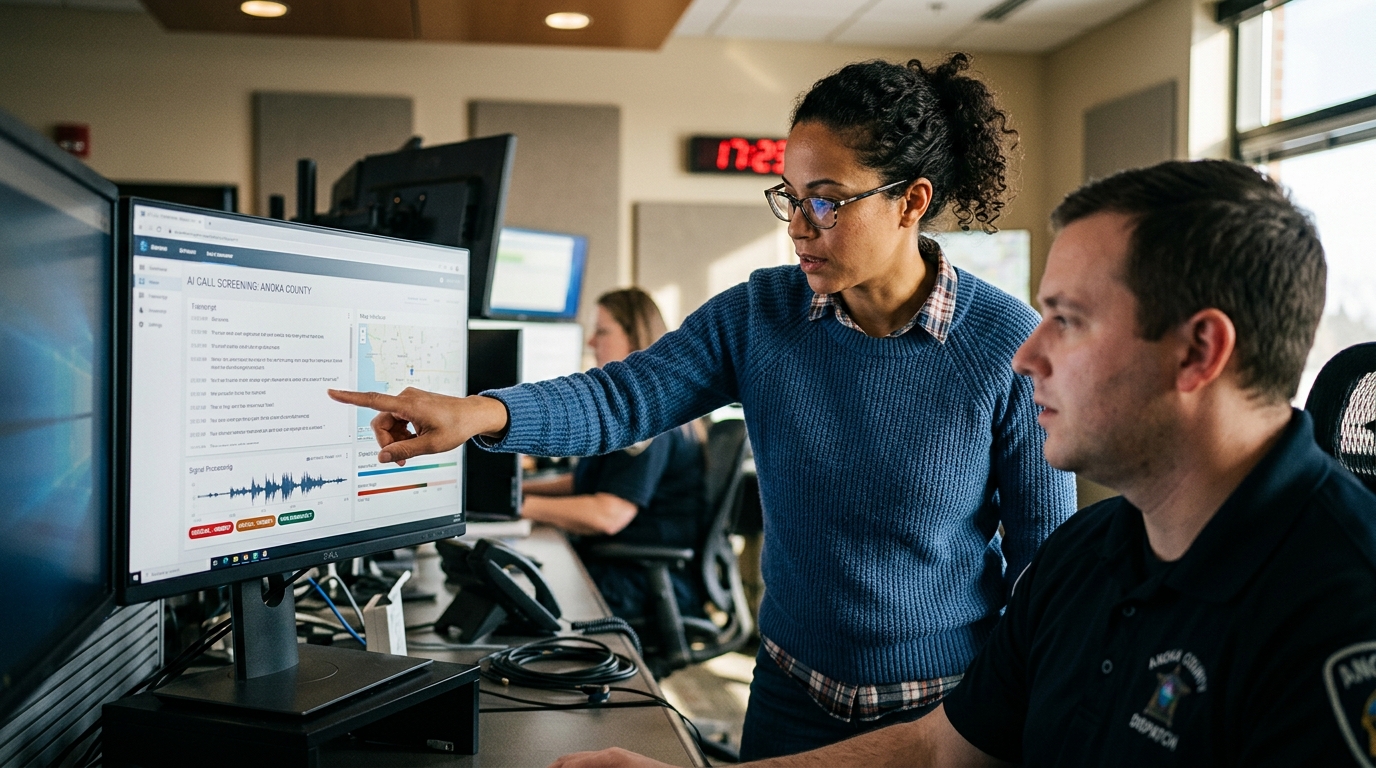
In an era where emergency response centers worldwide are under unprecedented strain, Anoka County in Minnesota is taking a bold step that could serve as a blueprint for future governance. The introduction of Artificial Intelligence (AI) systems to screen and manage non-emergency calls is not merely a technological upgrade; it is a strategic response to the staffing crisis and professional burnout plaguing emergency dispatchers.
The Digital Gateway to Public Safety
The problem is common across many metropolitan areas: 911, the number reserved exclusively for life-and-death situations, is frequently overwhelmed by inquiries about government office hours, noise complaints, or reports of stray animals. In Anoka County, authorities recognized that every second an experienced dispatcher spends explaining how to pay a traffic fine is a second taken away from a genuine crisis.
The new AI system acts as an "intelligent concierge." Using advanced Natural Language Processing (NLP), the platform can understand a citizen's request in real-time. If the call concerns a non-urgent matter, the AI can provide information, record a report, or redirect the caller to the appropriate department without human intervention. This allows human operators to remain focused on high-priority calls where lives are on the line.
Addressing the Staffing Crisis
This move comes at a critical juncture for the public safety workforce. Dispatch work is notorious for high stress and low retention rates. By automating mundane and repetitive tasks, Anoka County hopes to improve the quality of life for its employees.
- Reduction of "routine" call volume by up to 30%.
- Faster response times for actual emergencies.
- Ability to provide service in multiple languages without immediate need for a translator.
- Data collection on frequent citizen concerns, allowing for better resource allocation.
"We are not trying to replace the human touch, but to protect it for the moments when it truly matters," county officials state.
Ethical Challenges and the Accuracy Hurdle
Despite the benefits, the use of AI in services related to public safety is not without risks. The primary question remains: what happens if the AI fails to recognize danger in a seemingly calm call? Critics point out that humans have an intuitive ability to "read between the lines"—to hear the fear in a voice or the pause that suggests a threat. AI, however sophisticated, relies on probabilistic algorithms.
To mitigate this risk, the Anoka system is designed with strict safety protocols. There are specific keywords and acoustic patterns that trigger an immediate transfer to a human operator. Furthermore, transparency regarding how these algorithms were trained is essential for maintaining public trust. The County has committed to continuous oversight and regular audits of the system's decisions, ensuring that technology remains a tool rather than an authority.
The Future of Urban Management
Anoka's initiative is part of a broader trend toward "Smart Cities," where technology is used to optimize public infrastructure. As AI becomes more accessible, it is certain that more municipalities will turn to similar solutions. The challenge for the future will be balancing computational efficiency with social responsibility, ensuring that the digital transition does not leave behind the most vulnerable groups of the population who may struggle with automated systems.