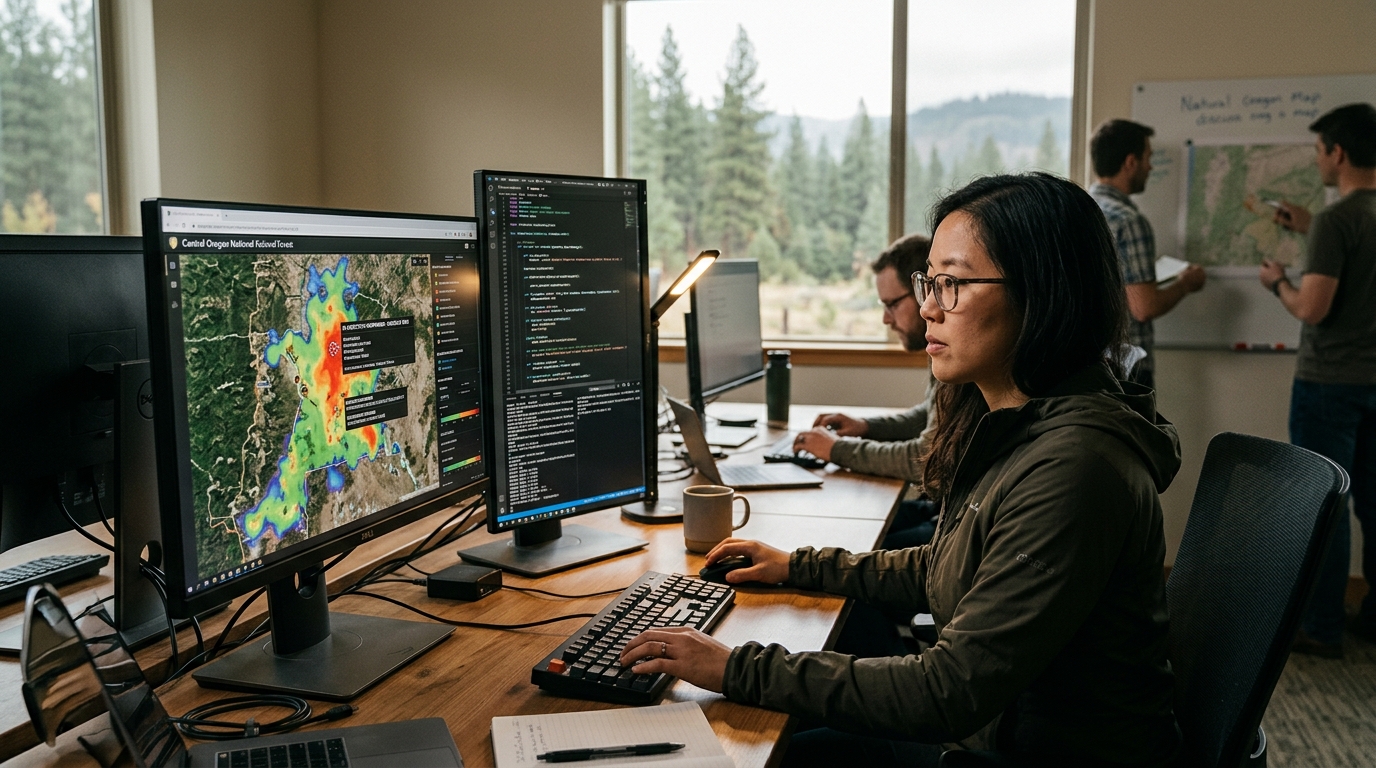
Every summer, residents of Oregon face a familiar yet terrifying ritual: the scent of woodsmoke on the breeze and the mounting anxiety over where the next blaze is ignited. However, in 2026, the battle against wildfires has gained a formidable new ally. Artificial Intelligence (AI) is no longer a theoretical promise; it is an operational tool scanning the horizon with speed and precision far exceeding human capabilities.
From Lookout Towers to Algorithms
Historically, wildfire detection relied on human lookouts stationed in isolated towers, armed with binoculars and alidades. While heroic, this method had inherent limitations: fatigue, darkness, and obstructed visibility. Today, the Oregon Department of Forestry (ODF), in partnership with companies like Pano AI, is deploying a network of 360-degree high-definition cameras at strategic high-altitude locations.
These cameras do more than just record footage. They are linked to machine learning algorithms trained on millions of images of smoke, fog, dust, and clouds. The system can discern the subtle difference between a tractor’s exhaust and the first wisp of a forest fire. Once a suspicious plume is detected, the AI triangulates the exact location and dispatches an alert to emergency centers in less than a minute.
The Critical Importance of the 'Golden Hour'
In firefighting, time is the ultimate currency. Experts refer to the 'golden hour'—the critical window from the fire's ignition to the first suppression effort. If a fire can be contained within its first ten minutes, the likelihood of it evolving into a catastrophic 'megafire' drops dramatically. AI reduces detection time from hours to seconds, allowing aerial and ground crews to strike before the blaze gains its own momentum.
- Continuous Surveillance: The system operates 24/7, requiring no breaks or sleep.
- Geolocation Precision: By utilizing multiple camera feeds, the AI can pinpoint a fire’s coordinates with incredible accuracy.
- False Alarm Mitigation: The algorithm's ability to filter out mist and dust reduces the wasteful deployment of resources.
According to Oregon fire officials, this technology has already proven its worth in recent incidents where smoke was detected in remote canyons, invisible from roads or traditional watchtowers.
Challenges and the Future of Prevention
Despite its efficacy, the technology is not without hurdles. The cost of installing and maintaining high-tech cameras in rugged terrain is significant, and the requirement for stable internet connectivity—often provided via satellite constellations like Starlink—adds layers of complexity. Furthermore, privacy concerns occasionally surface, as high-resolution cameras overlook vast areas, though authorities maintain that the algorithms are strictly focused on smoke detection.
"Artificial intelligence isn't replacing the firefighter; it’s providing the eyes needed to be omnipresent," noted one wildfire risk analyst.
The next frontier involves integrating real-time data from satellites and local weather stations, enabling the AI to not only detect fire but also predict its trajectory based on wind patterns and fuel moisture levels. For a state like Oregon, and by extension for fire-prone nations globally, this digital infrastructure is becoming a cornerstone of national security in the face of a changing climate.