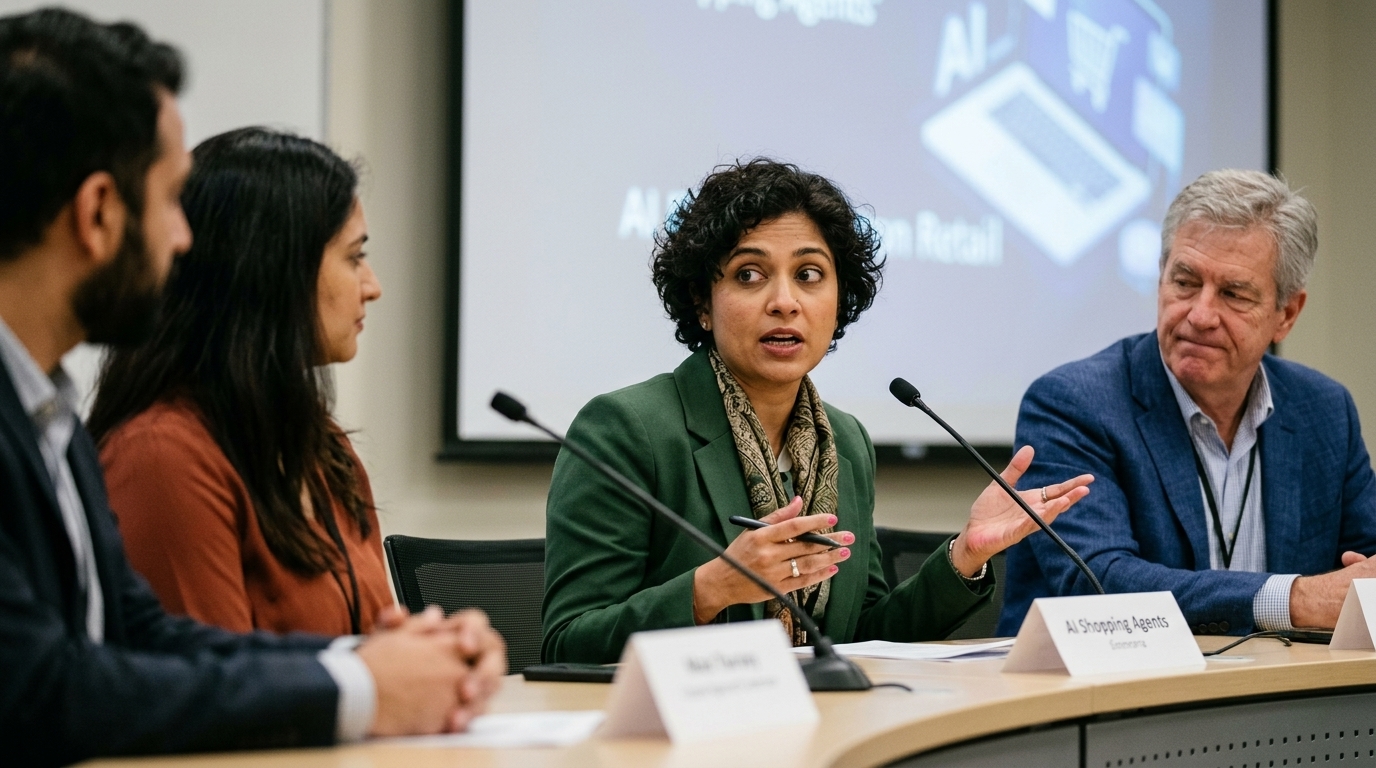
The era of using Artificial Intelligence merely to compare prices or read review summaries is coming to a close. At the recent Fortune Brainstorm Tech conference, it became clear that the next frontier is "AI shopping agents"—autonomous systems that don't just recommend products but are authorized to complete transactions, negotiate discounts, and manage a household's entire supply chain. However, behind the promise of ultimate convenience lies a harsh reality: the global market is institutionally and technically unprepared for this transition.
From Chatbot to Autonomous Agent
Until today, our relationship with AI in e-commerce has been advisory. We ask ChatGPT or Claude "what is the best washing machine for a family of four" and receive a list. An "agent," however, functions differently. It has access to our credit cards, our home address, and our personal preferences. We might tell it: "Find me a black suit for a wedding in July, with a budget of 500 euros, and buy it if the return policy is flexible."
This shift from Large Language Models (LLMs) to Large Action Models (LAMs) fundamentally changes market dynamics. Merchants will no longer target human eyes through striking photography and emotional ads, but rather algorithms that analyze data, specifications, and code. This means that SEO (Search Engine Optimization) will give way to AEO (Agent Engine Optimization), where a business's success depends on how "readable" its interface is to a machine.
The Standards Chaos and the Fraud Threat
The biggest hurdle highlighted at Fortune Brainstorm Tech is the complete lack of industry standards. How can a website know that the agent attempting to purchase a product is actually authorized by the cardholder? Today, security systems (like CAPTCHA) are designed to block bots. In the near future, merchants must learn to welcome "good" bots while simultaneously fending off "malicious" ones trying to scrape data or deplete inventory through automated attacks.
- Identity: There is no global "passport" protocol for AI agents yet.
- Transaction Security: Sharing API keys and financial credentials with third-party systems exponentially increases the risk of interception.
- Liability: If an agent misinterprets a command and buys 100 televisions instead of one, who bears the financial responsibility?
Experts warn that without a common "language" of communication between agents and e-commerce platforms, the system will collapse under the weight of disputed transactions and chargebacks.
The Return Policy and the Legal Void
Another critical issue is the psychology and legal standing of "buyer's remorse." Consumer law in the EU and the US is predicated on human will. When an algorithm makes a purchase, do the same withdrawal rights apply? Merchants fear that AI agents could be used for "return arbitrage": automatically buying dozens of products, physically comparing them, and returning everything but one, burdening businesses with massive logistics costs.
"We haven't yet created the rules of engagement for a world where machines transact with machines," said an executive from a leading payments firm. "Unless we solve the trust problem, agents will remain just expensive toys."
In conclusion, the advent of AI shopping agents is inevitable, as the modern human's need for time-saving is insatiable. However, the industry must accelerate the creation of a framework that ensures this new automated economy does not turn into a digital Wild West. The technology is leading, but the infrastructure—legal, ethical, and technical—is trailing with alarming latency.