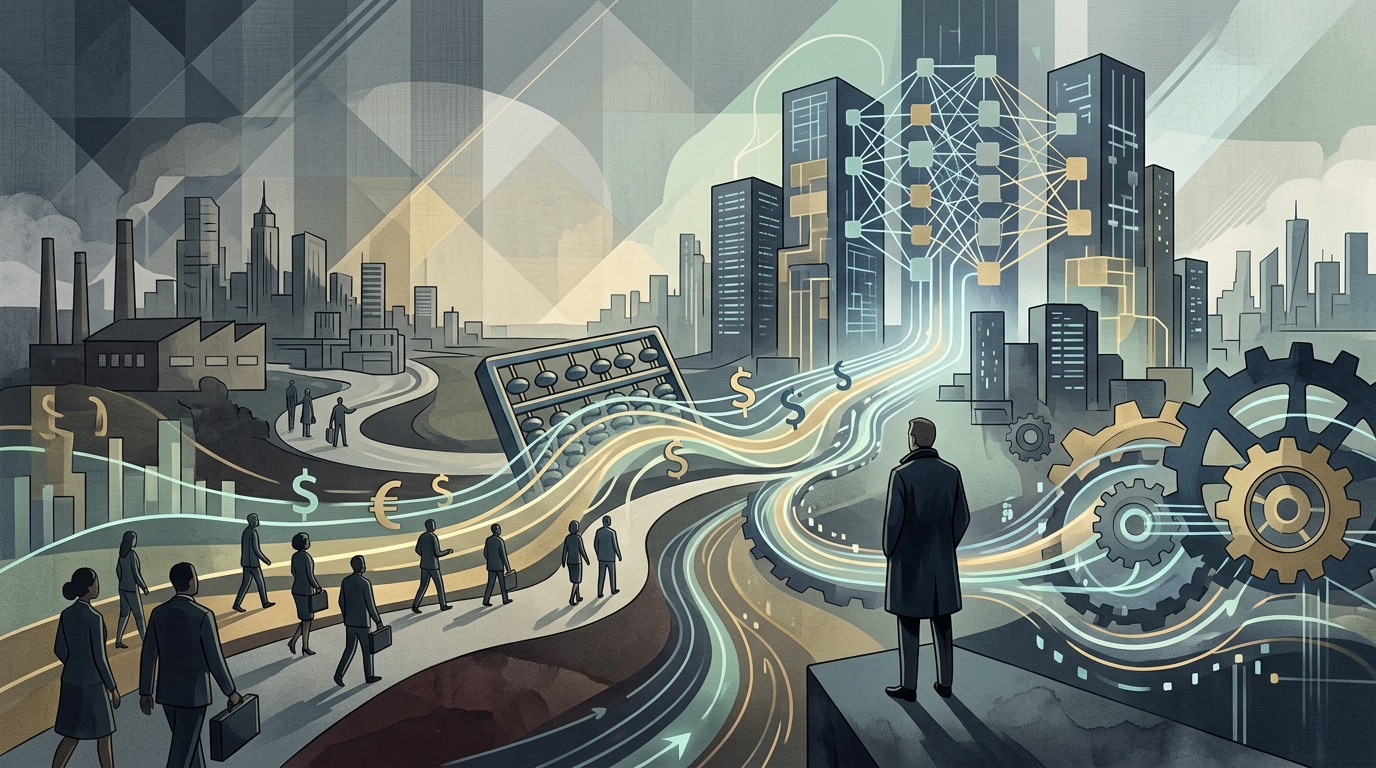
In an era where algorithms dictate everything from loan approvals to medical diagnoses, the central question is no longer just whether Artificial Intelligence (AI) is "smart," but whether it possesses a moral mind. New, comprehensive research has surfaced, analyzing how the human brain processes the concept of "moral thinking" in machines, revealing a profound asymmetry in how we judge silicon compared to biological entities.
The Psychology of Attributing Intentions
The research, grounded in social psychology and cognitive science experiments, demonstrates that humans typically use two primary dimensions to evaluate any entity: "agency" and "experience." Agency refers to the capacity for planning, self-control, and logical thought, while experience involves the capacity for pain, pleasure, and emotions. According to the findings, most people place AI in a unique category: it is granted high agency but zero experience.
This divide has massive implications for moral judgment. When an AI system makes an error, humans tend to judge it with a severity that often surpasses their judgment of humans, precisely because they believe its "logic" should be infallible. However, because it lacks "experience," we feel no need to grant it moral rights. This creates a paradox: we demand that AI behave morally, yet we refuse to treat it as an entity worthy of moral respect.
The Responsibility Paradox and the 'Moral Crumple Zone'
One of the study's most compelling findings concerns what scientists call the "Moral Crumple Zone." This phenomenon occurs when, in the event of an autonomous system's failure, moral and legal responsibility is deflected onto the nearest human operator, even if that person had no real control over the algorithm's decision.
- Study participants showed a tendency to "punish" the AI metaphorically by calling for it to be shut down, but they sought a human for criminal liability.
- The research found that the more "anthropomorphic" an AI interface is, the more easily humans attribute malice and intent to it.
- There is a clear distinction in the users' minds between a "programmed error" and a "moral failure."
This trend reveals that our judgment of AI is not purely rational but deeply rooted in evolutionary biases. We have evolved to recognize intent in anything that appears to move with purpose—a skill that once protected us from predators but now confuses us when dealing with Large Language Models or autonomous vehicles.
Social and Political Implications
Understanding how we judge AI morality is crucial for future legislation. If society perceives machines as "cold executors" without moral weight, then their acceptance in critical sectors like justice or policing will remain low. Conversely, if the industry invests in an illusion of "empathy," we risk being misled into trusting systems that, in reality, have no understanding of human suffering.
"Artificial Intelligence is not a moral agent, but a mirror of our own moral biases," the study notes.
In conclusion, the research underscores that the challenge of our time is not just to build ethical AI, but to train ourselves to understand the limits of our own perception. As machines become more sophisticated, the danger is not necessarily that they will become "evil," but that we will lose the ability to distinguish between accountability and automation.