In the quiet prairies of Illinois, the Fermi National Accelerator Laboratory (Fermilab) is no longer just hunting for subatomic particles; it is re-engineering the very way humanity processes information. The recent unveiling of enhanced storage infrastructure for the Department of Energy’s (DOE) Genesis Mission marks a pivotal moment in history. Artificial Intelligence (AI) has transitioned from a peripheral tool for data analysis to the central nervous system of high-energy physics.
The Exabyte Challenge and the Genesis Strategy
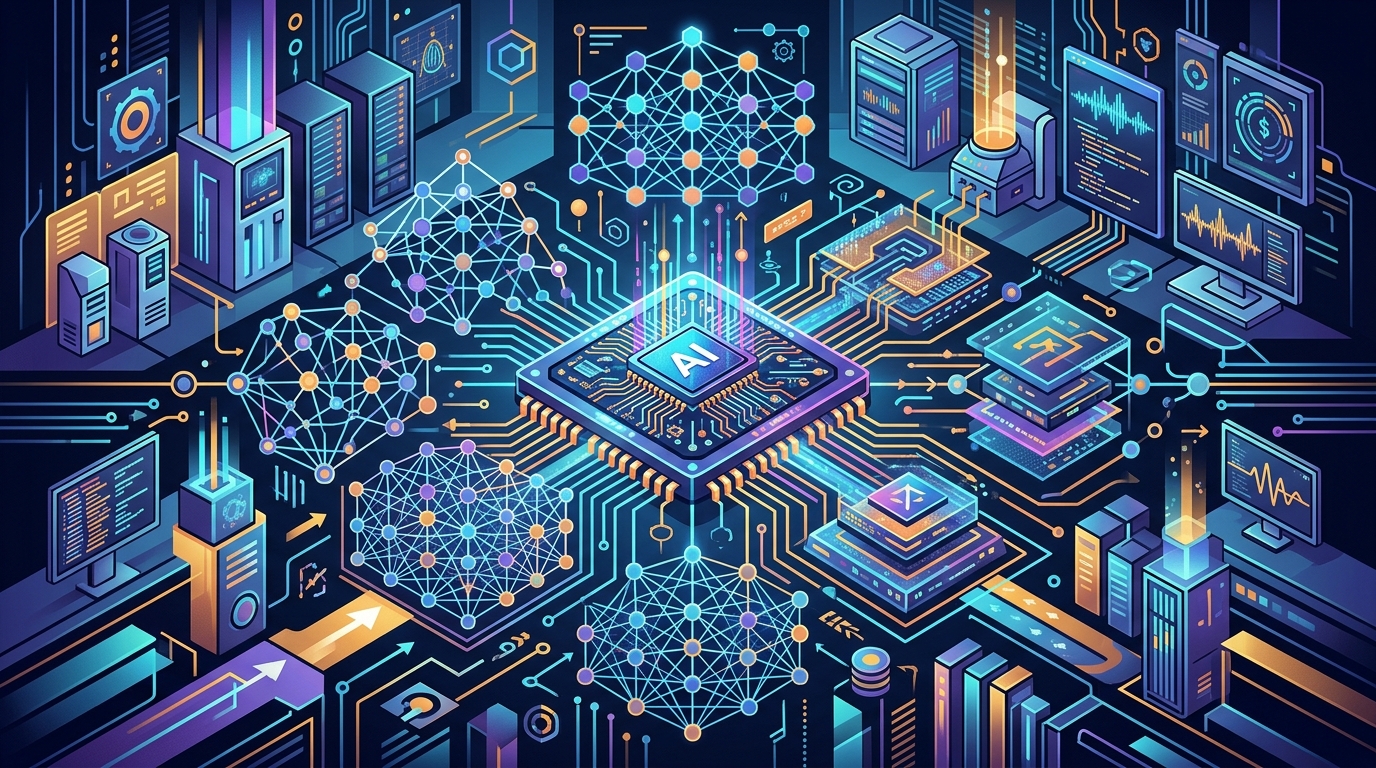
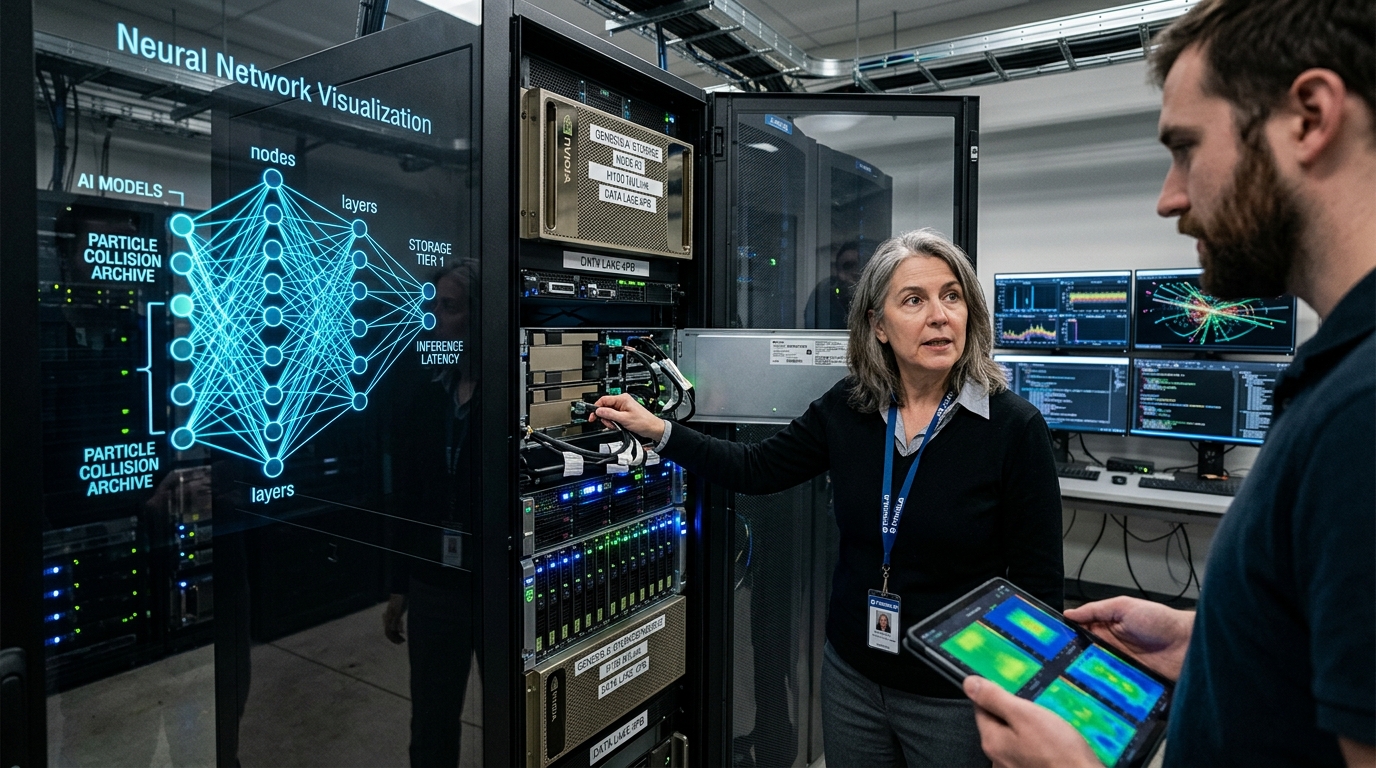
For decades, the primary hurdle in particle physics has been the sheer volume of data. Experiments like those at the Large Hadron Collider (LHC) and the upcoming Deep Underground Neutrino Experiment (DUNE) generate data at rates that would overwhelm traditional computing architectures. The Genesis Mission was conceived to solve this 'data deluge.' It is not merely a hardware refresh; it is a sophisticated architectural overhaul designed to feed AI models with data at unprecedented speeds.
By leveraging cutting-edge technologies such as NVMe-over-Fabrics (NVMe-oF) and high-performance parallel file systems, Fermilab has created a data pipeline that matches the velocity of modern GPUs. This eliminates the traditional storage bottlenecks, allowing AI models to perform 'inference at the edge'—analyzing data nearly as fast as it is generated by the detectors. This capability is crucial for the next phase of scientific discovery, where the signals we seek are buried under mountains of noise.
AI: The New Lens of the Microscope
Why is this specific storage infrastructure so critical for AI? In modern physics, finding new phenomena—be it dark matter candidates or neutrino oscillations—is like searching for a single grain of sand on a vast beach. Traditional data reduction techniques, known as 'triggers,' often discard 99% of data to keep the systems from crashing. With the Genesis-backed infrastructure, AI can now process a much larger fraction of this raw data, identifying subtle anomalies that previous methods would have missed.
- Accelerated Simulations: AI surrogates are replacing traditional Monte Carlo simulations, reducing the time required to model complex physics events from days to seconds.
- Autonomous Data Tiering: The Genesis system uses machine learning to predict which datasets will be in high demand, automatically moving them to high-speed tiers before the scientist even requests them.
- Energy Efficiency: By optimizing data movement and reducing the need for repetitive computations, the new infrastructure significantly lowers the carbon footprint of these massive scientific endeavors.
Geopolitics and the Future of Scientific Sovereignty
This investment transcends pure science. In an era where computational supremacy is a form of national power, Fermilab’s upgrade secures the United States' position at the forefront of 'AI for Science.' The Genesis Mission serves as a strategic counterweight to international efforts in Europe and Asia, ensuring that the U.S. remains the global epicenter for neutrino research for the next thirty years. The race to achieve exascale data management is the new frontier of the 21st century, and Fermilab has just taken a definitive lead.
"We are not just building a data warehouse; we are building the cognitive engine that will unlock the secrets of the universe," stated a lead researcher involved in the project.
In conclusion, the infrastructure enabling the Genesis Mission is a testament to the fact that 21st-century science is defined as much by data intelligence as by physical hardware. Fermilab is evolving from a laboratory of physics into a laboratory of 'cognitive physics,' where the synergy between AI and massive storage architectures will redefine the boundaries of human knowledge. As we move deeper into the 2020s, the ability to store, move, and think through data will be the ultimate catalyst for the next great breakthrough.