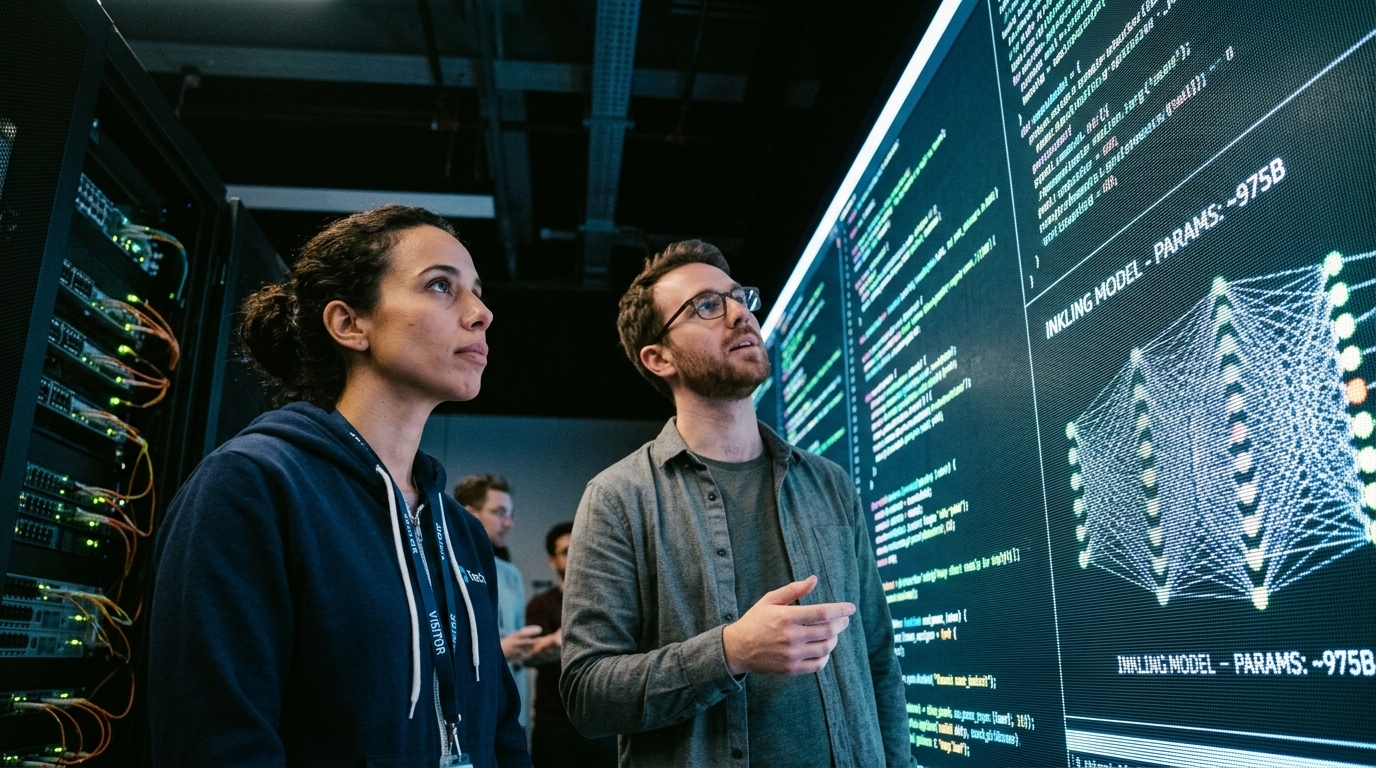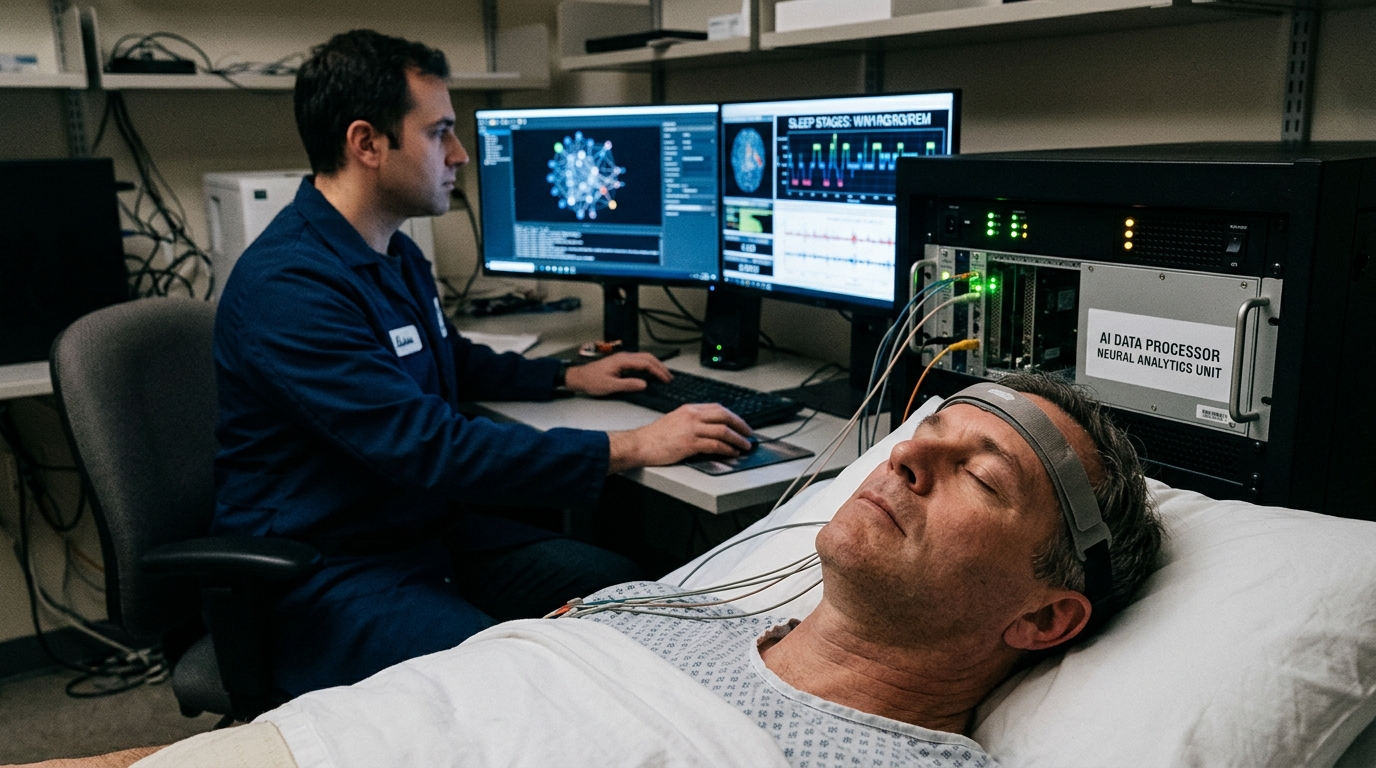
For decades, understanding what happens within the human brain during the night required a process that felt more like a science fiction experiment than a restful night. Polysomnography (PSG), the gold standard of sleep medicine, requires patients to sleep in an unfamiliar laboratory environment, wired with dozens of sensors on the scalp, face, and body. However, a new study recently highlighted by PsyPost demonstrates that Artificial Intelligence is now capable of providing the same accuracy without the slightest discomfort.
The Technological Leap of Algorithms
The core challenge in sleep analysis is distinguishing between various stages: from light sleep and deep sleep (NREM) to Rapid Eye Movement (REM) sleep, where most dreaming occurs. Traditionally, this requires electroencephalography (EEG) to record brain waves. The new AI approach, however, relies on Deep Learning to analyze data collected from much less invasive means, such as accelerometers and heart rate sensors found in wearables, or even radiofrequency sensors that do not come into contact with the body at all.
Researchers trained neural networks on massive datasets from thousands of clinical sleep studies. The result is an algorithm that can "read" subtle variations in heart rate variability (HRV) and breathing patterns, correlating them with sleep stages with success rates reaching 80-90% compared to human scoring by experts.
From the Lab to the Home: Democratizing Diagnosis
The significance of this development is not just technical, but deeply social. Across the globe, sleep disorders—from apnea to chronic insomnia—constitute a silent epidemic linked to depression, cardiovascular disease, and reduced productivity. The ability to monitor sleep in a person's natural environment, in their own bed, for many consecutive nights, offers a much more representative picture of their health than a single night in a cold hospital room.
- Elimination of the "first-night effect," where laboratory anxiety skews results.
- Reduction of costs for healthcare systems, as preliminary diagnosis can be conducted remotely.
- Continuous monitoring of treatment effectiveness over long periods.
"Sleep is the third pillar of health alongside nutrition and exercise. AI finally allows us to measure it without disturbing it," the study notes.
Challenges and Ethical Dilemmas
Despite the excitement, the use of AI in sleep monitoring raises serious questions regarding data privacy. Our sleep data is among the most sensitive biometric information we possess. It contains insights into our mental state, habits, and even the potential onset of neurodegenerative diseases, such as Parkinson’s, years before motor symptoms appear.
Who has access to this data? If the tech giants manufacturing these wearables can know when we sleep and when we dream, how do we ensure this information won't be used for targeted advertising or, worse, for determining insurance premiums? The need for a strict regulatory framework in the European Union is more urgent than ever, as technology outpaces legislation at a rapid tempo.
The Future: Precision Preventive Medicine
In the near future, your "smart" pillow or watch won't just tell you how many hours you slept. It will be able to detect early signs of illness. For instance, AI-driven analysis of REM stages has shown promising results in detecting disorders that precede dementia. The shift from reactive medicine (treating after falling ill) to precision preventive medicine (preventing based on data) passes through the neural networks analyzing our breath as we sleep.
Artificial Intelligence is not replacing the doctor; it is providing them with a magnifying glass that can peer into the night. As algorithms become more sophisticated, the dream of universal, free, and non-invasive health monitoring approaches reality, provided we ensure that data control remains in the hands of the user.