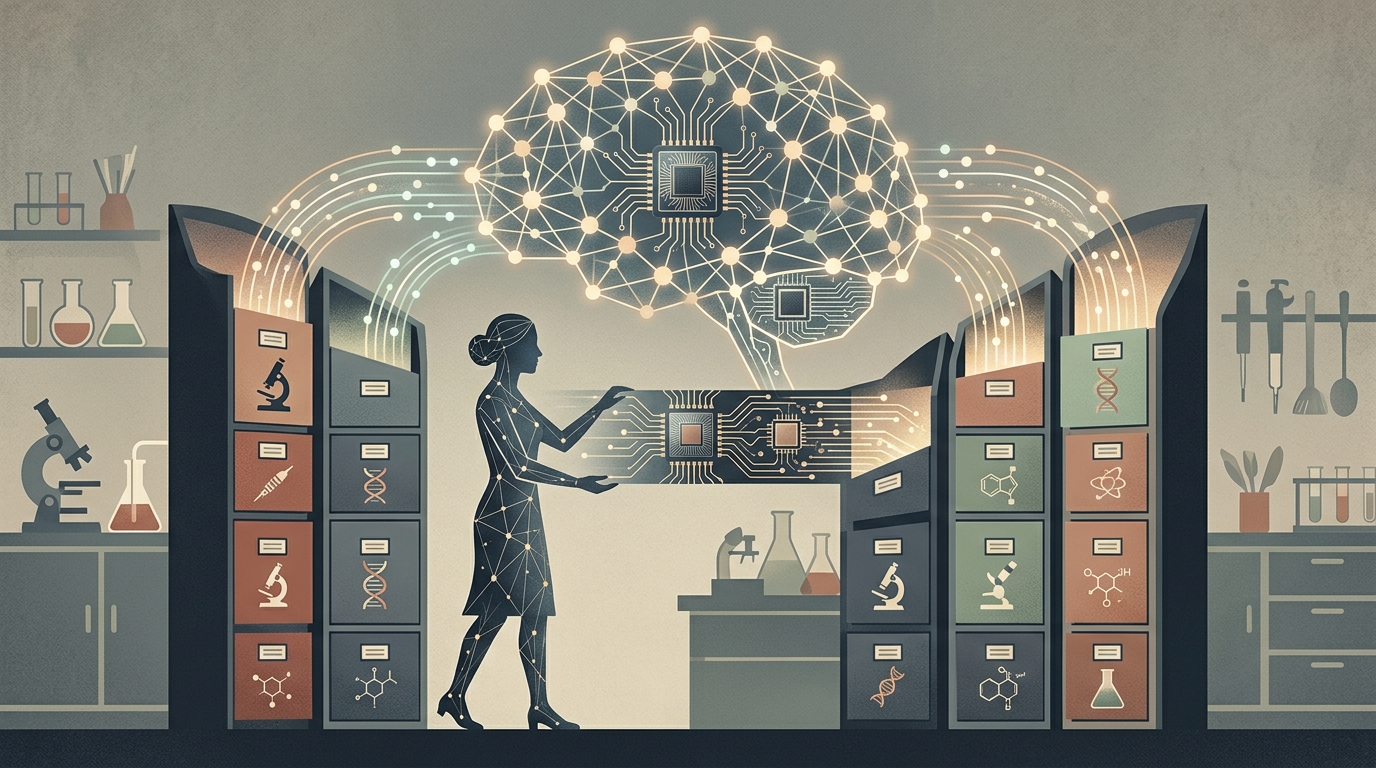
At the AI & Data Exchange 2026 conference, Dr. Susan Gregurick, Associate Director for Data Science at the National Institutes of Health (NIH), delivered a keynote that outlined a transformative vision for biomedical research. In an era where health data is generated at an unprecedented scale, Gregurick emphasized that the primary obstacle to medical breakthroughs is no longer a lack of information, but its fragmentation within "data silos." Her address marks a pivotal moment in 2026: the strategic shift from mere data storage to active, intelligent integration powered by Artificial Intelligence.
The Challenge of Digital Isolation
For decades, biomedical research has operated in isolated pockets. Hospitals, universities, and pharmaceutical companies have accumulated vast troves of data—ranging from genomic sequences to clinical trial results—that remain trapped in incompatible systems and proprietary formats. Dr. Gregurick explained that this lack of interoperability carries a human cost, delaying drug discovery and hindering our understanding of rare diseases. The NIH, under her leadership, is now aggressively championing FAIR principles (Findable, Accessible, Interoperable, Reusable), effectively mandating a common language for publicly funded data.
The 2026 strategy is not merely about technical compatibility; it is about a profound cultural shift. Gregurick noted that AI is acting as the "catalyst" that forces institutional collaboration. Since AI models are only as good as the data they are trained on, the desire for robust AI performance is providing the necessary incentive to break down the walls that have traditionally separated research entities.
AI as the Universal Translator
One of the most compelling aspects of the presentation was the role of Generative AI and Large Language Models (LLMs) as integration tools. Gregurick described how the NIH is deploying systems capable of "reading" heterogeneous datasets and automatically mapping them to unified ontological frameworks. This automation eliminates thousands of hours of manual data curation, allowing scientists to focus on high-level analysis rather than the tedious task of cleaning files.
- Automated data harmonization across disparate global sources.
- Generation of high-fidelity synthetic data for model training without privacy risks.
- Leveraging AI to detect patterns in billions of records that are invisible to the human eye.
Furthermore, Dr. Gregurick highlighted the importance of "federated learning." Instead of moving sensitive data to a central server—a process fraught with security and intellectual property concerns—the AI model is sent to the data. It learns locally at each institution, and only the refined mathematical weights are sent back to the central repository, ensuring that raw patient information never leaves its secure environment.
Privacy, Ethics, and the Human Element
As we navigate the complexities of 2026, the balance between open science and individual privacy remains a delicate tightrope. Gregurick was unequivocal: public trust is the bedrock of data science. The NIH is investing heavily in advanced encryption technologies and rigorous ethical frameworks to ensure that AI integration does not lead to algorithmic bias or privacy breaches.
"Artificial intelligence is not an end in itself, but a tool to serve humanity. Our success will not be measured by the complexity of our algorithms, but by how quickly we can turn data into cures," she stated.
The address concluded with a call for international cooperation. Gregurick argued that silos are not just institutional but national. To combat global threats, such as future pandemics or the health impacts of climate change, the world requires a global data ecosystem supported by responsible, transparent, and interoperable AI systems. The NIH's roadmap for 2026 serves as a global benchmark for achieving this unified future.