In the intricate mosaic of the European economy, Greece often serves as a case study full of contradictions. The recent Eurostat report on net earnings and deductions across the European Union brings to light a fact that, at first glance, seems like positive news: Greece ranks second in the EU regarding the percentage of the gross salary that actually ends up in the worker's pocket. In other words, the "tax wedge" and social security burdens in Greece are now among the lowest in Europe, leaving employees with a higher "net" percentage than in model countries like Germany or Belgium.
Analyzing the Data: What Eurostat Reveals
According to the analysis, the average worker in Greece sees significantly fewer deductions compared to the Eurozone average. While in countries like Belgium, Germany, and France, deductions can exceed 40% or even 50% of the total labor cost, in Greece, successive reductions in social security contributions and adjustments to tax brackets have significantly limited this loss. This means that for every euro spent by the employer, a larger portion reaches the employee's bank account.
However, this statistic hides a harsh reality. The ranking at the top of low deductions is not only due to government policy to reduce taxes but also to the fact that nominal wages in Greece remain at low levels. When wages are low, taxation starts from lower bases, resulting in the percentage burden appearing smaller compared to the wealthy economies of the North, where high wages lead to progressively higher taxes.
The Purchasing Power Paradox
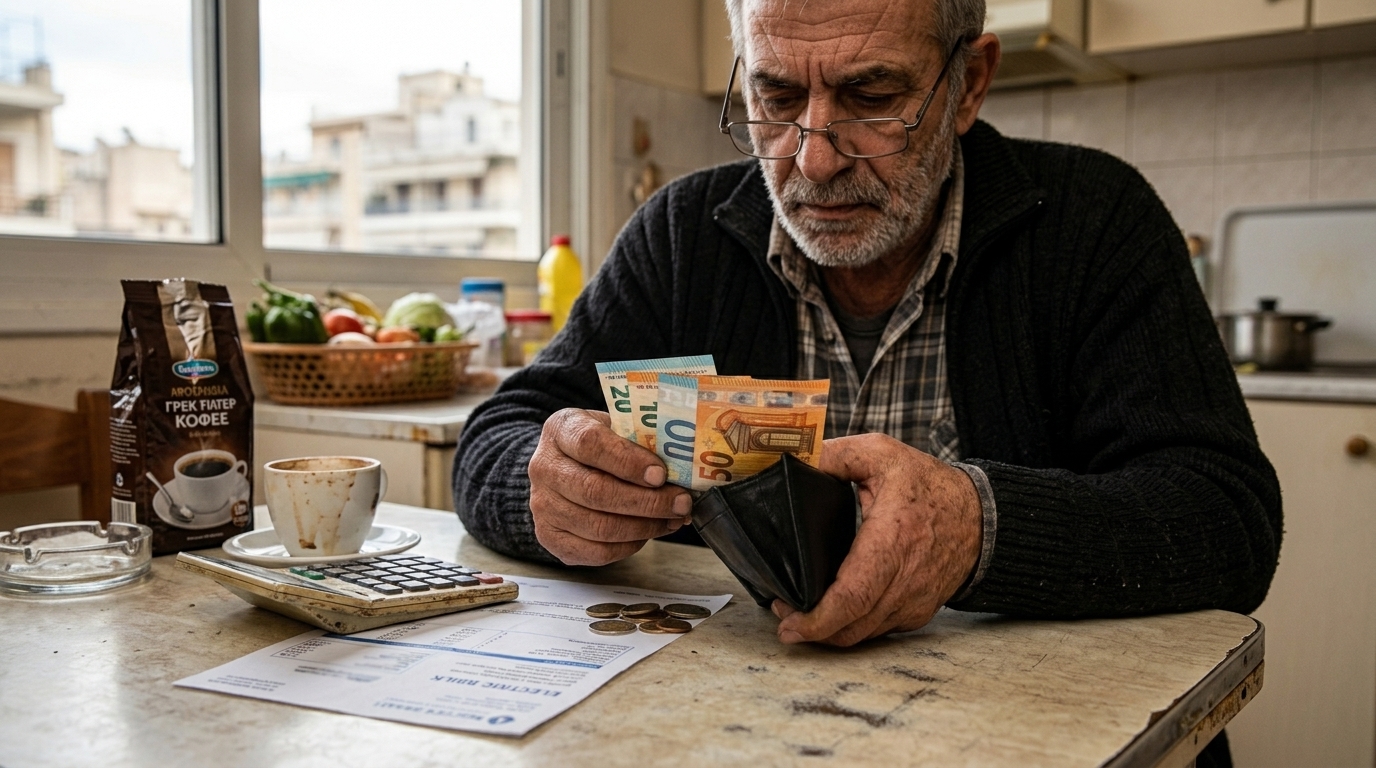
The critical question arising from the Eurostat report is: "What can you buy with this net amount?" Here, the picture is reversed. Despite the fact that the Greek worker keeps 85% or 90% of their gross salary, their purchasing power remains among the lowest in the EU. Greece consistently ranks among the bottom positions in Europe in terms of GDP per capita adjusted for Purchasing Power Standards (PPS).
- Housing costs in Greece have skyrocketed, in many cases absorbing over 40% of household income.
- Food and basic goods prices follow European inflation, while wages have not fully recovered from the crisis of the past decade.
- Indirect taxation (VAT, Excise Duties) remains extremely high, offsetting the benefits of low deductions on wages.
Investment Attractiveness and the Labor Market
From a business perspective, low deductions are a strong incentive for investment. Reducing non-wage labor costs makes Greece more competitive in the international market, allowing companies to hire at a lower cost without reducing the employee's net income. This is one of the key arguments of the economic staff for attracting foreign direct investment, especially in the technology and services sectors.
"Reducing deductions is a necessary but not sufficient step. Without a parallel increase in productivity and nominal wages, Greece risks being trapped in a low-cost economic model that does not favor retaining talent in the country (brain drain)."
In conclusion, Greece's second place in lowest deductions is a statistical achievement reflecting a conscious policy choice to reduce the burden on labor. However, for the average citizen, this success will only be felt when combined with a substantial increase in disposable income and effective measures against the high cost of living that erodes "net" euros before they even reach the supermarket shelf.
The European Comparison: Where Do Others Stand?
At the other end of the spectrum, countries like Luxembourg and Denmark offer much higher net wages, despite higher deductions, due to the massive difference in base salaries. In Eastern Europe, countries like Bulgaria and Romania show a similar trend to Greece, trying to keep the tax burden low to stimulate employment. The challenge for Greece in 2026 and beyond will be to move from the group of "low deductions and low wages" toward a model of "reasonable deductions and high purchasing power."