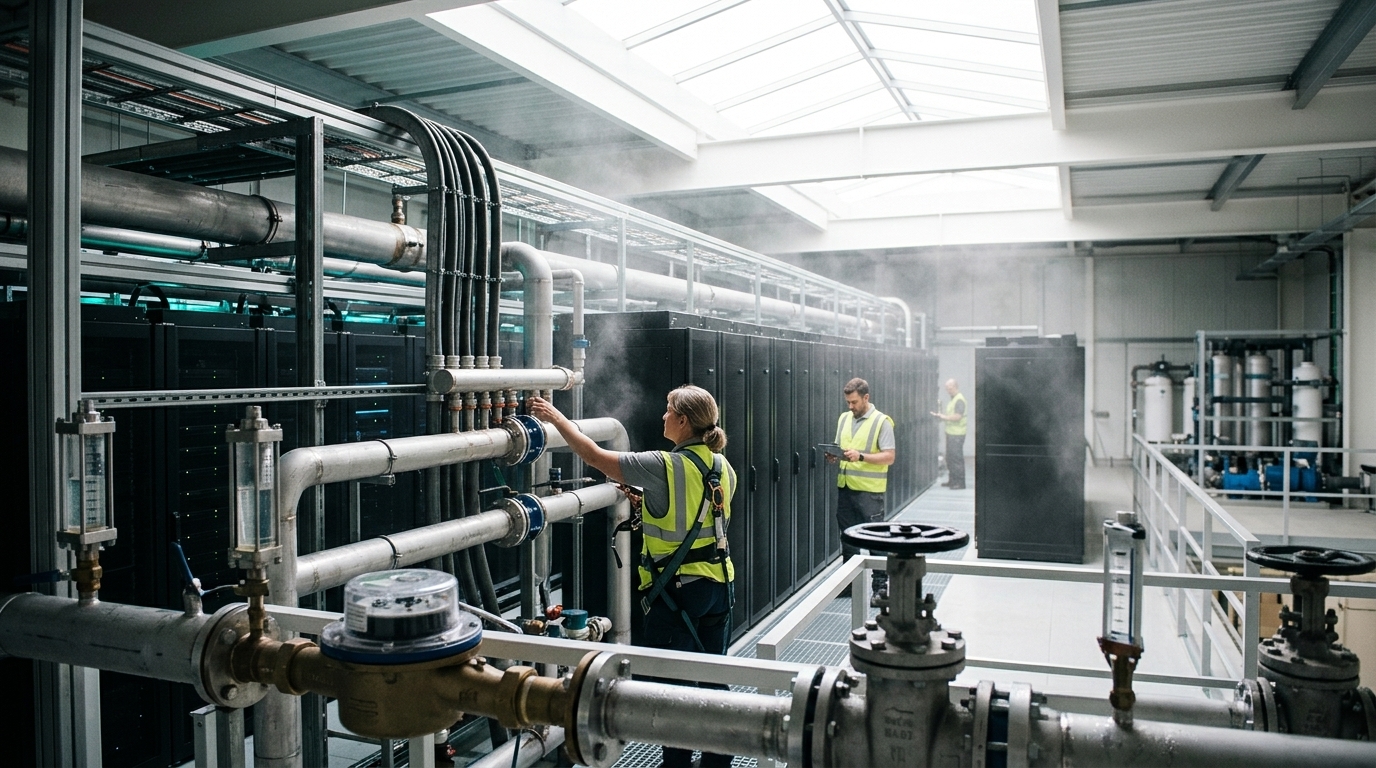
In today's digital landscape, Artificial Intelligence (AI) is often portrayed as an ethereal force, an algorithm existing purely in the "cloud." However, the reality of 2026 is far more physical, noisy, and energy-intensive. Behind every ChatGPT response or AI-generated video lies a massive infrastructure of data centers—cavernous warehouses filled with thousands of servers consuming electricity on the scale of small nations. As the race for AI supremacy accelerates, the demand for physical space and power has evolved into one of the most contentious geopolitical and social issues of the decade.
The Algorithmic Energy Crisis
The core challenge lies in the very nature of the chips powering AI. Unlike traditional central processing units (CPUs), the graphics processing units (GPUs) produced by NVIDIA and others—essential for training large language models—require vast amounts of power to operate and equally large quantities of water for cooling. Experts estimate that by the end of 2026, global data center energy consumption could double compared to 2022 levels.
In hubs like Northern Virginia in the US, Dublin in Ireland, and Frankfurt in Germany, power grids are reaching their breaking point. Local utility companies are struggling to meet connection requests for new facilities, leading to delays of up to a decade in some jurisdictions. This strain is not merely technical but economic: in many cases, the surge in demand from tech giants is driving up utility bills for residential consumers, sparking significant public backlash.
The Big Tech Nuclear Renaissance
To secure their energy independence, companies like Microsoft, Amazon, and Google are turning to solutions that would have seemed unthinkable just a few years ago. The most striking development is the pivot toward nuclear energy. Microsoft’s deal with Constellation Energy to restart a reactor at Three Mile Island marks a historic shift. Tech giants are no longer just buying power; they are becoming major players in the energy market, funding the development of Small Modular Reactors (SMRs).
- Microsoft is betting on nuclear power to meet its carbon-negative goals while expanding AI capacity.
- Amazon recently acquired a data center campus directly powered by a nuclear plant in Pennsylvania.
- Google is exploring partnerships for enhanced geothermal energy and advanced long-duration battery storage.
This trend signals a new model of "corporate sovereignty," where tech firms control the entire value chain, from power generation to the end-user AI service. However, critics warn that this "privatization" of energy resources could leave public infrastructure underfunded and secondary to corporate needs.
Community Impact and the Environmental Footprint
Beyond energy, data centers directly affect the lives of those living in their shadow. The constant hum of cooling fans is a source of noise pollution, while the consumption of millions of gallons of water for server cooling raises alarms in drought-prone regions. Even in emerging markets, the arrival of massive facilities brings a difficult question to the forefront: Is the promise of jobs and digital modernization enough to offset the environmental and local costs?
"We aren't just building warehouses for computers. We are building the factories of the new industrial revolution, and like every revolution before it, this one carries a heavy price tag for our physical reality," says a leading industry analyst.
In conclusion, the path to "intelligent" technology requires a very "hard" and often resource-heavy infrastructure. The challenge for the coming years will be balancing innovation with sustainability. If AI is to solve humanity’s greatest problems, it cannot do so by precipitating a new energy and environmental crisis. The physical limits of our planet are finally catching up with the infinite ambitions of the digital world.