In the deep blue but often treacherous waters of the San Francisco Bay, a technological revolution is quietly unfolding. Bay Area researchers, collaborating with Silicon Valley technologists, are now deploying advanced AI-powered cameras to monitor the migratory patterns of gray whales (Eschrichtius robustus). This development is not merely an equipment upgrade; it represents a fundamental shift in how we understand and protect marine mammals in an era of rapid climate change.
The Silent Sentinels of the Pacific
Gray whales undertake one of the longest migrations in the animal kingdom, traveling thousands of miles from the breeding lagoons of Mexico to the feeding grounds of the Arctic. However, in recent years, the San Francisco Bay has transformed from a simple transit point into a critical stopover for rest and foraging. This behavioral shift has alarmed scientists, as the Bay is one of the busiest shipping lanes in the world.
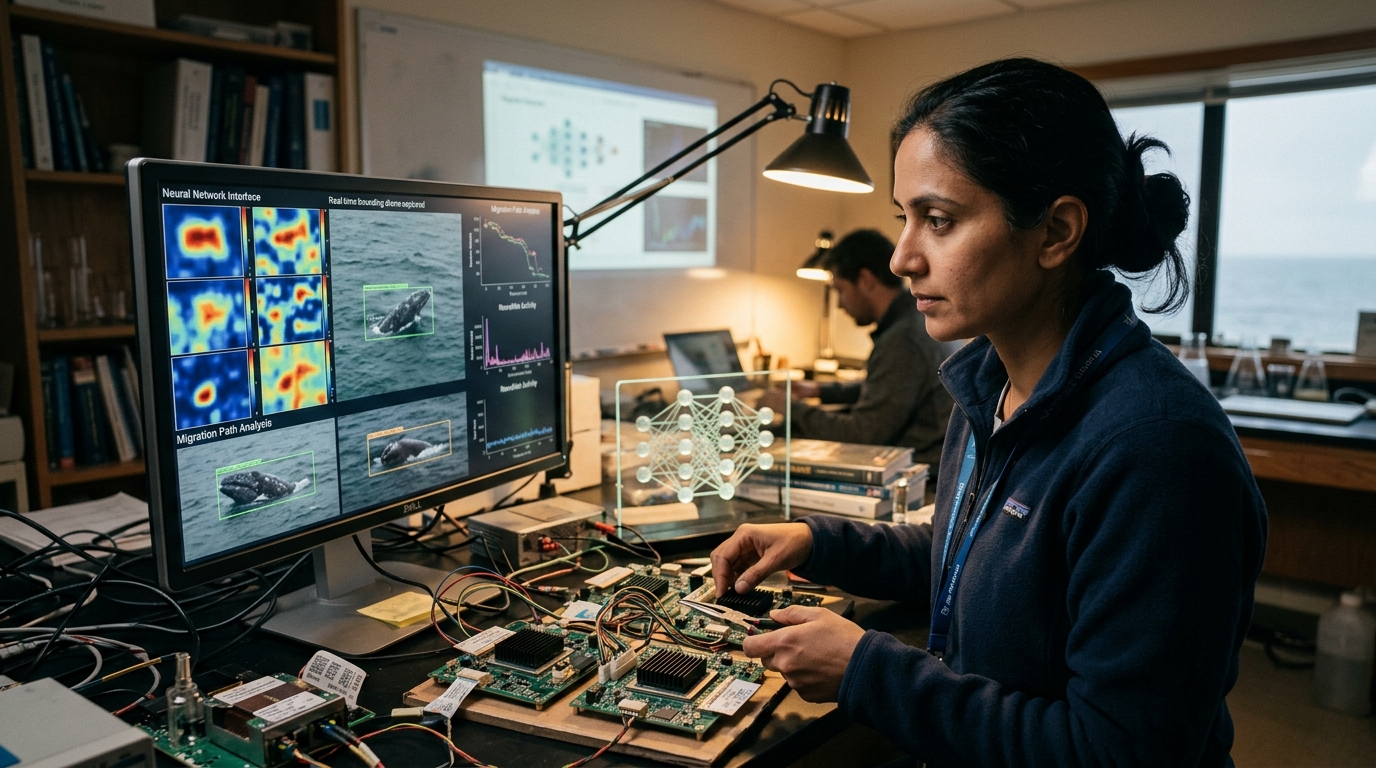
The use of Artificial Intelligence fills a massive data gap. Traditionally, whale monitoring relied on volunteers with binoculars and notebooks—a valuable but limited method restricted by daylight, weather conditions, and human fatigue. The new AI cameras, strategically positioned at locations like the Golden Gate Bridge, operate 24/7. Utilizing computer vision algorithms, the system can identify the characteristic 'blow' of a whale or the arch of its back amidst the visual noise of waves and passing vessels.
Beyond Human Sight: The AI Advantage
The system goes beyond simple recording. Deep learning algorithms have been trained on thousands of hours of footage to distinguish not just the presence of a whale, but its health status. Researchers can now analyze the body condition of the animals—identifying if they appear malnourished—in real-time. This is particularly crucial given the recent 'Unusual Mortality Event' (UME) that has plagued the gray whale population since 2019.
"Artificial intelligence allows us to see the invisible. We can now correlate whale presence with ship movements and alert authorities before a fatal collision occurs," say sources from the research community.
Furthermore, the cameras are equipped with thermal sensors that allow for nighttime monitoring. This reveals behaviors that were previously unknown: how whales rest in the dark and how they navigate (or fail to navigate) the massive commercial ships entering the Bay under the cover of night.
Climate Crisis and the Need for Data
Why are whales choosing to stay longer in the Bay? The answer lies in the Arctic. The retreat of sea ice is affecting the populations of amphipods, the primary food source for gray whales. Animals arrive in the Bay hungry and exhausted, seeking alternative food sources. This 'desperation feeding' brings them closer to shores and shipping lanes, increasing the risk of entanglement and ship strikes.
The data collected by AI cameras feeds into predictive models that help coastal managers make informed decisions. For instance, if the system detects an increased concentration of whales in a specific area, a recommendation for ship speed reduction can be issued. This dynamic management is the future of wildlife conservation, where technology acts as a bridge between economic activity and ecological sustainability.
Ethical Implications and the Future of Conservation
Despite the promise, the use of AI in the wild is not without challenges. Processing vast amounts of data requires significant computational power and energy resources. Additionally, there is the issue of privacy, as these cameras may inadvertently capture human activities in the Bay. However, researchers assure that the algorithms are tuned to ignore anything that is not related to marine life.
In conclusion, the AI cameras in the San Francisco Bay serve as a brilliant example of how technology, often criticized for alienating humans from nature, can ultimately become the tool for our reconnection with it. They offer us a second chance to understand these majestic creatures before climate change drives them to the brink. The success of this program could serve as a global blueprint for ocean monitoring, turning every port into a smart sanctuary for marine life.