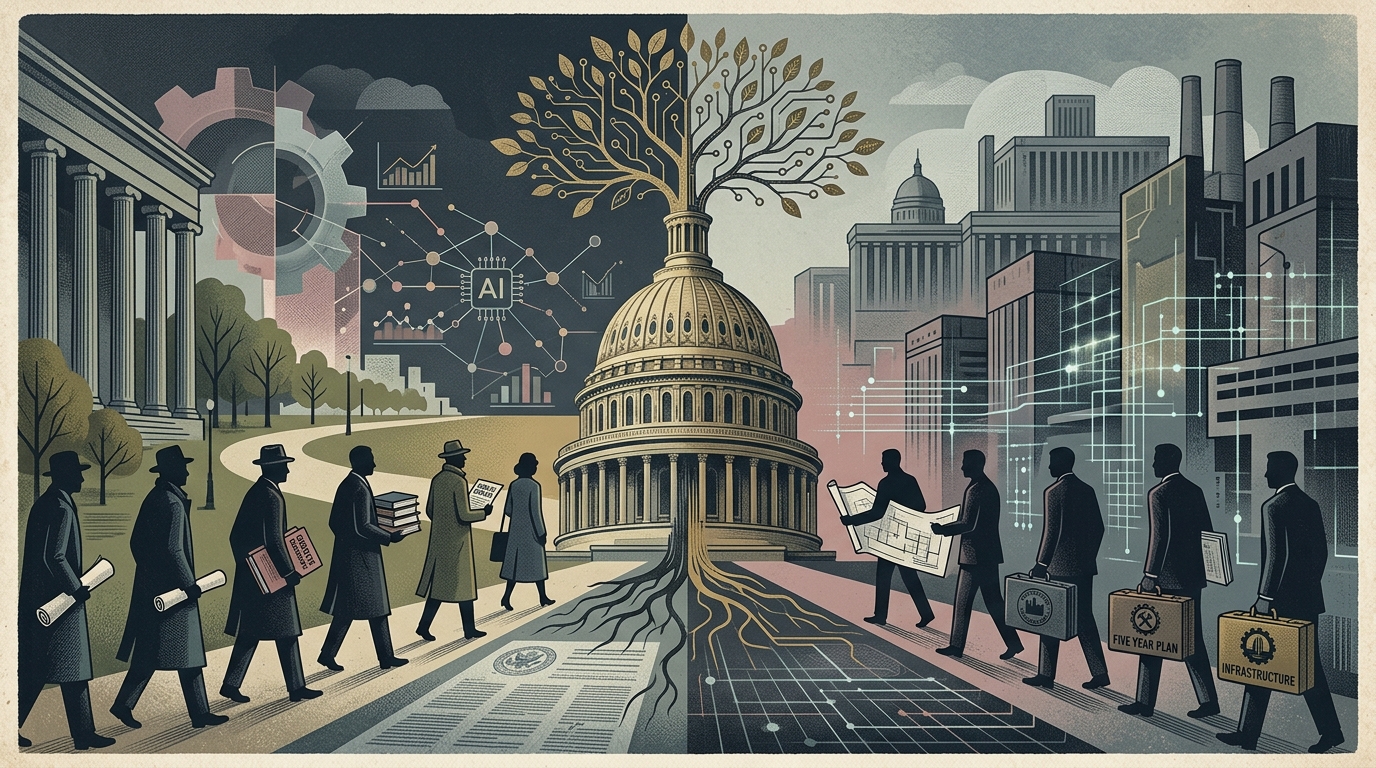
The scene resembles a science fiction scenario turned reality: lecture halls where presentations are accompanied by live AI transcription, research labs powered by generative artificial intelligence algorithms, and administrative offices using chatbots to manage thousands of student inquiries. However, behind the glossy facade of modernization, within the major university systems of the United States and Europe, a "civil war" is raging over the soul of higher education. The recent move by colossal educational institutions to fully "embrace" Artificial Intelligence (AI) is not being met with universal enthusiasm, but rather with a mixture of skepticism, fear, and organized resistance.
The Strategy of Survival and Market Pressure
For university administrations, the adoption of AI is not merely an option, but a necessity for survival. In a world where the labor market is transforming at a dizzying pace, provosts and chancellors argue that their mission is to prepare students for a work environment that will be dominated by technology. "If we don't teach our students how to use AI responsibly and effectively, we will leave them defenseless against the competition," says a vice-rector of a major American system. Investing in licenses for tools like ChatGPT Enterprise or Microsoft Copilot is now seen as being as essential as providing access to libraries.
However, this approach raises questions about the commodification of knowledge. Many universities are entering into strategic partnerships with tech giants, turning campuses into beta testing grounds for new software. This close relationship between academia and Silicon Valley causes concern regarding institutional autonomy and the protection of student data. The worry is not just about "what" is being taught, but also "who" controls the tools of instruction.
The Voice of Academics: Labor and Pedagogy
On the other side, faculty members are raising strong objections, rooted in two main pillars: labor rights and pedagogical integrity. Professors fear that AI will be used as a pretext for staff reductions or the replacement of teaching assistants with algorithms. In many universities, faculty unions have already begun demanding clauses in collective bargaining agreements that prohibit the replacement of human instruction by automated systems.
Beyond labor issues, there is a profound pedagogical question. Learning, many academics argue, is a process based on human interaction, critical thinking, and effort. The ease provided by generative AI in producing texts and solutions could lead to an "atrophy" of students' intellectual capabilities. "The university is not a degree-producing factory, but a space for shaping consciences," says a sociology professor. The resistance is not technophobic, but rather an attempt to safeguard the quality of the educational process from the simplification imposed by the algorithm.
The Student Paradox
Students themselves find themselves in a paradoxical position. On one hand, they were the early adopters of AI tools to facilitate their studies, often pushing the boundaries of academic integrity. On the other hand, they express growing anxiety about the value of their degrees. If an AI can write an essay or solve a complex engineering problem, what will make a graduate indispensable in the labor market?
Furthermore, there is the issue of the financial burden. While some universities provide free access to premium AI tools, others pass the cost on to students through additional technology fees. This creates a new "digital divide" on campus: students who can afford to use the most advanced AI models have a clear advantage over those who cannot, deepening existing social inequalities.
Ethics, Bias, and the Future
One of the most critical points of friction is the ethical dimension of AI use in education. AI models are known to carry biases present in their training data. When these tools are used for student assessment or career counseling, the risk of reproducing racial, gender, or class discrimination is real. Academics are calling for algorithmic transparency and strict oversight—something tech companies often refuse, citing trade secrets.
The future of higher education seems to hang in a delicate balance. The integration of AI is inevitable, but how it is implemented will determine whether universities remain beacons of knowledge or transform into mere providers of certifications for software usage. The need for a new "social contract" within the academic community, placing humans at the center of technological evolution, is more urgent than ever.