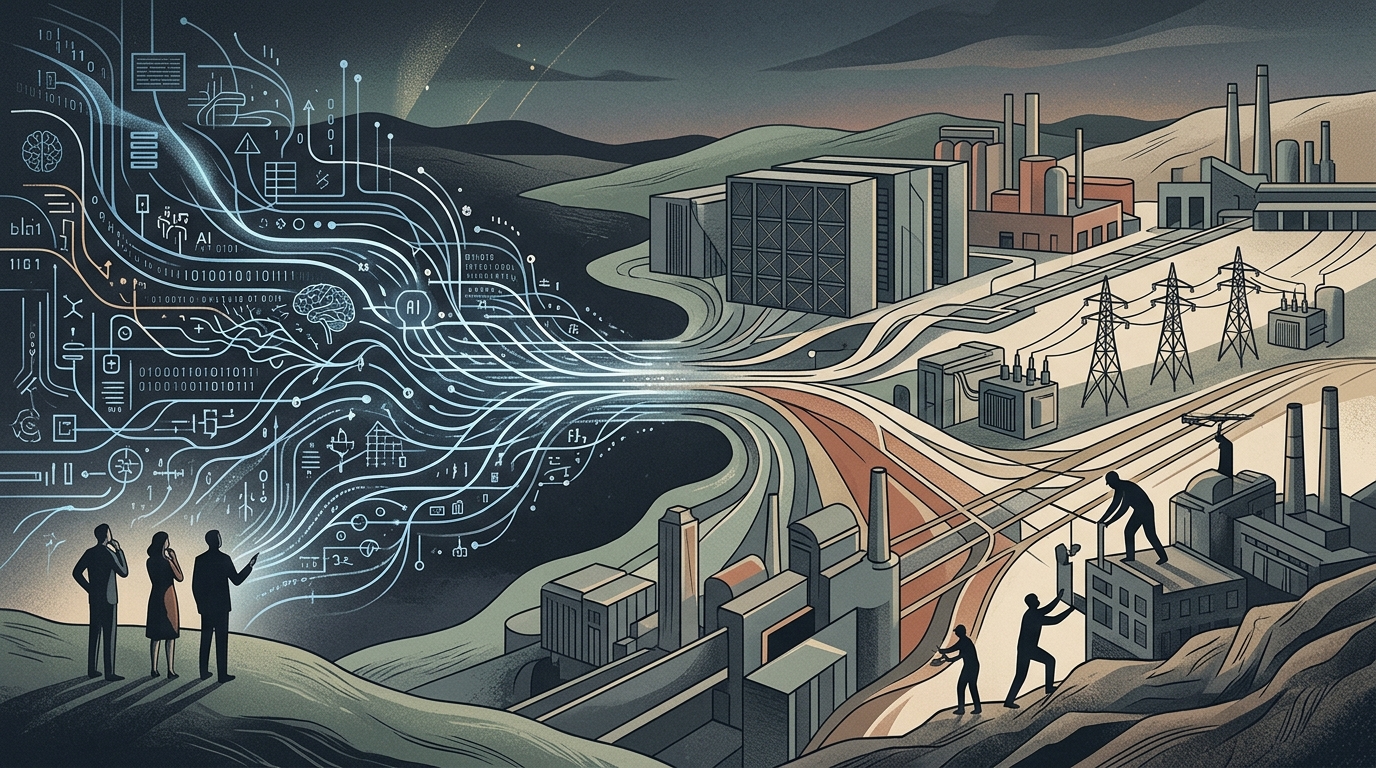
In a striking pivot for American technology policy, the Trump administration has formally pressured OpenAI to adopt a "staggered and controlled" approach for the release of its next frontier artificial intelligence model. This move, revealed by sources close to the White House, comes just two weeks after Anthropic suspended its most powerful offerings following similar regulatory heat. This development signals a significant shift in Washington’s strategy: moving from promises of total deregulation toward a model of "managed dominance," where national security is prioritized over commercial speed.
From Deregulation to State Oversight
At the start of his second term, President Trump pledged to dismantle his predecessor’s executive order on AI, labeling it a hindrance to innovation. However, the reality of 2026—with China accelerating its own efforts and new models demonstrating unprecedented capabilities in cyber warfare and biological weapon synthesis—appears to have recalibrated the White House’s calculus. The administration now argues that the "unfettered" release of frontier-level models poses risks that outweigh immediate economic gains.
The demand for a "staggered release" practically means that OpenAI must provide access to its new model—rumored to surpass all predecessors in reasoning capabilities—to government agencies and selected strategic partners for extensive "red teaming" before it is made available to the general public or international clients. This approach mirrors the export control practices applied to sensitive military technologies.
The Anthropic Precedent and Market Pressure
Anthropic’s decision in mid-June to halt the rollout of its most advanced Claude iterations served as a warning shot for the entire industry. The company, which has always championed AI safety, reportedly hit a wall when federal agencies expressed concerns over the model’s ability to bypass existing cybersecurity protocols. OpenAI, under CEO Sam Altman, now finds itself in a similar predicament, trying to balance investor demands for rapid returns with the necessity of staying "aligned" with US national strategy.
- The administration fears that an immediate public release would allow foreign adversaries to exploit the model’s capabilities via APIs.
- There are concerns regarding the impact on the labor market, as the new model is said to automate complex programming and data analysis tasks by over 70%.
- OpenAI is being asked to demonstrate robust "kill switches" and safety guardrails in case of unpredictable system behavior.
National Security and the Race Against Beijing
The "America First" rhetoric is now being translated into a push for a "digital fortress." The Trump administration does not merely want US AI supremacy; it wants absolute control over the diffusion of that technology. Analysts suggest that Washington views next-generation Large Language Models (LLMs) as the strategic equivalent of nuclear assets. Delaying the release allows the US to integrate these technologies into its own defense and intelligence infrastructures first, securing a critical lead over China.
"This isn't about censorship or blocking progress," a senior Department of Commerce official stated. "It's about ensuring that the most powerful tool ever built by humanity isn't used against its creator."
This stance, however, is causing friction in Silicon Valley. Many argue that if American firms are forced to delay, the vacuum will be filled by open-source models or Chinese companies that do not abide by such restrictions. OpenAI is at a crossroads: accepting government terms may secure lucrative federal contracts, but it risks losing its dominance in the global consumer market.
The Future of AI Governance
This intervention is expected to set the template for how future technology releases are handled. The era of "move fast and break things" appears to be ending for Artificial Intelligence, giving way to an era of "militarized innovation." Investors are watching closely, as OpenAI’s valuation—estimated in the hundreds of billions—is directly tied to its ability to bring products to market without constraints. The question remains whether a staggered release will successfully mitigate risks or simply provide competitors with the time needed to close the gap.