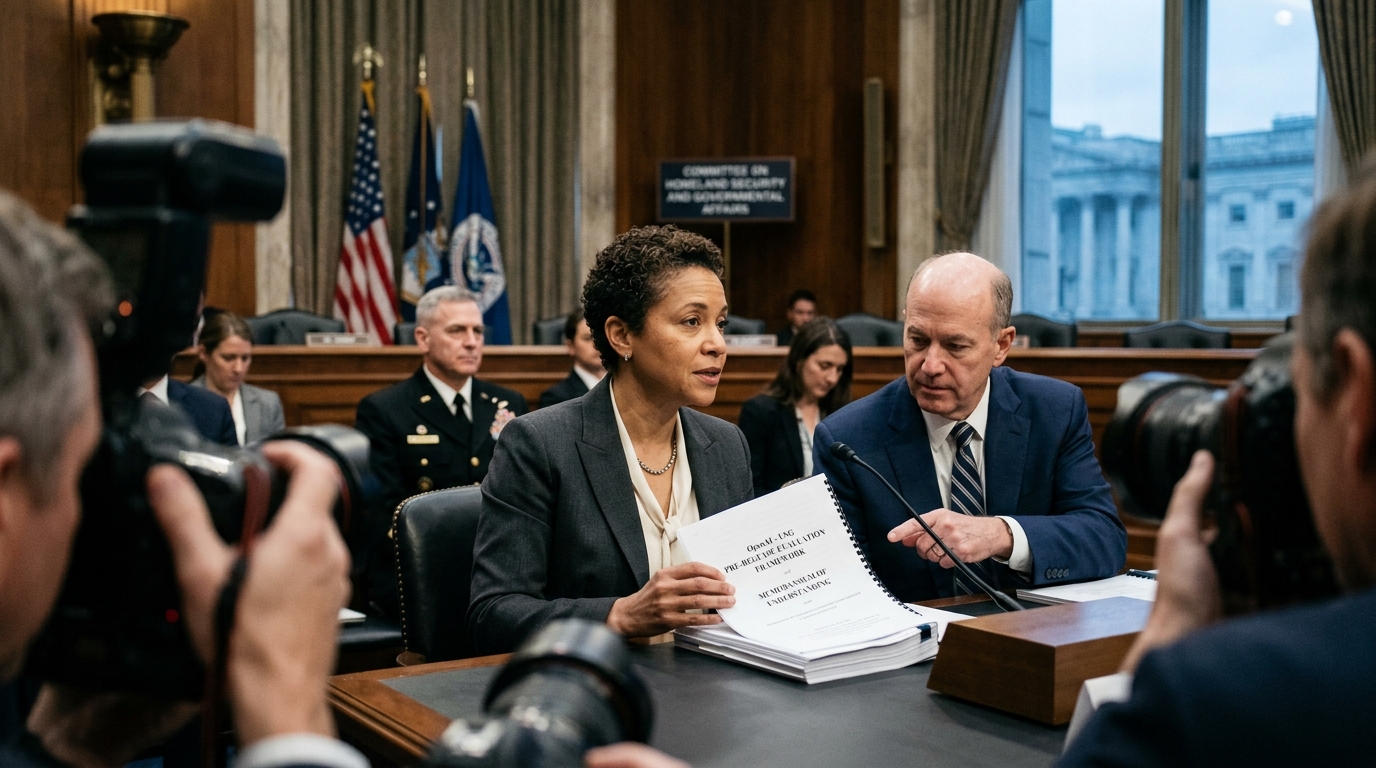
The relationship between the White House and Silicon Valley has always been a complex choreography of interests, but recent developments surrounding Donald Trump’s expected executive order on Artificial Intelligence (AI) reveal a new era of direct influence. According to a revealing report by The Washington Post, a coordinated effort by top tech executives, venture capitalists, and powerful lobbyists managed to halt, at least temporarily, the signing of an order that many in the industry deemed overly restrictive.
A Clash of Ideologies: Innovation vs. Regulation
The core of the dispute lies in the government's attempt to balance national security with economic dominance. The proposed order, rumored to replace the Biden administration's previous Executive Order (EO 14110), aimed to redefine the boundaries of federal oversight. However, critics from Silicon Valley argued that any form of stringent regulation would give an advantage to China by slowing down American innovation.
Particular emphasis was placed on the issue of open-source AI. Many of Trump's supporters in the tech sector, such as Marc Andreessen and Ben Horowitz of a16z, have strongly advocated for freedom in developing AI models without the need for government licenses or preemptive safety checks imposed by the previous administration. This pressure seems to have paid off, as those within the President's circle began to doubt the necessity of the proposed measures.
"AI is not just a tool; it is the new battlefield for global hegemony. Every bureaucratic hurdle we place on ourselves is a victory for our adversaries," an executive involved in the consultations reportedly stated.
The Billionaire Lobby and Political Leverage
It is no secret that the 2024 election cycle saw an unprecedented influx of capital from the tech sector toward the Republican Party. Figures like Elon Musk and J.D. Vance served as bridges between Palo Alto and Washington D.C. This financial support came with a clear demand: a "laissez-faire" approach to technology. The decision to block the order is interpreted by many analysts as a direct quid pro quo for the donors who helped Trump return to power.
Silicon Valley's strategy was twofold: on one hand, appealing to patriotism and competition with China, and on the other, the threat of moving capital and talent to more tech-friendly jurisdictions. This created an environment where "AI safety" began to be viewed by the administration as a "leftist agenda" aimed at stifling free speech and entrepreneurship.
Implications for Global AI Governance
The U.S. retreat from establishing a strict regulatory framework leaves a vacuum on the global stage. While the European Union moves forward with the implementation of the AI Act, Washington appears to be choosing the path of full deregulation. This creates a risk of "regulatory arbitrage," where companies will prefer the U.S. for developing risky or controversial models, avoiding European oversight.
Furthermore, the lack of a clear executive order leaves federal agencies in a state of uncertainty. Without central guidance, the use of AI in the public sector, defense, and law enforcement will continue without common standards of ethics or security. For AI safety advocates, this represents a dangerous setback that could lead to unpredictable consequences in the future.
Conclusion: Who Governs Technology?
Silicon Valley’s success in blocking the Trump order highlights a fundamental shift in the balance of power. The tech elite is no longer just an economic factor but a co-shaper of national policy. As AI continues to evolve at a rapid pace, the question remains: can the state regulate a force that funds its very existence? The answer, for now, seems to be no.