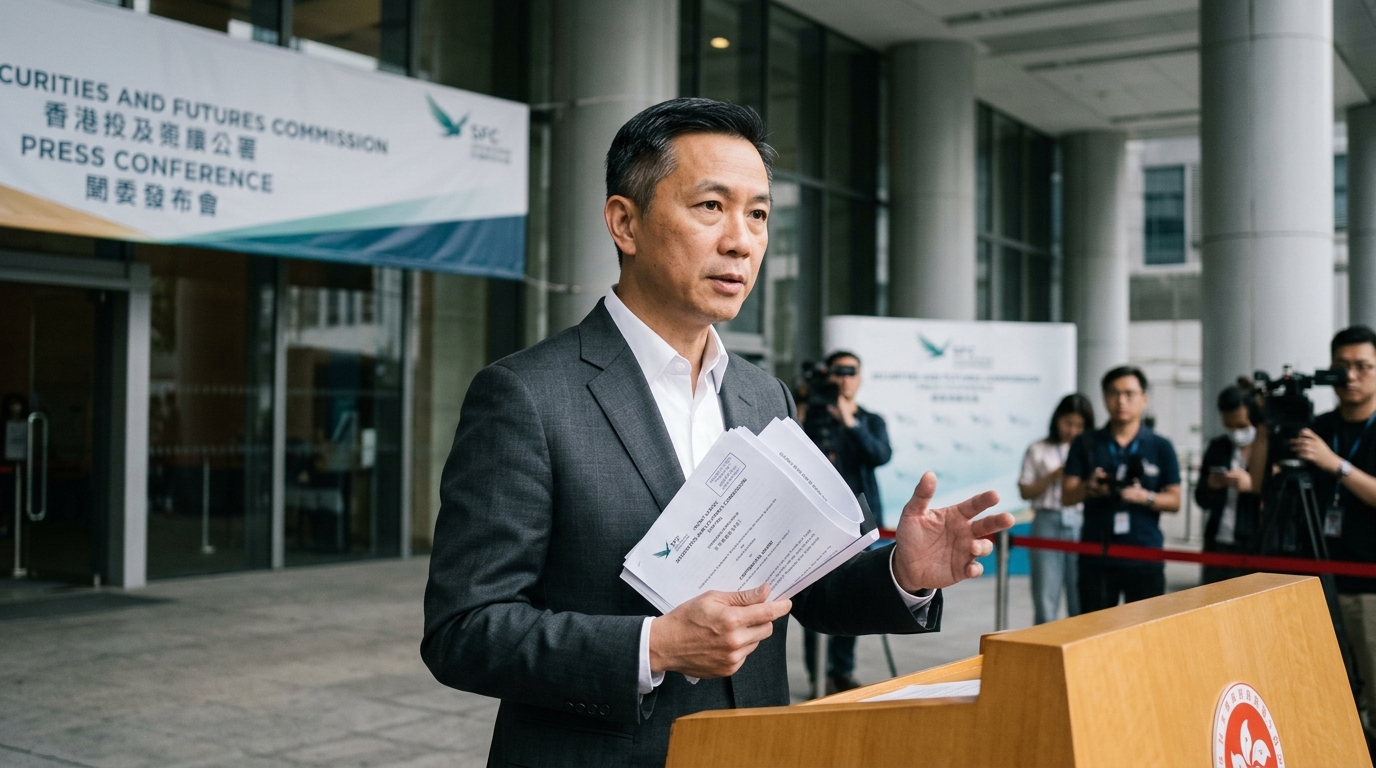
In an era where technological innovation moves at a pace that often outstrips regulatory capacity, Hong Kong’s Securities and Futures Commission (SFC) has issued a stern warning to all licensed financial institutions. The core message is clear: Artificial Intelligence (AI) is no longer just a tool for enhancing efficiency, but a potent weapon in the hands of cybercriminals targeting the heart of the global financial system.
The New Generation of Digital Threats
The SFC's warning comes at a critical juncture for Hong Kong, as it strives to maintain its status as Asia’s premier financial hub. The regulator emphasizes that traditional cybersecurity methods are rapidly becoming obsolete against attacks bolstered by Generative AI. The most alarming development involves the use of deepfakes—highly realistic audiovisual forgeries that can mimic the voice and appearance of top corporate executives.
These are not theoretical scenarios. Recently, a multinational firm in Hong Kong lost $25 million when a finance department employee was deceived into transferring funds following a video conference where, as it turned out, all other participants were deepfakes. This incident served as a catalyst for the SFC, compelling it to demand that firms immediately reassess their verification protocols and internal procedures.
Regulatory Expectations and Operational Resilience
The SFC circular is not limited to general advice. It sets out a framework of specific expectations for licensed corporations. Firms are called upon to integrate AI-related risk assessments into their broader risk management strategies. This includes implementing multi-factor authentication (MFA) that is resilient to AI-driven attacks, as well as providing continuous staff training to recognize sophisticated phishing attempts.
- Tightening approval processes for large fund transfers.
- Utilizing AI detection tools to verify the authenticity of communications.
- Conducting regular penetration testing that simulates AI-based attacks.
The SFC stresses that the responsibility lies with senior management. Directors and boards must ensure they possess the necessary resources and expertise to counter these dynamic threats. 'Ignorance' is no longer an acceptable excuse for a security breach.
The Geopolitical Stakes
Hong Kong’s move reflects a broader global trend. From the European Union with its AI Act to the United States, regulators are realizing that data security is inextricably linked to national security and economic stability. For Hong Kong, the challenge is twofold: it must embrace AI to remain competitive against Singapore and New York, while simultaneously shielding itself against the darker aspects of the same technology.
"Artificial Intelligence is a power multiplier. In the hands of defenders, it can predict attacks. In the hands of attackers, it can tear down walls that took decades to build," a market executive noted.
Conclusion: A Constant Arms Race
The SFC's warning marks the beginning of a new era in financial supervision. Cybersecurity is no longer an issue relegated solely to the IT department but a strategic priority for survival. As AI models become more accessible and powerful, the battle between regulators and cybercriminals will evolve into a constant arms race. The firms that will survive and thrive will be those that understand that trust—the most valuable currency in the world of finance—now depends entirely on their digital integrity.